


Introduction
The laundry room is a vital yet often overlooked part of the home, demanding flooring that can endure the rigors of daily use. Choosing the right laundry room floor involves balancing several factors, including durability, moisture resistance, ease of cleaning, and cost-effectiveness. There is more on this in What Home Maintenance Actually Costs in Dallas Per Year.
With a variety of materials available—from luxury vinyl and porcelain tile to engineered wood and concrete—each option offers unique benefits and challenges. The cost of these materials varies significantly.
Understanding flooring trends, like large format tiles and luxury vinyl herringbone patterns, can help you create a laundry room that is both functional and stylish. Proper installation and maintenance are crucial for ensuring longevity and performance, making it essential to consider professional help for complex installations. If you want to go deeper, read Chimney Flashing in 2026.
Key Considerations for Laundry Room Floor
When choosing flooring for your laundry room, several factors must be considered to ensure you make the best choice for your needs.
- Durability: The flooring must be sturdy enough to support heavy appliances such as washers and dryers and be durable enough to handle regular wear and tear.
- Moisture Resistance: Moisture-resistant materials are crucial given the high humidity and potential for water spills.
- Ease of Cleaning: Laundry rooms are exposed to detergents and cleaning agents, so easy-to-clean surfaces are preferred.
- Aesthetic Appeal: While functionality is key, the flooring should enhance the room’s overall look.
- Cost Considerations: Flooring costs vary based on material, coverage area, subfloor preparation, and installation requirements.
Choosing the Right Laundry Room Floor for Function and Style
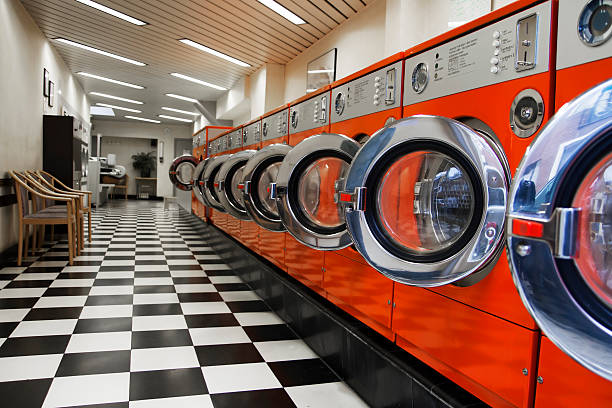
Selecting the appropriate laundry room floor is essential because this space demands a surface that can withstand moisture, frequent foot traffic, and occasional spills while still enhancing the overall aesthetic of your home. Practical flooring options like vinyl, ceramic tile, and sealed concrete offer water-resistance and easy cleanup, making them well-suited to the humid and often messy environment of laundry rooms. At the same time, design choices such as patterned tiles or warm wood-look surfaces can contribute to a more inviting and cohesive interior. By balancing durability with visual appeal, the right flooring transforms the laundry room from a purely functional area into a space that complements your home’s style without sacrificing performance under everyday wear and tear. We cover this in more depth in Master Bath Layout.
Comparing Laundry Room Flooring Costs
Grasping the cost differences between various flooring materials will empower you to make a well-informed choice. Here’s an approximate cost breakdown for a 10′ x 10′ laundry room:
| Flooring Options | Per Square Foot Cost | (10×10 Room) Cost |
| Luxury Vinyl Flooring | $2–$10 | $200–$1,000 |
| Porcelain Tile | $2–$30 | $200–$3,000 |
| Vinyl Sheet Flooring | $1–$4 | $100–$400 |
| Epoxy Floor Coating | $1–$5 | $100–$500 |
| Rubber Tile | $4–$12 | $400–$1,200 |
These estimates do not include labor costs, which can be minimized by opting for DIY installation where feasible.
Top Laundry Room Flooring Options
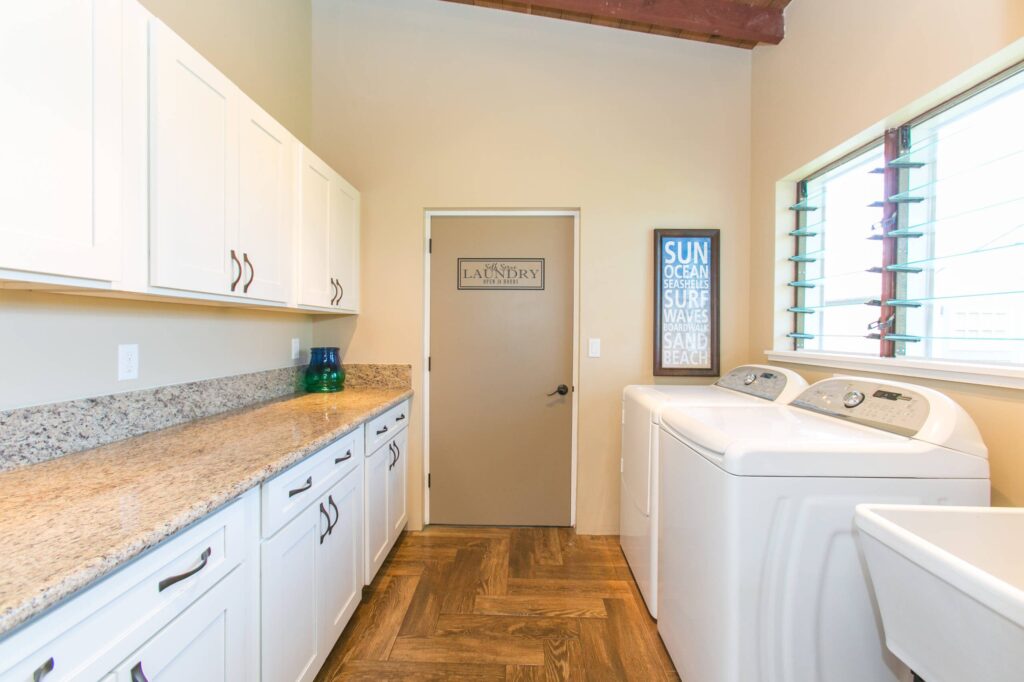
Let’s explore some popular flooring options suitable for laundry rooms:
Porcelain or Ceramic Tile
Porcelain and ceramic tiles are popular choices because of their strength and ability to resist moisture. Available in a wide range of styles and hues, they can feel chilly to walk on.
Luxury Vinyl Flooring
Luxury vinyl is praised for its water resistance and budget-friendly price. It imitates natural materials like wood or stone and is easy to install.
Laminate Flooring
Laminate offers the look of wood at an affordable price but is not entirely waterproof. It can be damaged by water that remains on the surface for extended periods.
Vinyl Sheet Flooring
Vinyl sheets provide a seamless surface that reduces water seepage risks. They are cost-effective but offer limited design options compared to other materials.
Rubber Flooring
Rubber tiles are comfortable underfoot and provide sound absorption. They may not suit all aesthetic preferences but are practical for high-moisture areas.
Engineered Wood Flooring
Engineered wood offers the warmth of real wood with better moisture resistance than hardwood. It is more expensive than some alternatives but adds elegance to any space.
Natural Stone Flooring
Natural stone is luxurious and durable but requires sealing to prevent staining. It is pricier than other alternatives.
Concrete Flooring
Concrete floors are extremely durable and generally waterproof. They can be customized with stains or paints for aesthetic enhancement.
Laundry Room Flooring Trends
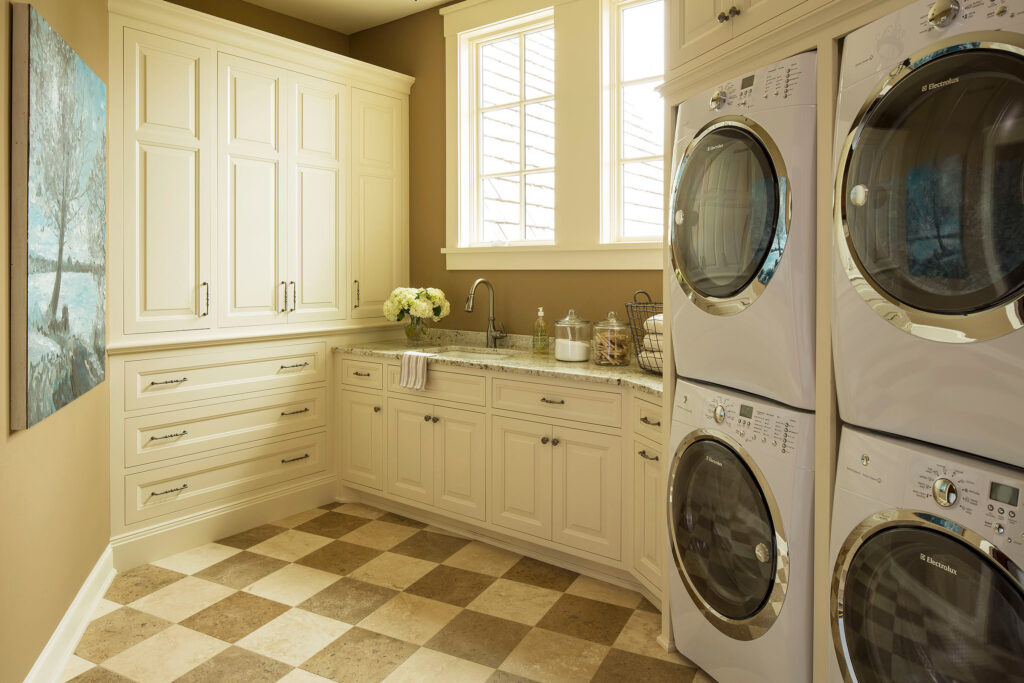
Current trends aim to make small spaces like laundry rooms feel fresh and spacious:
Large Format Tile
Extra-large porcelain tiles create a seamless look that resists moisture. Neutral colors like white or gray make spaces feel open.
Luxury Vinyl Herringbone
This pattern mimics hardwood while being waterproof. It pairs well with both contemporary and rustic styles.
Quartz-Look Tile
Porcelain tiles that mimic quartz add elegance without the need for sealing. Dark green or blue hues can energize small spaces.
Tips for Installing Laundry Room Flooring
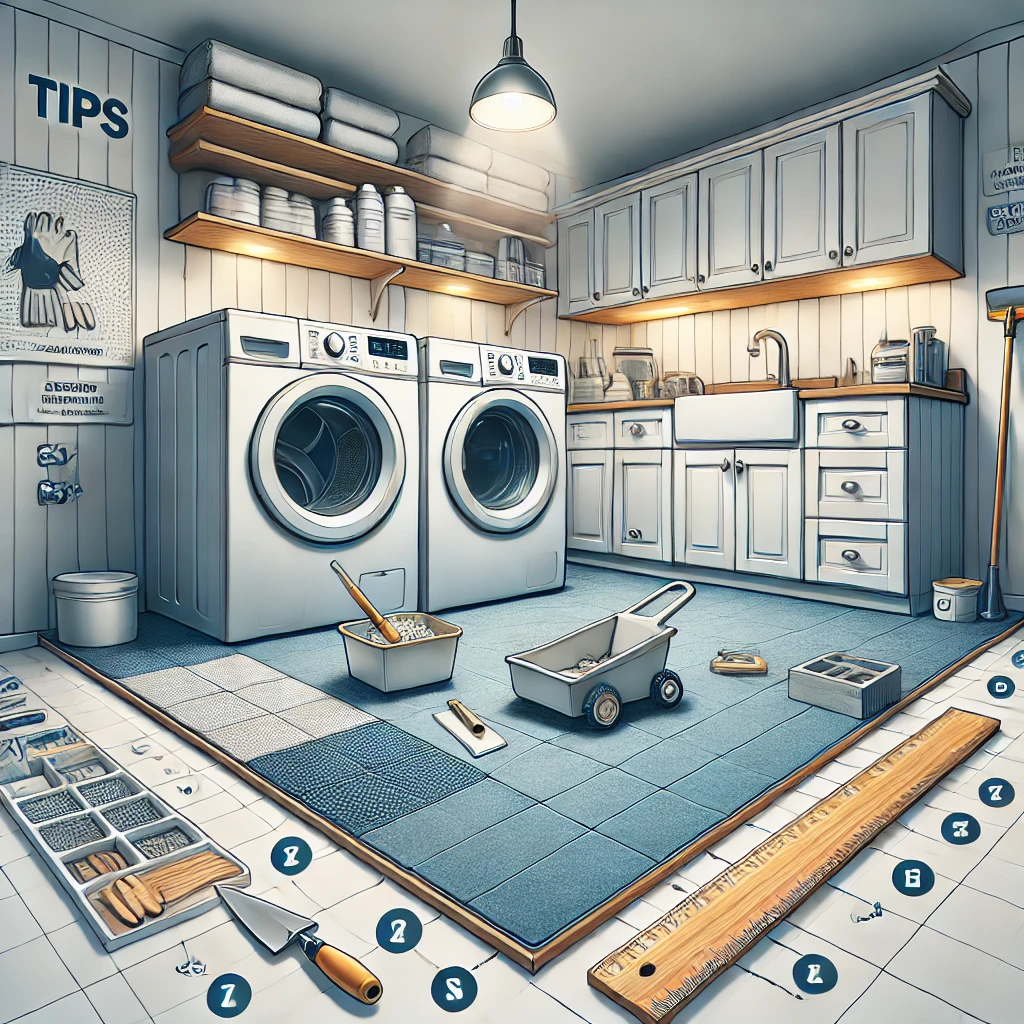
Proper installation ensures longevity and performance:
- Make sure the subfloor is clean, dry, and level to avoid potential problems later.
- Install a waterproof layer on the concrete to protect against water damage.
- Seal tile grout lines properly to prevent moisture penetration.
- Leave an expansion gap around vinyl planks or tiles to accommodate temperature changes.
- Consider professional installation for complex materials like epoxy coatings or large format tiles.
Maintaining Laundry Room Flooring
To keep your flooring in top condition:
- Use manufacturer-recommended cleaning products.
- Address spills immediately to avoid potential damage.
- Routinely check floors for wear, especially around appliances and water connections.
- Reseal tile grout lines annually to maintain water resistance.
- Place mats near entrances and appliances to catch dirt and moisture.
Conclusion
Choosing the right flooring for your laundry room involves balancing practicality with aesthetics while considering budget constraints. By understanding the various options available—from luxury vinyl to porcelain tile and knowing current trends, you can create a functional yet stylish space that meets your needs.
Proper installation and maintenance will ensure your chosen flooring stands the test of time, providing a durable foundation for one of your home’s most hardworking areas.
Apart from that if you want to know about “How do Microwave Range Hood Vent Work? Understanding Its Benefits, Limitations, Size, Kit, Installation, Replacement and Much More” then please visit our “Interior Design” Category.
FAQs
Vinyl, tile (ceramic or porcelain), and rubber are among the top flooring choices for laundry rooms. These materials are tough, resistant to moisture, and can endure the heat typical in laundry spaces.
In a 3,000-square-foot home, a laundry room measuring 8.5 feet by 12 feet is usually adequate. You may want to consider a larger area for added functionality, such as incorporating a desk or workspace.
To ensure ease of use, there should be at least 42 inches of clearance between your washer and dryer and any walls or cabinets, allowing ample room for door access and movement.
Flooring that is water-resistant and durable, such as vinyl, tile, or sealed concrete, works best in laundry rooms.
Laundry rooms are prone to spills and humidity, so moisture-resistant floors help prevent warping and damage.