


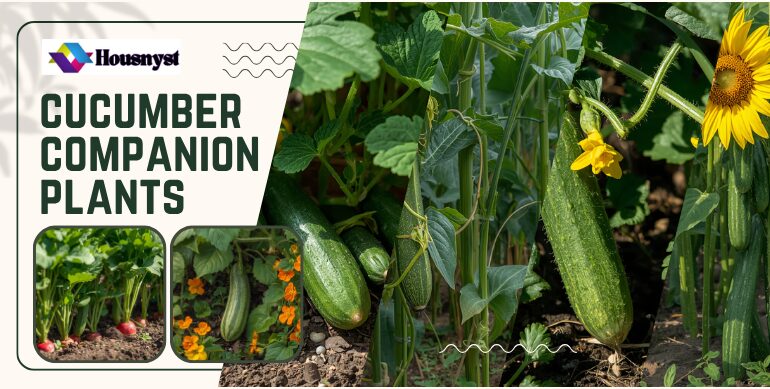
Cucumbers are among the most popular and productive vegetables grown in home gardens worldwide. Known for their refreshing taste and high water content, they are widely used in salads, juices, and healthy diets. Because cucumbers grow quickly and produce heavily during the warm season, they are often a top choice for both beginner and experienced gardeners. This is where the cucumber companion plants become an essential strategy rather than just an optional technique.
Despite their rapid growth, cucumbers can be surprisingly sensitive. They are vulnerable to common problems such as pest infestations (such as aphids and cucumber beetles), fungal diseases, poor pollination, and inconsistent watering. Companion planting is a time-tested gardening approach that involves growing specific plants together so they can support each other naturally.
It is deeply rooted in traditional agriculture and is now widely supported by modern organic gardening practices, with an experience-based understanding of what to plant with cucumbers and what to avoid for long-term garden success.
In simple terms, companion planting turns your garden into a self-supporting system where plants help each other grow stronger. This not only reduces maintenance effort but also yields healthier crops and more sustainable gardening outcomes. Whether you are growing cucumbers in a backyard, raised bed, or small urban garden, understanding companion planting can significantly improve your success rate.
Cucumber Companion Plants Quick Reference Table
| Companion Plant | Effect on Cucumbers |
|---|---|
| Corn | Acts as a natural trellis and improves airflow |
| Beans | Adds nitrogen to soil and boosts growth |
| Radishes | Repels cucumber beetles and improves soil |
| Marigolds | Deter pests like aphids and nematodes |
| Dill | Attracts beneficial insects and improves pollination |
| Sunflowers | Attract pollinators and provide support |
| Lettuce | Retains soil moisture and reduces weeds |
| Nasturtiums | Repel aphids and attract beneficial insects |
| Oregano | Acts as ground cover and pest deterrent |
| Borage | Improves pollination and plant health |
| Carrots | Loosen soil and improve root development |
| Beets | Grow well without competing for nutrients |
| Spinach | Provides ground cover and retains moisture |
| Onions | Help repel certain insect pests |
| Garlic | Protects against fungal diseases and insects |
| Chives | Improve plant growth and repel aphids |
| Peas | Add nitrogen and improve soil fertility |
| Calendula | Attracts pollinators and beneficial insects |
| Tansy | Repels ants, beetles, and flying insects |
| Zinnias | Attract pollinators and improve biodiversity |
| Mint | Repels pests (best grown in containers nearby) |
| Thyme | Acts as a living mulch and pest deterrent |
| Parsley | Attracts beneficial insects |
| Celery | Supports healthy growth without competition |
| Turnips | Improve soil structure and garden diversity |
Understanding Cucumber Growth Requirements (Foundation Knowledge)
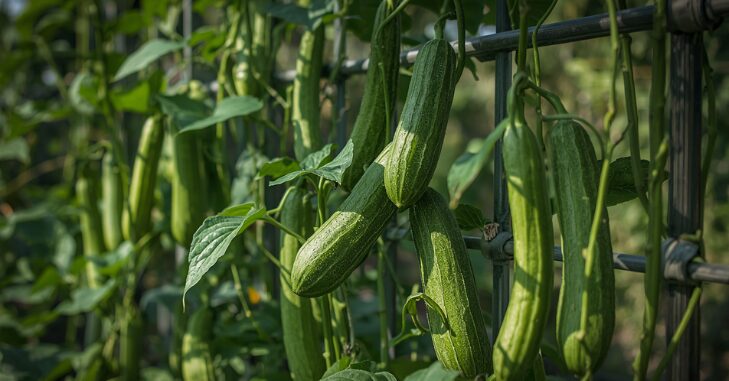
To understand companion planting, you must first understand the cucumbers themselves.
Cucumbers (Cucumis sativus) are warm-season vining plants that require:
- Full sunlight (6–8 hours daily)
- Loose, well-drained soil
- Consistent watering (moist but not soggy soil)
- Warm temperatures (above 18°C / 65°F)
- Rich organic matter in soil
They are highly sensitive to stress. Any imbalance in water, nutrients, or pests can quickly reduce production. This is why companion plants play such an important role; they naturally stabilize the growing environment.
How Companion Planting Actually Works? (Scientific Explanation)
Companion planting is based on natural plant interactions such as:
1. Nutrient Exchange
Some plants, like beans, fix nitrogen in the soil. Cucumbers benefit from this extra nitrogen, which supports leafy growth and fruit production.
2. Pest Disruption
Certain plants release strong scents that confuse or repel pests like cucumber beetles and aphids.
3. Beneficial Insect Attraction
Flowers such as marigolds and sunflowers attract pollinators and predator insects that protect cucumber plants.
4. Microclimate Creation
Tall plants like corn provide shade and wind protection, creating a stable micro-environment.
5. Ground Cover Effect
Low-growing plants like lettuce reduce weed competition and help retain soil moisture.
These natural interactions make your garden more balanced and productive.
Best Cucumber Companion Plants (Detailed Breakdown)
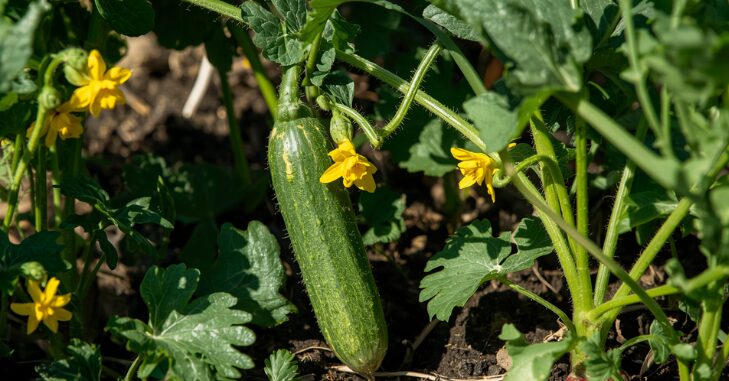
1. Corn: Natural Support System
Corn acts as a living trellis for cucumbers, allowing them to climb naturally.
Why does it work?
- Saves garden space
- Improves airflow around cucumber vines
- Reduces fungal diseases caused by soil contact
- Provides structural support without artificial stakes
This method is part of the traditional “Three Sisters” gardening used by indigenous farming systems.
2. Beans: Natural Soil Fertilizer
Beans are nitrogen-fixing plants, meaning they convert atmospheric nitrogen into usable soil nutrients.
Benefits of cucumbers
- Enhances leaf and vine growth
- Improves fruit development
- Reduces the need for synthetic fertilizers
- Builds long-term soil fertility
This makes beans one of the most important cucumber companions.
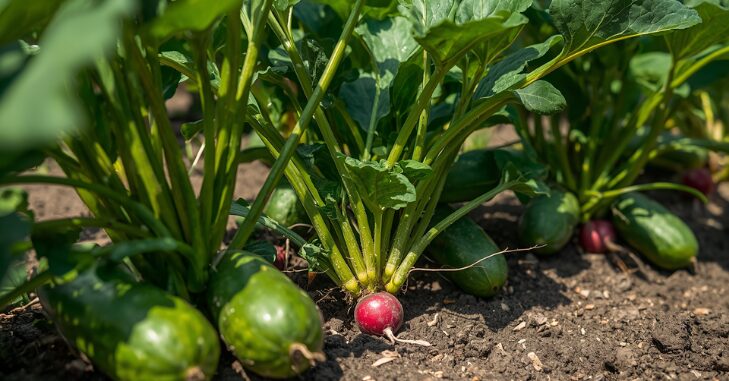
3. Radishes: Natural Pest Defense
Radishes grow quickly and serve as trap and deterrent crops.
Benefits
- Repel cucumber beetles
- Break compact soil for better root growth.
- Harvest early without affecting cucumber space.
They are excellent for early-season garden protection.
4. Marigold: Organic Pest Control Powerhouse

Marigolds are widely used in organic gardening systems.
How do they help?
- Repel aphids, nematodes, and beetles.
- Improve overall garden biodiversity.
- Attract pollinators indirectly
- Reduce soil-borne pests
They are one of the most reliable protective companion flowers.
5. Dill: Pollinator Magnet
Dill attracts beneficial insects that naturally control pests.
Advantages
- Attracts ladybugs and hoverflies
- Improves pollination rates
- Helps reduce aphid populations
However, it should be managed carefully as a mature dill can compete for space.
6. Sunflowers: Pollinator Hub
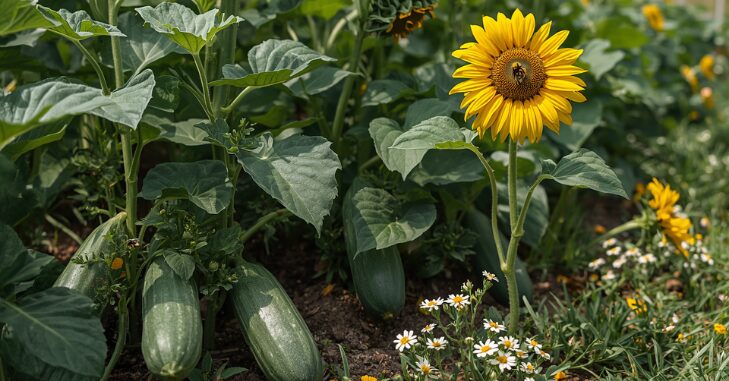
Sunflowers act as both support and attraction plants.
Benefits
- Attract bees for better pollination.
- Provide partial shade in hot climates.
- Improve biodiversity in the garden.
They are especially useful in large garden layouts.
7. Lettuce: Living Mulch
Lettuce is ideal for ground coverage.
Benefits
- Reduces weed growth
- Retains soil moisture
- Keeps soil temperature stable
- Does not compete for vertical space
Worst Cucumber Companion Plants (Important Avoidance Guide)

Potatoes: High Risk Companion
Potatoes compete aggressively for nutrients and are prone to fungal diseases.
Problems
- Increase disease spread
- Reduce the cucumber growth rate.
- Deplete soil nutrients quickly
Melons: Family Competition Issue
Melons belong to the same plant family as cucumbers.
Why avoid them?
- Share pests and diseases.
- Competent for water and nutrients.
- Increase crop vulnerability
Brassicas: Soil Mismatch Plants
Includes cabbage, broccoli, and cauliflower.
Issues
- Different soil nutrient requirements
- Slow cucumber growth
- Poor compatibility in shared beds
Strong Aromatic Herbs (Sage, Rosemary)
These herbs can interfere with cucumber growth.
Effects
- May inhibit seed germination
- Competent for soil space.
- Reduce vine expansion
Advanced Benefits of Companion Planting for Cucumbers

1. Improved Pollination Rates
Better pollination results in more uniform, abundant cucumbers.
2. Natural Pest Ecosystem
Instead of killing pests, the garden creates balance using beneficial insects.
3. Long-Term Soil Health
Repeated use of nitrogen-fixing plants improves soil quality year after year.
4. Water Efficiency
Ground cover plants reduce evaporation and improve moisture retention.
5. Higher Yield per Square Foot
Smart plant combinations maximize production in small spaces.
Expert-Level Gardening Tips for Maximum Success
- Always rotate cucumber crops every season.
- Use organic compost to improve soil microbial activity.
- Install trellises for vertical growth.
- Water the soil level to prevent fungal disease
- Combine flowering plants with vegetables for ecosystem balance.
- Avoid overcrowding to maintain airflow.
These practices are widely used in professional organic farming systems.
Common Mistakes Gardeners Make

- Planting cucumbers too close together
- Ignoring pest prevention until infestation occurs
- Mixing incompatible plant families
- Over-fertilizing with nitrogen
- Not using Mulch for soil protection.
Avoiding these mistakes significantly improves harvest quality.
Conclusion
Cucumber companion plants are more than just a traditional gardening method; they are a smart, science-backed approach to growing healthier plants while reducing reliance on chemicals. By thoughtfully pairing cucumbers with beneficial companions like beans, corn, marigolds, and lettuce, you create a natural support system that improves pollination, enriches the soil, and keeps harmful pests under control.
What makes this method truly valuable is its long-term impact. Instead of focusing only on short-term yield, companion planting helps build a self-sustaining garden ecosystem. Over time, your soil becomes richer, pest problems decrease naturally, and plant health improves season after season. This approach not only increases cucumber production but also enhances the flavor and quality of the harvest.
It is also important to remember that success in cucumber companion planting comes from observation and consistency. Every garden has slightly different conditions, including soil type, climate, and available space. By experimenting with different plant combinations and following proven principles, you can discover what works best in your specific environment.
Want to know about When to Fertilize Blueberries for Beginners? Easy Guide to Timing, Fertilizers, and Common Mistakes Check out our Gardening category.
Frequently Asked Questions (FAQs)
Beans, corn, marigolds, and dill are among the best companions because they improve soil fertility, support pollination, and protect against pests.
Yes, but only with proper spacing and airflow. Both plants can suffer from fungal diseases if overcrowded.
Marigolds repel harmful insects and reduce soil pests, making them highly valuable in organic gardening.
Yes, cucumbers rely on bees and insects for fruit formation. Companion flowers help attract them naturally.
Yes, but yields may be lower and pest problems more frequent without companion support.
Overcrowding and poor pest management are the most common causes of low cucumber yield.
Most companion plants should be spaced 12–24 inches apart, depending on their size and growth habits.