

You finally get that tall storage cabinet or wall-mounted entertainment unit out of the box. The pieces line up, the instructions make sense, and you are almost ready to enjoy the finished result. Then you reach the step that tells you to secure it to the wall. The package includes two small anchors and a couple of screws, but your wall does not seem to match anything shown in the instructions.
Do you use the included hardware anyway, buy larger anchors, or start looking for a wall stud? This situation happens more often than homeowners expect. Furniture manufacturers provide hardware for common installation conditions, but they cannot account for every wall structure found inside a home. Drywall, wood studs, metal studs, plaster, masonry, hidden wiring, plumbing lines, and furniture weight can all change the installation method.
For Marysville homeowners, these differences matter because using the wrong fastener can damage the wall or leave furniture unstable. Professional furniture installation services in Marysville can help identify the wall structure, select suitable mounting hardware, and secure furniture according to the actual conditions inside your home. Understanding why the supplied hardware may not work is the first step toward a safer, cleaner, and more reliable installation.
Why the Included Hardware May Not Work on Your Wall?
Furniture hardware is usually selected for a particular range of wall conditions, not for every possible installation. The important question is not whether a screw or anchor can physically enter the wall, but whether the complete mounting system can safely transfer the furniture’s load to a suitable part of the building structure.
For example, a drywall anchor may be appropriate for a relatively light attachment. On the other hand, a tall storage cabinet may need to connect to a wood stud, blocking, or another suitable structural point. Metal-stud construction, plaster, masonry, tile, and layered wall surfaces can require different fastening approaches.
There is also a difference between the wall surface and the structure behind it. Drywall may provide the visible mounting surface, but it is not necessarily the component that should carry the entire load. Likewise, finding a stud does not automatically mean that any screw will work; the fastener still needs to be appropriate for the framing and the furniture’s mounting hardware.
Before replacing the supplied anchors with something “stronger,” identify what the fastener will actually be attaching to and how much load that connection will experience.
How Can You Identify the Wall Structure Before Installation?
Before choosing a replacement anchor, determine what is behind the finished wall. A stud finder can help locate framing, but its reading should be treated as one clue rather than the entire answer.
Look at the surrounding room as well. Electrical outlets and switches can provide clues about stud locations, while trim, previous fastener holes, wall thickness, and visible construction details may help explain unusual readings. If the wall behaves differently from what you expected when testing a location, stop rather than continuing to drill until something feels solid.
You may be dealing with wood framing, metal studs, plaster, masonry, multiple layers of wall material, or a remodeled section with additional blocking. These conditions can change which fastener is appropriate.
The objective is not simply to find a place where a screw will hold temporarily. It is to identify a mounting point that can support the furniture under its expected load without damaging the wall or compromising the installation.
Why Does Furniture Weight Change the Hardware You Need?
The weight printed on a furniture box is only part of the installation equation. A wall-mounted unit has to transfer its load through the furniture’s mounting points, brackets or rails, fasteners, wall material, and ultimately the structure capable of supporting that load.
Consider a tall storage cabinet. Its empty weight may be manageable, but adding books, cookware, tools, or household supplies increases the load substantially. Opening a door, pulling a drawer, or someone accidentally leaning against the unit can also place additional force on the mounting connection.
This is why choosing the largest anchor available is not necessarily the safest solution. An anchor’s performance depends on the wall material, installation conditions, fastener type, mounting geometry, and expected load. A very strong anchor cannot compensate for a weak mounting bracket, damaged drywall, or an attachment point that was never designed to carry the load.
The right question is therefore not, “What is the strongest anchor I can buy?” It is, “What mounting system is appropriate for this furniture, this wall, and this expected load?”
What Should You Do When There Is No Stud Where You Need One?
A common installation problem is that the furniture’s mounting holes do not line up with convenient wall framing. Moving the furniture may not be practical because the new position could interfere with an outlet, doorway, window, vent, or the room’s intended layout.
At that point, the solution is not automatically to use a larger drywall anchor. The appropriate approach depends on the furniture’s design, its expected load, the wall construction, and the manufacturer’s mounting requirements.
Depending on those conditions, an installation may use a properly rated anchor, toggle-style fastener, mounting rail, bracket, cleat system, or a different attachment point. Some furniture may also be designed so that its mounting rail can span between framing locations.
This is where furniture installation services in Marysville can become useful. Professional installation focuses on matching the attachment method to the actual wall and furniture rather than forcing the supplied hardware to work.
Can You Mount Heavy Furniture Directly to Drywall?
A tall cabinet or bookcase presents two separate concerns: whether the mounting connection can support the expected load and whether the furniture can tip.
A properly selected drywall anchor may support a specified load under suitable conditions, but that does not automatically make drywall-only attachment appropriate for every tall or heavily loaded piece of furniture. The way the furniture is constructed and the forces created when doors, drawers, or shelves are used also matter.
Tipping is particularly important with tall bookcases, wardrobes, dressers, storage cabinets, and entertainment units. The center of gravity can change as shelves and drawers are loaded or opened. Children climbing on furniture or someone pulling against a cabinet can create forces that are very different from the furniture simply sitting against the wall.
For that reason, follow the manufacturer’s anti-tip and anchoring requirements rather than treating a wall anchor’s load rating as the only safety consideration.
What Should You Check Behind a Wall Before Drilling?
A successful mounting point has to be strong enough to support the furniture without interfering with the systems hidden inside the wall.
Electrical wiring, plumbing, HVAC components, communication cables, and protective metal plates can all be concealed behind finished surfaces. The risk is not identical throughout a room. Areas near plumbing fixtures, electrical boxes, kitchens, bathrooms, laundry spaces, and mechanical equipment deserve particular caution.
This becomes more complicated when furniture requires several mounting points. A cabinet may need multiple holes across a relatively large section of wall, increasing the number of locations that need to be assessed.
If you cannot confidently determine what is behind a proposed drilling location, don’t treat resistance from the wall as a signal to drill harder. Stop and reassess the location before creating a hole. A mounting method that avoids one problem is not a good solution if it creates a more serious one behind the wall.
Why Can Baseboards and Trim Complicate Furniture Installation?
A piece of furniture can be perfectly level and still refuse to sit correctly against the wall because of the baseboard behind it.
Even a relatively small amount of trim projection can leave a gap between the furniture and the wall. If the installer compensates by pulling the furniture tightly backward with the mounting screw, the bracket or cabinet can be placed under unnecessary stress.
The same issue can occur with chair rails, decorative molding, window trim, uneven flooring, and other architectural features.
Before finalizing the mounting points, check how the furniture actually meets the wall and floor. If the back of the unit cannot sit where the manufacturer intended, the installation may require a different mounting position, appropriate spacing, or another adjustment rather than simply tightening the fasteners.
How Is Cabinet Installation Different from Basic Furniture Assembly?
Assembling a cabinet and installing it securely against a wall are two different tasks. Assembly creates the furniture; installation determines how that furniture interacts with the room.
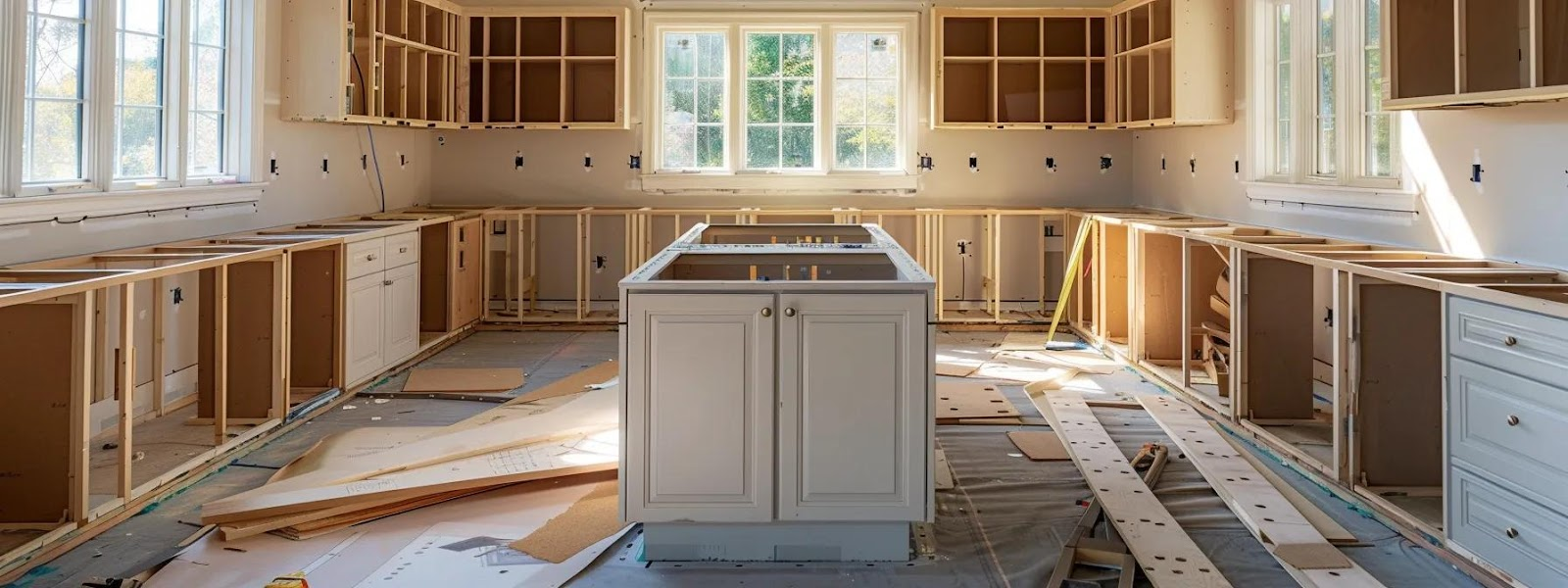
Cabinet installation becomes more demanding when several units need to line up. A small difference in floor level or wall angle can become obvious across a row of cabinets. Doors may appear uneven, gaps can change from one end to the other, and mounting points may not fall where the furniture was designed to attach.
Walls are rarely perfectly straight, and floors are not always perfectly level. An experienced installer accounts for those conditions while maintaining the manufacturer’s intended mounting points and keeping the finished installation level, aligned, and functional.
This is especially important for cabinets with multiple doors, drawers, adjoining units, or tight clearances around appliances, outlets, trim, and windows.
What Are the Warning Signs That Your Mounting Method Is Wrong?
A furniture installation usually gives you clues when something is not working correctly.
Watch for:
- Anchors that spin inside the wall
- Screws that never tighten
- Crumbling drywall around mounting points
- Furniture pulling away from the wall
- Mounting brackets that flex
- Cabinets that gradually shift
- Shelves that sag after loading
- Doors that stop lining up correctly
- Furniture that rocks or leans
- Fasteners that loosen repeatedly
Do not keep tightening the loose fastener and hope it eventually holds. Excessive tightening can enlarge the hole or damage the wall material further.
Stop and reassess the mounting method.
The correct solution may involve relocating the fastener, finding structural framing, selecting another anchor, repairing the damaged mounting area, or changing the installation layout.
When Should Marysville Homeowners Consider Professional Installation?
Professional furniture installation services in Marysville become particularly valuable when the main challenge is no longer assembling the furniture but deciding how it should be secured.
Consider getting help when the furniture is tall or heavy, the wall construction is unclear, the supplied hardware does not suit the wall, or the mounting points do not line up with framing. Multiple cabinets, difficult trim conditions, masonry or plaster walls, and potential wiring or plumbing behind the mounting area can add another level of complexity.
The benefit is not simply having someone put the furniture together. A qualified installer can assess the mounting area before drilling, determine how the furniture should be supported, account for wall and floor irregularities, and complete the final alignment and anchoring.
For Marysville homeowners, that can be especially useful when a project involves large storage furniture, wall-mounted units, home-office cabinetry, entertainment centers, or several cabinets that need to work together.
Why Is the Included Hardware Only the Starting Point?
When an installation feels insecure, homeowners often focus immediately on the anchor. But the anchor may not be the weakest component.
The mounting bracket, cabinet back, mounting rail, fastener, wall material, or connection between the furniture components can fail before a properly installed structural attachment does. Older or damaged furniture can also have enlarged mounting holes or weakened material around the attachment point.
This is why replacing a small anchor with a larger one does not automatically solve the problem. The entire connection needs to be considered as a system.
A good installation therefore evaluates both sides of the connection: what the furniture is capable of supporting and what the wall is capable of supporting.
Get Your Furniture Installed with the Right Support
If the screws, brackets, or anchors included with your new furniture do not seem right for your wall, avoid turning the installation into a guessing game. The wrong mounting method can leave you with damaged drywall, loose furniture, unnecessary holes, or a unit that never feels properly finished.
Schedule a professional furniture installation evaluation in Marysville. An experienced installer can assess the wall structure, locate suitable mounting points, select appropriate hardware, and complete the installation with attention to alignment and long-term use. Whether you need help securing a bookcase, installing storage furniture, mounting a wall unit, or completing a cabinet project, professional support can help you finish the job correctly and confidently.