

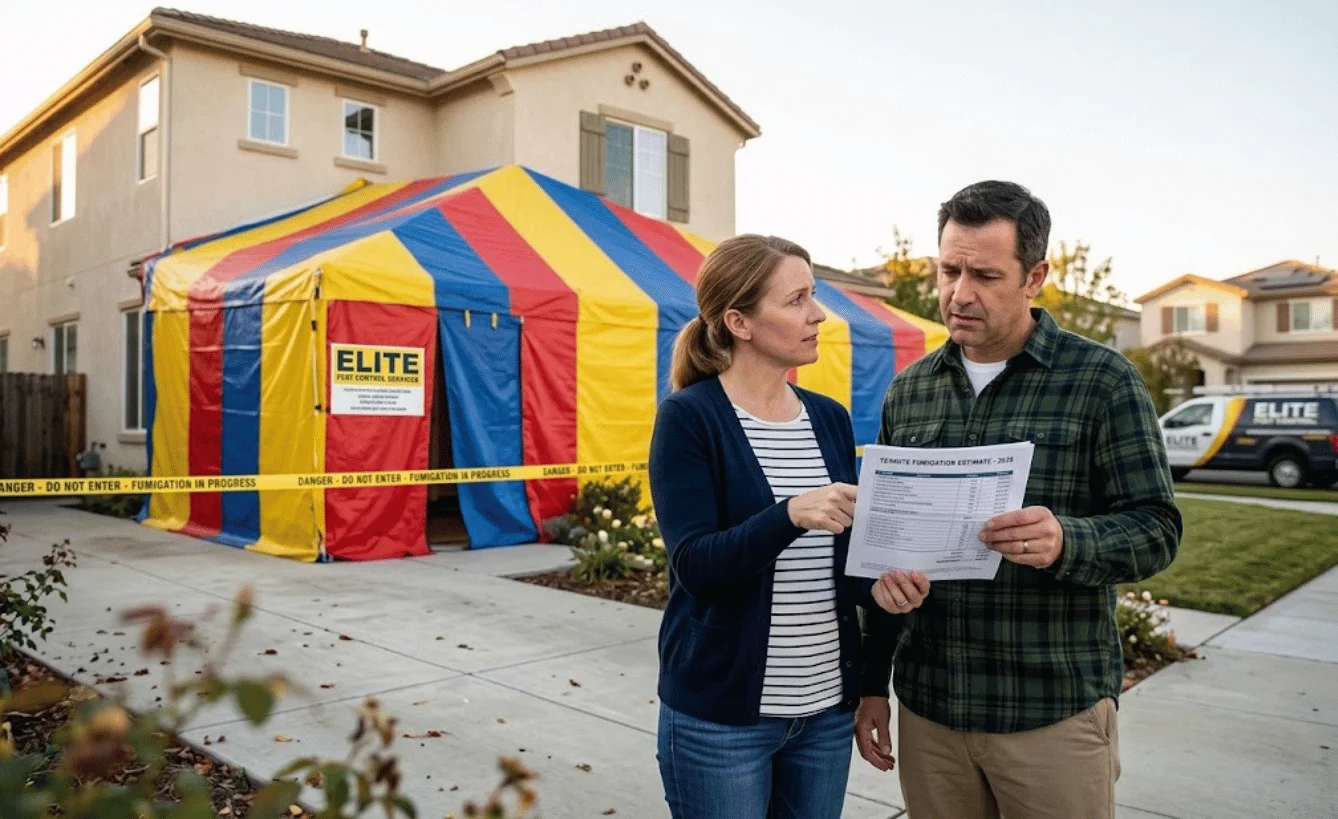
If you’re dealing with drywood termites, termite fumigation cost can become one of the biggest factors in your treatment decision. Whole-house tenting typically costs several thousand dollars, so understanding what goes into the price can help you budget before hiring a pest control company.
For 2026 planning, gas fumigation commonly costs about $1 to $4 per square foot. That puts many 2,000-square-foot homes in the $2,000 to $8,000 range. Many complete treatments cost between $2,000 and $5,000, although prices vary by property and location.
| Cost factor | Typical planning figure |
| Gas fumigation | $1–$4 per sq. ft. |
| 1,500 sq. ft. home | $1,500–$6,000 |
| 2,000 sq. ft. home | $2,000–$8,000 |
| 2,500 sq. ft. home | $2,500–$10,000 |
| 3,000 sq. ft. home | $3,000–$12,000 |
| Initial inspection | About $100–$350 |
| Typical time away | Up to about 72 hours or several days |
| Commonly used for | Widespread or inaccessible drywood termites |
These figures are planning ranges, not contractor quotes. Home size, local labor costs, accessibility, infestation severity, and preparation requirements can all affect the final price.
Key takeaways
Whole-house tenting is commonly priced by square footage.
A range of $1 to $4 per square foot is useful for early budgeting.
Fumigation is mainly associated with widespread drywood termite problems.
Inspection, lodging, repairs, and preparation can increase your total expenses.
You must stay out of the home until the certified operator clears it for re-entry.
Termite Fumigation Cost by Home Size in 2026
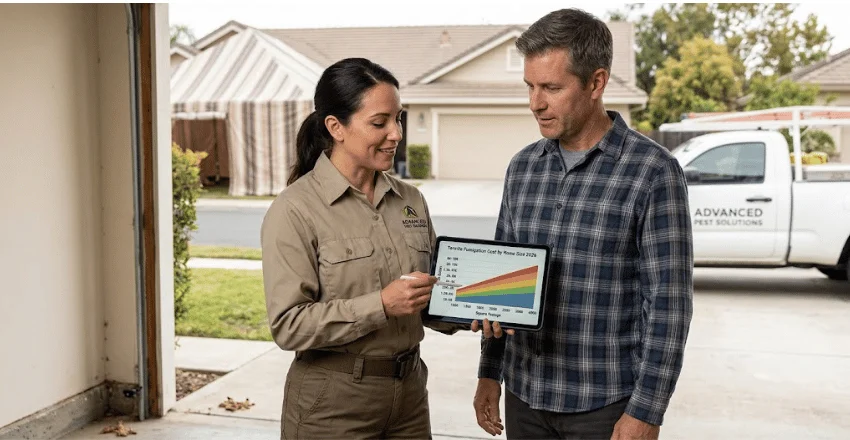
Home size provides a useful starting point because many fumigation companies price structural tenting by square footage.
| Home size | Approximate fumigation range |
| 1,000 sq. ft. | $1,000–$4,000 |
| 1,500 sq. ft. | $1,500–$6,000 |
| 1,800 sq. ft. | $1,800–$7,200 |
| 2,000 sq. ft. | $2,000–$8,000 |
| 2,500 sq. ft. | $2,500–$10,000 |
| 3,000 sq. ft. | $3,000–$12,000 |
| 4,000 sq. ft. | $4,000–$16,000 |
A broad range of about $1 to $4 per square foot is useful for estimating potential costs. However, many homeowners may receive quotes that fall closer to the middle of that range.
That’s why the highest number in a square-foot calculation shouldn’t be treated as an automatic quote. Your local market, the structure of your home, and the extent of the infestation still matter.
What Makes a Fumigation Quote Go Up or Down?
Square footage matters, but it isn’t the only pricing factor.
Infestation severity: More extensive or harder-to-reach infestations may require more preparation and treatment time.
Home design: Multistory buildings, attached structures, decks, and complex rooflines can make tent installation more difficult.
Location: Labor rates and termite activity vary by city and state.
Inspection needs: Some companies charge separately for the initial inspection, while others apply the fee toward treatment after you book.
Treatment scope: Repair work, follow-up visits, and preventive services may not be included in the fumigation quote.
Moisture problems also deserve attention when reducing termite risk. If you suspect a plumbing issue, Housnyst’s guide to professional leak detection explains common signs of concealed household leaks.
Roof leaks can also expose framing and other materials to prolonged moisture. Housnyst explains how roof repairs can help prevent moisture from reaching interior wood framing.
Is Whole-House Tenting the Right Treatment?
Whole-house tenting may be appropriate when the termite species and infestation pattern call for treatment of the entire structure.
Structural fumigation is commonly used for drywood termites, especially when colonies are hidden in areas that are difficult to inspect or treat directly. Occupants, pets, and plants must leave the property during treatment and aeration.
Subterranean termites usually require a different approach because they live and travel through soil. Barrier treatments and bait systems may be more appropriate in those cases.
| Treatment | Typical price basis | Common fit |
| Gas fumigation | $1–$4 per sq. ft. | Widespread drywood termites |
| Heat treatment | $1–$3 per sq. ft. | Whole-structure drywood treatment |
| Micro or spot treatment | About $6–$8 per treated sq. ft. | Small, localized infestations |
| Soil treatment | About $3–$20 per linear ft. | Subterranean termites |
Pricing units differ because these methods treat different parts of a property. A higher per-square-foot rate for spot treatment may still result in a lower total cost if only a small area requires treatment.
Extra Costs to Include in Your Budget

The tenting quote isn’t always the full amount you’ll end up spending.
An initial termite inspection may cost around $100 to $350. Some companies waive the fee or apply the inspection charge toward treatment after you hire them.
You may also need to budget for:
Hotel stays or temporary lodging
Pet boarding
Food preparation or replacement
Repairs to termite-damaged wood
Follow-up inspections
Preventive work after treatment
A useful household budgeting formula is:
Estimated project budget = fumigation quote + temporary lodging + preparation expenses + repairs + any follow-up services not included
Ask contractors to identify every excluded item before you sign a contract. Doing so makes competing estimates much easier to compare.
How Long Will You Need to Leave the House?
The full fumigation process can take several days. Preparation, treatment, and aeration may take up to about 72 hours, depending on the property and treatment plan.
Don’t rely on a general timetable to decide when you can return.
Sulfuryl fluoride is commonly used for residential structural fumigation. Clearance testing must be completed before occupants can safely re-enter the home.
Follow the certified operator’s clearance notice, even if the tent has already been removed.
How to Compare Fumigation Quotes
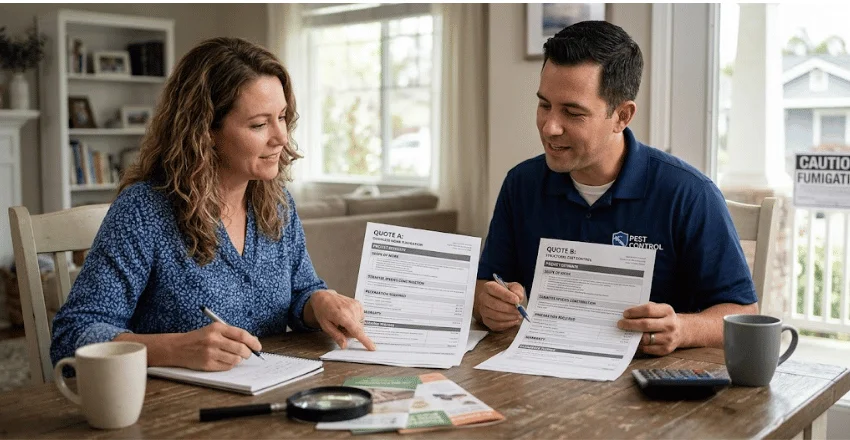
Price matters, but a low price isn’t useful if the scope of work is incomplete.
Before choosing a company, ask:
Did the inspection confirm the termite species?
Is the entire structure included in the price?
Does the quote include inspection and clearance testing?
What preparation must you complete yourself?
Are detached structures or decks included?
Does the company provide a written warranty?
Are follow-up inspections included?
Which repairs are excluded from the estimate?
You should also confirm that the company is properly licensed and qualified to perform structural fumigation in your area.
For more homeowner pest information, browse Housnyst’s pest control guides. If you manage a food business, Housnyst’s guide to pest control for restaurants and cafes explains the role of professional inspections and routine pest management.
Get Written Quotes Before You Book
A square-foot estimate gives you a starting budget, but a professional inspection determines the treatment your property actually needs. Get at least three written quotes from licensed termite professionals and make sure each contractor is pricing the same scope of work.
Compare the treatment method, preparation requirements, clearance testing, warranty terms, and follow-up service. A clear quote helps you avoid choosing a low headline price that excludes necessary work.
Frequently Asked Questions
Using a commonly cited range of $1 to $4 per square foot, a 2,000-square-foot home could cost about $2,000 to $8,000 to fumigate. Individual quotes may fall closer to the middle of that range.
No. People, pets, and plants must leave during structural fumigation. Return only after the operator has completed the required aeration and officially cleared the property for re-entry.
No. Fumigation targets termites already inside the treated structure. It doesn’t create a permanent barrier against future infestations. Ongoing inspections and property maintenance can help reduce the risk of another infestation.
No. Whole-structure fumigation is most useful when drywood termite colonies are widespread or difficult to locate. Localized infestations or subterranean termites may require different treatment methods.