


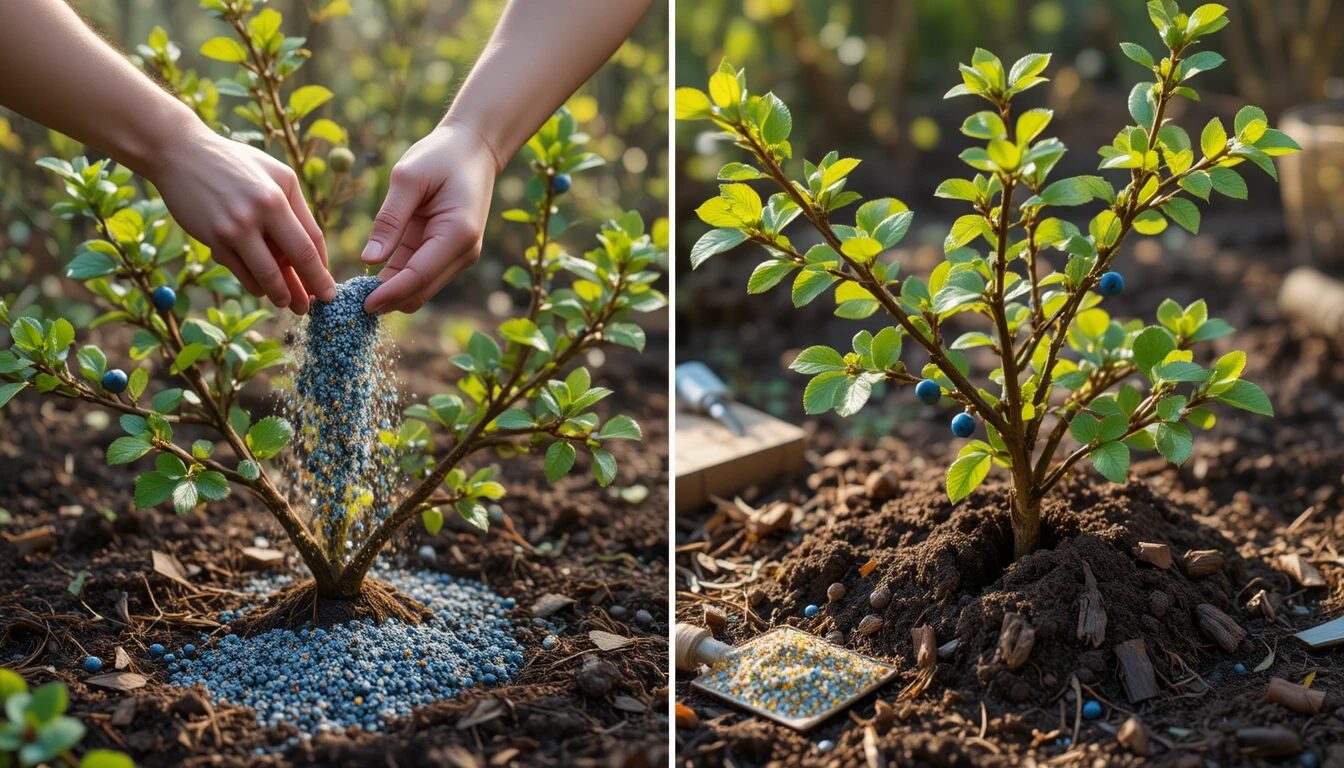
Blueberries reward gardeners with delicious fruit, attractive foliage, and relatively low maintenance if given the right care. When to Fertilize Blueberries? is one of the most important considerations for growing healthy plants. Proper timing, type, and application method of fertilization directly affect plant vigor, flowering, fruit set, and berry quality.
This guide explains when to fertilize blueberries for beginners. what fertilizers work best, how much to apply, and common mistakes to avoid. It mixes practical step-by-step advice, clear tables, and quick bullet-point reminders so you can nurture productive blueberry bushes with confidence. If you want to go deeper, read Common Cooling Problems Homeowners Ignore Until It’s Too Late.
| Category | Details | Key Insights |
| Main Topic | When to fertilize blueberries? | Critical for plant health and fruit yield |
| Ideal First Fertilization | Early spring (bud break stage) | Supports new growth and root activity |
| Second Application | 4–6 weeks after first feeding | Boosts flowering and fruit formation |
| Optional Feeding | Early summer (light application) | Only if plant growth is weak |
| When to Avoid Fertilizing | Late summer, fall, and winter | Prevents frost-damaged new growth |
| Soil pH Requirement | 4.5 – 5.5 (acidic soil) | Essential for nutrient absorption |
| Best Fertilizer Types | Ammonium sulfate, acid-loving plant fertilizers, and organic compost | Maintains soil acidity and plant health |
| Key Nutrients Needed | Nitrogen (N), Phosphorus (P), Potassium (K) | Balanced growth and fruit quality |
| Application Method | Spread around base, not touching stem | Prevents root and stem damage |
| Watering After Fertilizing | Immediate light watering | Helps nutrients absorb into the soil |
| Young Plants Care | Light feeding, focus on roots | Avoid over-fertilization |
| Mature Plants Care | Regular spring feeding | Increases yield and plant strength |
| Signs of Under-Fertilization | Yellow leaves, slow growth, small berries | Indicates nutrient deficiency |
| Signs of Over-Fertilization | Burnt leaf edges, excessive leaf growth | Can reduce fruit production |
| Organic Options | Compost, fish emulsion, manure | Improves long-term soil health |
| Synthetic Options | Fast-release chemical fertilizers | Quick results but risk of overuse |
| Common Mistake #1 | Fertilizing too late in the season | Leads to weak, frost-damaged growth |
| Common Mistake #2 | Using alkaline fertilizers | Raises pH and harms plants |
| Common Mistake #3 | Over-fertilizing | Damages roots and reduces yield |
| Climate Consideration | Adjust timing based on region | Warmer areas fertilize earlier |
| Best Beginner Tip | Stick to the early + late spring schedule | Simple and effective approach |
Why Fertilizing Blueberries Matters
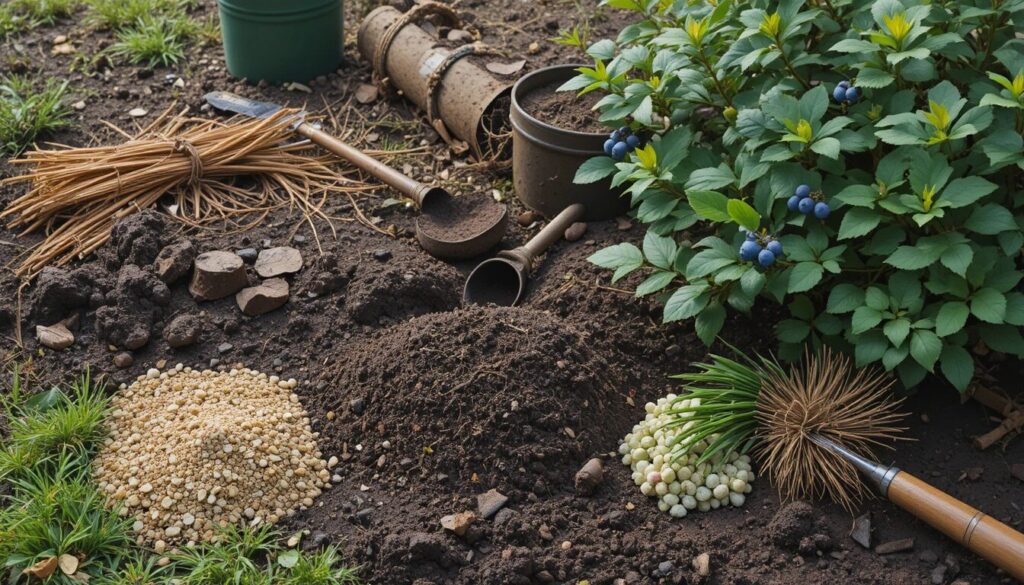
Blueberries prefer acidic soils (pH 4.5–5.5) and rely especially on nitrogen and certain micronutrients, which become less available outside that pH range. Proper fertilization supports bush establishment, vigorous vegetative growth, abundant flower production, and high-quality fruit. Conversely, both over- and under-fertilizing can disrupt bloom timing, reduce fruit size, and harm overall plant health—so balanced feeding is essential for good yield and longevity.
Blueberry Growth Cycle and Fertilizer Timing (Overview)
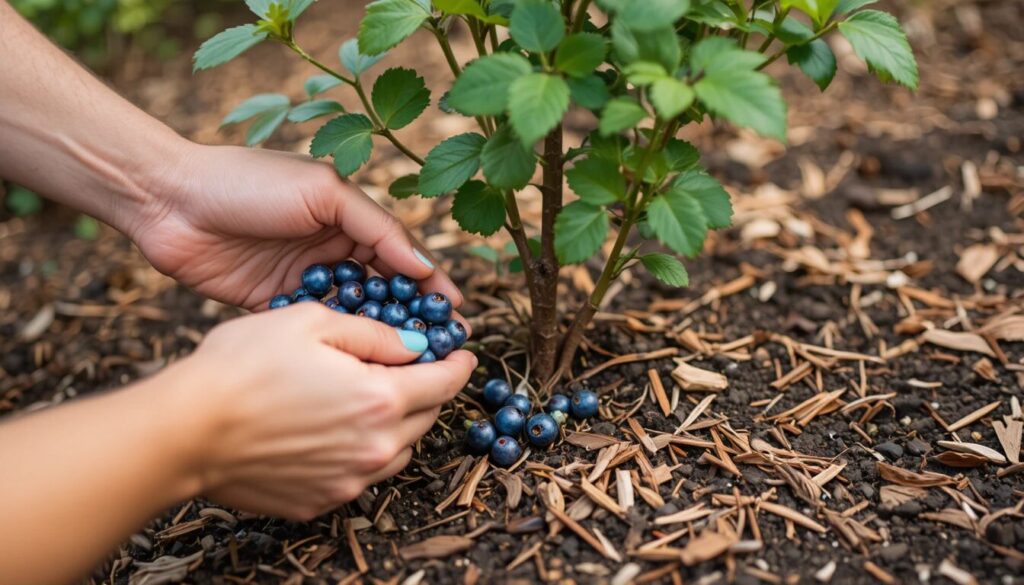
Understanding the blueberry growth cycle helps choose fertilizer timing that matches plant needs. A typical deciduous highbush blueberry (Vaccinium corymbosum and cultivars) follows this seasonal pattern:
- Late winter / early spring (prebudbreak): Buds swell, and root activity begins as temperatures rise.
- Spring (budbreak to bloom): Rapid shoot growth, leaf expansion, and flower opening—high nutrient demand.
- Early summer (fruit set and development): Nutrients support developing fruit and continued shoot growth.
- Mid to late summer (postharvest): Plants recharge reserves and develop next year’s buds.
- Fall (hardening off): Growth slows; plants prepare for dormancy—fertilizer late in the season can be harmful if it delays hardening.
- Winter (dormancy): Minimal nutrient uptake; no fertilization.
Core rule: apply most fertilizer in early spring and avoid heavy late-summer or fall applications that push growth too late in the season.
When to Fertilize Blueberries? Seasonal Schedule (Beginners’ Timeline)
Early spring (just after bud swell or at leaf-out) is the primary feeding time, supplying nitrogen and other nutrients needed for vegetative growth and bloom; this application is the most important and should provide roughly 50–70% of the season’s nitrogen.
Four to six weeks after the first application, in late spring to early summer, you can apply an optional light side-dressing or reapplication if plants show weak growth or yellowing leaves to reinforce fruit development.
Immediately after harvest (early to mid-summer), apply a modest amount of fertilizer to help the plants replenish reserves, but keep rates lower than in spring to avoid stimulating late growth. Avoid fertilizing in late summer or fall (within 8–10 weeks of the first expected frost), since late nutrition can produce tender new shoots that are vulnerable to winter injury.
Selecting the Right Fertilizer
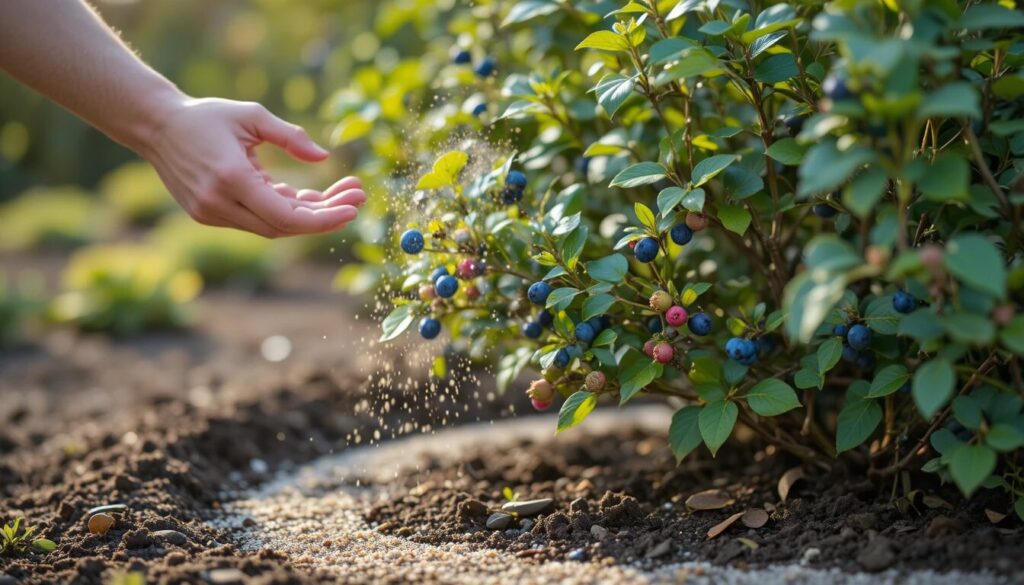
Blueberries have acidic soil preferences and respond well to fertilizers formulated for acid-loving plants (azaleas, rhododendrons). Key fertilizer considerations:
- Nitrogen source: Use ammonium-based nitrogen (ammonium sulfate, ammonium nitrate) or urea in acidic soils. These supplies favor lower pH and are more readily used by blueberries than nitrate-only formulas.
- Acidifying fertilizers: Products like ammonium sulfate or fertilizers labeled for “acid-loving plants” help maintain pH and nutrient availability.
- Balanced micronutrients: Blueberries sometimes show deficiencies in iron, manganese, or magnesium on higher-pH soils; choose products or soil amendments that address these deficiencies if needed.
- Slow-release vs. quick-release: Slow-release nitrogen (sulfur-coated urea, polymer-coated fertilizers) gives prolonged feeding and reduces leaching; water-soluble fertilizers work well for quick correction and container-grown plants.
Recommended Fertilizer Types (Common Options)
- Ammonium sulfate (21-0-0, with sulfate that acidifies): Widely recommended for garden blueberries.
- Ammonium nitrate (33-0-0): Effective nitrogen source but less acidifying than ammonium sulfate.
- Urea (46-0-0): High nitrogen concentration; can be used but may volatilize if not incorporated or watered in.
- 10-10-10 or 12-4-8 blends labeled for azaleas/blueberries: Provide a N-P-K balance for soils that need phosphorus or potassium supplementation.
- Organic options: Blood meal, cottonseed meal, feather meal, and fish emulsion supply nitrogen and are favored by organic gardeners; they tend to be slower-release.
How Much Fertilizer to Apply (General Guidelines)
Fertilizer rates depend on plant age, variety, and soil fertility, so use these beginner-friendly guidelines and adjust based on plant response and soil tests. In the planting year (year 1), apply 1/4 to 1/2 cup of 10-10-10 per plant, split into two applications (early spring and 6–8 weeks later), or about 1/4 cup of blood meal or cottonseed meal per plant; keep fertilizer away from stems and lightly incorporate it into the topsoil.
For establishing plants in years 2–3, use roughly 1/2 to 3/4 cup of 10-10-10 per bush per year in split applications, or an equivalent amount of nitrogen from other sources. Mature bushes (4+ years) generally need about 1 to 1.5 cups of 10-10-10 (or equivalent nitrogen) per plant annually, split half in early spring and half in late spring/early summer.
These figures are approximate—soil and foliar tests are the most reliable way to tailor amounts—and overfertilizing can cause excessive vegetative growth at the expense of fruiting and can weaken plants.
Application Methods
- Broadcast/topdress: Spread fertilizer evenly in a ring around the bush’s dripline, avoiding direct contact with stms. Lightly work into the top inch of soil or leave on the surface and water in.
- Side-dressing: Apply fertilizer in a narrow band 6–12 inches from the stem and water well. Useful for mature plant rows.
- Container plants: Use lower rates and water-soluble fertilizer according to package instructions; feed more frequently at lower rates.
- Liquid feeding: Water-soluble fertilizers (e.g., 20-20-20 diluted) can be used for quick nutrient correction. Fish emulsion or kelp can supply micronutrients and a gentler nitrogen source.
Soil pH and Amendments
Test soil pH
Blueberries require an acidic soil pH of about 4.5–5.5. If pH is above this range, nutrient uptake—especially of iron and manganese—declines even when fertilizer is applied.
Lower soil pH
Use elemental sulfur, iron sulfate, or acidifying fertilizers to lower pH. Incorporate a sulfur amendment months before planting or apply in the fall to allow time for the soil to react.
Add organic matter
Amend soil with peat moss, pine needles, or composted bark to improve acidity, soil structure, and moisture retention. Avoid alkaline, lime-rich composts, as they can raise pH.
Fertilizing for Different Plant Stages

- Newly planted bushes: Light, frequent feeding helps establishment—avoid heavy initial fertilizer that can burn roots.
- Young, non-fruiting plants (years 1–2): Focus on promoting root and shoot development with modest nitrogen.
- Fruit-bearing plants: Increase nutrient support in early spring and provide moderate postharvest feeding to replenish reserves without pushing late-season growth.
- Older plants: Maintain steady, measured feeding to sustain yield and plant health; consider pruning to redirect energy and reduce heavy fertilizer needs.
Signs of Nutritional Problems and How to Respond
Nitrogen deficiency shows as pale green leaves, reduced growth, and fewer flowers; correct it with ammonium sulfate or a quick organic nitrogen source. Iron chlorosis, yellowing leaves with green veins, is often caused by high soil pH; lower the pH or apply an iron chelate as a foliar treatment.
Magnesium deficiency produces interveinal chlorosis on older leaves and can be corrected with Epsom salts (magnesium sulfate) applied to the soil or as a foliar spray. Overfertilization causes excessive soft growth, reduced fruiting, or leaf burn; if that happens, flush the soil with water and reduce the next application rates.
Common Mistakes Beginners Make
- Applying too much fertilizer in fall: Late-feeding stimulates tender growth that may not harden off before winter, increasing winter kill.
- Using nitrate-only fertilizers: Nitrate N (NO3-) is less desirable for blueberries than ammonium forms and can raise soil pH over time.
- Neglecting soil pH testing: Without addressing pH, fertilizer applications may be ineffective or cause hidden deficiencies.
- Placing fertilizer too close to the stem: Can burn roots—always apply in a ring or band away from the crown.
- Ignoring mulch and organic matter: Mulch conserves moisture and acidity; neglecting it reduces nutrient efficiency.
Fertilizer Timing and Rates
| Plant Stage | Timing | Example Fertilizer & Rate (per plant) |
| Newly planted (yr1) | Early spring & mid-season | 1/4–1/2 cup 10-10-10 split; or 1/4 cup blood meal |
| Establishing (yrs2–3) | Early spring + repeat 6–8 wks | 1/2–3/4 cup 10-10-10 total, split applications |
| Mature (4+ yrs) | Early spring + late spring | 1–1.5 cups 10-10-10 total, split; or 1/2–1 cup ammonium sulfate |
| Container plants | Early spring to mid-summer | Liquid feed every 2–4 weeks, dilute per label |
Practical Step-by-Step Fertilizing Routine (Beginner-Friendly)
- Test soil pH and nutrient levels every 2–3 years.
- In early spring (when buds begin to swell), apply half of the season’s fertilizer in a ring around the plant 6–12 inches from the stem, avoiding direct stem contact. Water thoroughly.
- Watch growth for 4–6 weeks; if plants show healthy, steady growth and dark green leaves, you may skip the second application. If growth lags, apply the remaining half of the fertilizer.
- Immediately after harvest, apply a modest side-dressing to help plants replenish reserves, but keep it lighter than spring rates.
- Maintain 2–4 inches of acidic organic mulch (pine needles, wood chips, shredded bark) and replenish as needed to protect roots and conserve acidity and moisture.
Regional and Variety Considerations
In colder, northern climates, avoid late-summer feeding to prevent tender new growth from being susceptible to frost. At the same time, in warmer southern areas, the fertilizing window may extend later into the season—always follow local extension service guidance for your region.
Different blueberry types have different needs: lowbush and rabbiteye varieties often tolerate higher soil pH and have distinct nutrient requirements compared with highbush types, so check cultivar-specific recommendations. Container-grown plants need smaller, more frequent feedings than in-ground bushes because pots hold less soil and nutrients leach more quickly.
When to Call a Professional
- Repeated nutrient problems despite proper fertilization and pH adjustment.
- Widespread pest, disease, or unexplained decline in multiple plants.
- Large or commercial plantings where soil management and fertilization plans need to be optimized for yield and sustainability.
Conclusion
Knowing when to fertilize blueberries requires balancing timing, fertilizer choice, plant stage, and soil conditions. For beginners, the simplest, most effective practice is to test your soil, apply a measured early-spring dose of
Avoid late-season heavy feeding, maintain acidic soil through amendments and mulch, and watch your plants to fine-tune rates. With attentive care, blueberries will reward you with vibrant foliage and plentiful harvests for years to come.
Want to know about Types of Grass: Expert Insights on Climate Adaptation, Root Strength, Soil Needs, and Lawn Performance Check out our Gardening category.
FAQs
Early spring (just after bud swell/at leaf-out) is the most important application and should supply about 50–70% of the season’s nitrogen. Apply a light follow-up 4–6 weeks later only if growth lags, and a modest postharvest dressing. Avoid late-summer or fall fertilizing.
Ammonium-based nitrogen (ammonium sulfate, ammonium nitrate) or urea is preferred over nitrate-only fertilizers because ammonium helps maintain soil acidity that blueberries need.
Rates vary by age: year 1 ~1/4–1/2 cup 10-10-10 split into two applications; years 2–3 ~1/2–3/4 cup total; mature bushes ~1–1.5 cups total per year (split). Adjust using soil tests and follow product labels.
That’s typical iron chlorosis, usually caused by too-high soil pH. Lower soil pH with sulfur or apply iron chelate as a foliar treatment.