

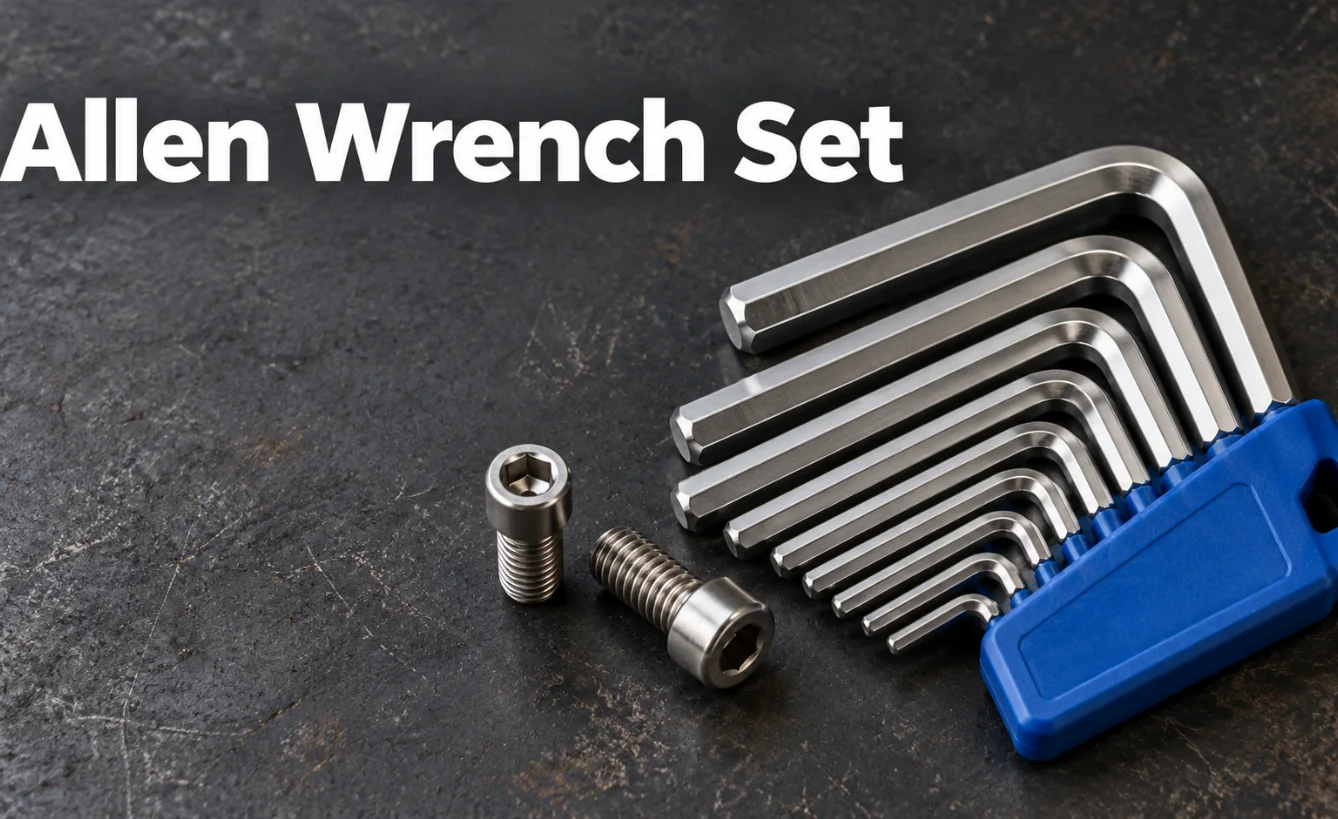
An Allen wrench set is one of those small tool purchases that can solve dozens of household problems. Hex fasteners appear on furniture, bicycles, appliances, fixtures, exercise equipment, and many DIY projects. The right set gives you useful sizes without filling your toolbox with duplicate tools.
For most U.S. households, a set containing both SAE and metric sizes offers the widest coverage. Long-arm L-keys work well for general repairs, while ball ends improve access around obstacles. Buyers should also consider steel quality, clear size markings, comfortable handling, and organized storage.
Quick answer: Choose a set with both SAE and metric sizes for broad household coverage. Long-arm L-keys provide useful reach and torque, while ball ends help with angled access. For frequent repair work, prioritize accurate tips, durable steel, clear size markings, and a holder that keeps your keys organized.
Allen Wrench Set Quick Buying Guide
| Feature | Good Choice for Most U.S. Homes |
|---|---|
| Measurement system | SAE and metric combination |
| General design | Long-arm L-key |
| Tip style | Straight end plus ball end |
| Common metric range | About 1.5 mm to 10 mm |
| Common SAE range | About 1/16 inch to 3/8 inch |
| Material | Quality alloy steel with protective finish |
| Storage | Labeled holder or case |
| Best use | Furniture, bicycles, fixtures, appliances, DIY repairs |
| Budget level | Basic for occasional work; midrange for regular DIY use |
What Is an Allen Wrench?
An Allen wrench is a simple tool designed for fasteners with an internal hexagonal socket. It is also commonly called a hex key in hardware stores and tool catalogs. The basic design uses a six-sided metal shaft that fits directly inside the fastener. Many versions use the familiar L-shape because it provides two working positions. The long side provides reach, while the short side offers useful leverage.
Manufacturers also offer T-handles, folding tools, socket bits, and other variations. The correct fit matters because the tool transfers force through six contact surfaces. A poorly fitting key can damage the fastener before the job is complete. Starting with the correct measurement system and size reduces that risk.
SAE or Metric: Which Sizes Should You Buy?
Many U.S. homeowners encounter both SAE and metric fasteners. Domestic hardware may use inch-based sizes, while furniture, bicycles, electronics, and imported products often use metric hardware. A combination kit therefore makes sense for a general household toolbox. Metric collections commonly include sizes from roughly 1.5 mm through 10 mm.
SAE collections often cover sizes from approximately 1/16 inch through 3/8 inch. Exact ranges vary by manufacturer, so check the size list before buying. Never substitute the nearest metric size for an SAE fastener, or vice versa. Two sizes can look close but still fit the socket poorly. That loose fit concentrates pressure near the corners and increases the chance of rounding them.
Allen Wrench Set Types Compared
Different handle designs change how easily you can reach, turn, and store the tool. No single style handles every task better than the others. Your usual projects should determine which design deserves space in your toolbox.
| Type | Main Strength | Main Limitation | Best For |
|---|---|---|---|
| Long-arm L-key | Reach and useful leverage | Slower than handled designs | General household repairs |
| Ball-end L-key | Angled access | Lower contact area at an angle | Tight or obstructed spaces |
| T-handle | Comfortable and quick turning | Takes more storage space | Repeated workshop use |
| Folding set | Compact and difficult to lose | Limited access in narrow areas | Cars, drawers, portable kits |
| Hex bit or socket set | Works with drivers or ratchets | Requires another handle | Mechanical and higher-torque work |
Long-Arm L-Keys
L-shaped tools are the most versatile choice for a general homeowner. Their simple construction works in furniture assembly, maintenance jobs, and equipment adjustments. Long versions also reach recessed fasteners more easily than short keys.
Pros
- Compact and simple
- Good reach
- Useful leverage
- Easy to organize by size
Cons
- Less comfortable during repetitive work
- Individual keys can be misplaced
Ball-End Hex Keys
A ball-shaped tip lets the key engage a fastener from a slight angle. That feature helps when surrounding parts prevent perfectly straight access. Current U.S. retail sets commonly combine a ball end with a conventional straight end. The ball end usually handles access and quick turning rather than maximum tightening force.
The straight end gives more surface contact inside the fastener. Use that end when breaking a tight fastener loose or applying final torque.
Pros
- Easier access around obstacles.
- Helpful in recessed locations.
- Convenient for furniture and bicycle work.
Cons
- Not intended for maximum torque at an angle
- Usually costs more than basic straight-tip tools
T-Handle Sets
T-handles give your hand a wider gripping surface than plain L-shaped keys. They can make repeated fastener work faster and more comfortable. Mechanics and frequent DIY users often appreciate that extra control. Their main disadvantage is storage space. A complete T-handle collection occupies far more room than nested L-keys. Homeowners with limited toolbox space may prefer conventional keys instead.
Folding Hex Keys
Folding sets keep several sizes attached to one handle. Their pocket-friendly design prevents individual keys from disappearing around a garage or vehicle. They work well as a secondary tool for quick repairs. The fixed handle can become a problem in restricted spaces. You cannot separate one key from the body for additional reach. A folding design therefore favors portability over maximum access.
How to Choose the Right Allen Wrench Set
Start by considering the equipment you already maintain. Furniture assembly and general home repairs usually favor a broad SAE and metric collection. Bicycle or machinery work may call for longer tools, ball ends, or specialized handle designs. Next, examine how clearly each size is marked. Tiny markings become frustrating when several keys look almost identical. A labeled holder also makes missing tools obvious before you finish the job.
Material quality matters, but the alloy name alone doesn’t tell the whole story. Chrome-vanadium and S2 alloy steel both appear in reputable tools. Accurate machining, heat treatment, tip geometry, and finish can matter as much as the material label. Finally, inspect the working ends when possible. Edges should look clean and properly formed, not rounded from poor manufacturing. Better tip fit helps transfer force without unnecessary movement inside the socket.
Ball End or Straight End?
Straight tips provide full engagement with the sides of a hex socket. They are the safer option when a fastener needs significant turning force. They also work well when the tool can approach the screw directly. Ball ends trade some contact area for easier access. They can enter a socket at an angle when pipes, frames, panels, or nearby parts block straight entry.
This makes them useful for bicycles, furniture frames, and machinery. A combination design offers homeowners the most flexibility. Use the ball end for convenient positioning and lighter turning. Switch to the straight end when the fastener becomes tight.
How Much Should You Spend?
Occasional furniture assembly does not require an expensive professional collection. A basic kit can handle light household use when the tips fit accurately. Spending more becomes worthwhile when you use these tools every week. Midrange sets usually improve storage, reach, finish, size markings, and overall fit. Professional tools may add better handles, specialty sizes, stronger warranty support, or more refined manufacturing.
Those advantages matter more during repeated workshop use than occasional household repairs. The cheapest option is not always the least expensive over time. Poorly fitting tips can damage fasteners or wear prematurely. A reasonably priced, complete set from a recognized tool maker is often the practical middle ground.
How to Avoid Stripping Hex Fasteners
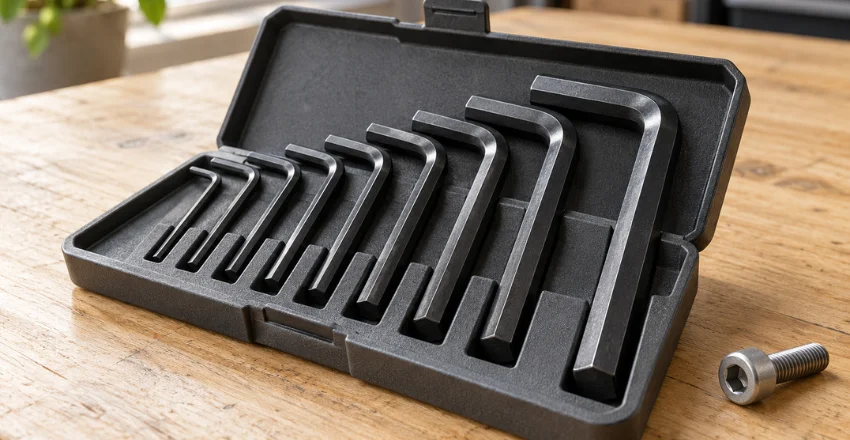
First, remove dirt or debris from the socket before inserting the tool. Push the key fully into the fastener before applying force. Partial engagement places excessive pressure near the top edges. Keep the tool aligned as straight as the available space allows. Stop if the key rocks noticeably inside the socket. That movement can indicate the wrong size or a fastener that is already damaged.
Use controlled pressure rather than sudden force. For difficult fasteners, choose the straight end rather than an angled ball end. Replace badly worn keys because rounded tool edges make future damage more likely. For broader household repair planning, Housnyst’s washing machine DIY checks guide shows why choosing suitable hand tools matters for safe home repairs.
Larger projects, including DIY door installation or building a sauna at home, require the same careful approach to tool selection.
A Practical Homeowner Setup
A homeowner doesn’t need every hex tool design. One quality combination set can cover furniture, shelving, exercise equipment, bicycles, fixtures, and routine adjustments. A second specialized set only makes sense when repeated projects demand it. Start with long-arm SAE and metric L-keys stored in labeled holders. Ball ends add convenience when the price difference is reasonable.
You can later add T-handles or socket bits for frequent mechanical work. This approach avoids buying several overlapping collections at once. It also keeps the toolbox easier to organize. More tools help only when each one solves a real access or torque problem.
Our Verdict: What Type Should Most U.S. Homeowners Buy?
For most households, the strongest all-purpose choice is a long-arm SAE and metric L-key combination set. Look for clear markings, secure storage, accurate tips, and both straight and ball-end working options. This configuration covers more common projects without requiring several separate kits.
Choose T-handles when you repeatedly work on bicycles, machinery, or workshop projects. Pick a folding set when portability matters more than reach. Hex bit sockets make more sense when your work already involves ratchets or compatible hand drivers. The right choice isn’t the set with the highest piece count.
It is the collection containing the sizes and shapes your projects require. Good fit and sensible organization matter more than unnecessary extras.
Frequently Asked Questions
What sizes should an Allen wrench set include?
A general-purpose household collection should contain both small and larger common sizes. Metric sizes from about 1.5 mm to 10 mm cover many household products. SAE coverage from roughly 1/16 inch through 3/8 inch adds useful compatibility with inch-based hardware.
Are Allen wrenches and hex keys the same thing?
In everyday U.S. use, the terms usually describe the same type of tool. Both fit fasteners containing a six-sided internal socket. Tool manufacturers and retailers commonly use both names.
Should I buy metric or SAE hex keys?
Buy both if you maintain different household products and equipment. Modern homes can contain inch-based and metric fasteners at the same time. A combination set prevents unsafe size substitutions.
Are ball-end hex keys better?
Ball ends are better for angled access, but not for every task. Straight ends provide more contact when higher turning force is needed. A tool offering both ends gives you more flexibility.
Can I use a hex key with a drill?
Only use driver-compatible hex bits with a drill or power driver. Ordinary L-keys are designed for hand use and shouldn’t be improvised as powered bits. Keep torque controlled because small hex fasteners can strip quickly.
Why does my hex key keep slipping?
The tool may be the wrong size, worn, or incompletely inserted. The fastener itself may also have damaged internal corners. Clean the socket, confirm the exact size, and stop applying force if the tool keeps slipping.
Choose Fit Before Piece Count
A useful tool collection should make repairs easier, not create more choices to sort through. Focus on correct SAE and metric coverage, accurate tips, useful reach, and organized storage. Those features matter during real household work. For most U.S. homeowners, a long-arm combination set with straight and ball ends provides an excellent starting point.
Add specialized handles only when your projects justify them. With the right Allen wrench set, you will be prepared for many furniture, bicycle, fixture, and household repair jobs.