

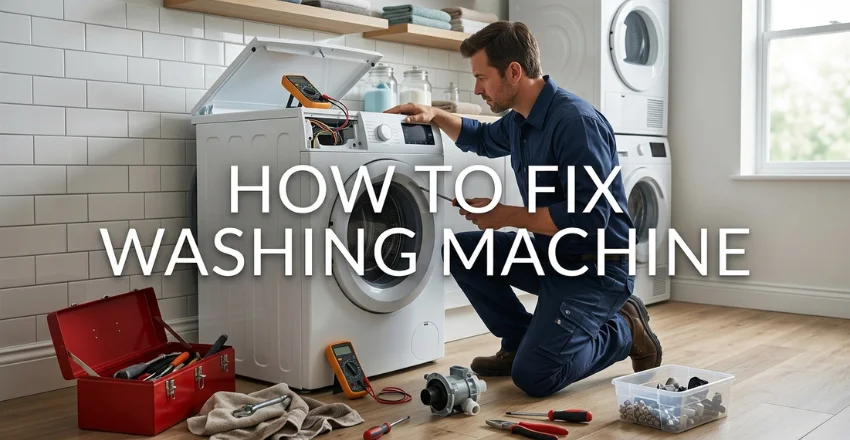
A broken washer can quickly stop a household, but many common faults have simple, low-risk checks. This guide explains how to fix washing machine problems without guessing at parts or opening live electrical systems. Start with power, water flow, drainage, load balance, and visible hoses before calling a technician.
Quick answer: Unplug the washer and close both water valves. Check the owner’s manual, model number, and displayed error code before moving parts. Then inspect the load, outlet, supply hoses, drain hose, and accessible filter. Stop if you see damaged wiring, smell burning, notice major leaks, or suspect an internal electrical fault.
| Washer symptom | First checks | When to stop DIY |
|---|---|---|
| Won’t start | Plug, breaker, controls, door or lid | Cord damage or repeated breaker trips |
| Won’t drain | Drain hose, filter, household drain | Pump or electrical failure |
| Won’t spin | Drainage, load balance, level | Grinding, motor trouble, damaged bearings |
| Leaking | Hoses, connections, door seal, filter cap | Major or unexplained water flow |
| Loud vibration | Load placement, feet, floor level | Metallic grinding or damaged suspension |
| Clothes stay wet | Drainage, load size, spin setting | Problem continues after basic checks |
Current manufacturer troubleshooting follows this symptom-first approach. Whirlpool, Maytag, LG, and Samsung recommend simple checks before replacing parts or calling a professional. Model-specific instructions still take priority because filter access and controls vary.
TL;DR: Most washer failures involve power, water movement, balance, or a worn component. Diagnose the symptom before buying parts, and follow your model’s manual for filter access. A persistent breaker trip, burning smell, grinding noise, or severe leak deserves professional service.
Safety Comes Before Troubleshooting
Washers combine electricity, moving parts, and pressurized water, so preparation matters. Unplug the appliance before removing covers or handling an accessible filter. Close both supply valves when checking hoses, leaks, or fittings.
Keep standing water away from plugs, outlets, and power cords. Never bypass a lid lock, door switch, fuse, or safety interlock. Stop immediately when the cord, plug, or internal wiring appears damaged.
For an active leak, contain the water before diagnosing the appliance. Housnyst’s guide to finding the source of sudden water leaks explains how to limit household water damage. Shut the supply valves if water continues entering the area.
What You’ll Need Before You Start
| Item | Why it helps |
|---|---|
| Owner’s manual or model number | Confirms model-specific procedures |
| Towels | Catches residual water |
| Shallow pan or bucket | Collects water from filters and hoses |
| Flashlight | Helps inspect hoses and connections |
| Bubble level | Checks appliance stability |
| Basic screwdriver | Only for panels the manual permits users to access |
| Phone camera | Records error codes and part locations |
You do not need advanced electrical tools for the checks below. Internal voltage testing adds risk and often requires model-specific technical information. Leave control boards, motors, and live electrical diagnosis to qualified technicians.
How to Fix Washing Machine Problems in 8 Safe Steps
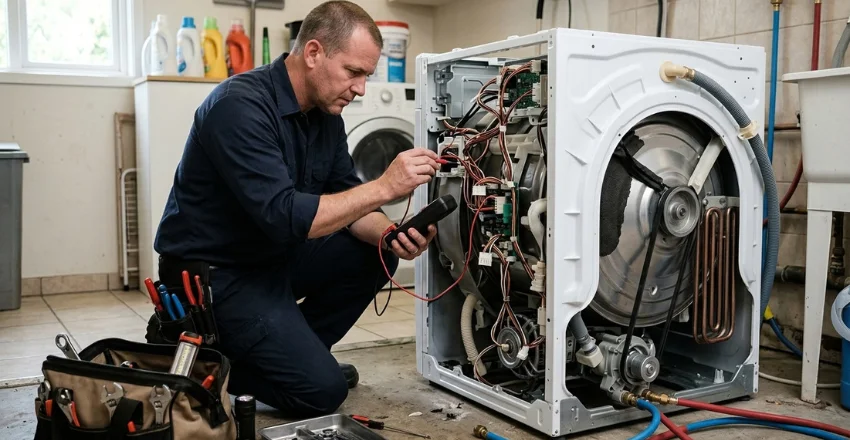
- Record the model number and error code. Photograph the display before resetting anything. Search the manufacturer’s manual for that exact code. Error information can narrow the fault before you move the appliance.
- Make the work area safe. Unplug the washer before touching hoses, filters, or removable panels. Close both water valves if you will inspect plumbing connections. Keep towels ready for trapped water.
- Check power and controls. Confirm the plug is fully seated and inspect the household breaker. Verify that Control Lock or Delay Start is not active. Make sure the door or lid closes normally without forcing it.
- Verify the water supply. Confirm both supply valves are open during normal operation. Check inlet hoses for kinks, crushing, or visible damage. Follow the manual before cleaning inlet screens or disconnecting hoses.
- Clear the drain path. First, look for a crushed or kinked drain hose. Clean an accessible pump filter only when your manual provides that procedure. LG notes that filter designs differ between front-load and top-load models. For household drainage problems, see Housnyst’s drain cleanout guide.
- Correct balance and spin problems. Redistribute heavy items and remove excess laundry before retrying the spin cycle. Confirm all washer feet sit firmly on the floor. Samsung and Whirlpool both identify balance problems as common causes of poor spinning.
- Trace visible leaks and unusual noises. Inspect fill hoses, drain connections, the front-door gasket, and accessible filter caps. Remove visible debris from a front-loader gasket without damaging it. Stop if you notice grinding, burning odors, or water reaching electrical components.
- Run one controlled test cycle. Restore water and power only after you secure every opened connection. Watch the washer through filling, draining, and spinning. Stop the test if the original problem returns or a new symptom appears.
Washer Won’t Start
Begin with the power source, controls, and door or lid position. A machine can have power yet refuse a cycle when its safety lock cannot engage. Manufacturer instructions should guide any diagnosis beyond these visible checks.
A brief power cycle may clear an occasional electronic glitch. Samsung recommends disconnecting power for roughly one to five minutes when a reset is appropriate. Recurring errors still require troubleshooting rather than repeated resets.
Washer Won’t Drain
A kinked drain hose can stop water movement without any failed component. Some front-load machines also have user-accessible pump filters that collect coins, lint, and other debris. Clean that filter only according to your model’s instructions.
Drainage problems can also come from the household plumbing instead of the appliance. Water backing up at the standpipe suggests the drain deserves attention. Don’t replace a pump until you have ruled out simple obstructions and installation issues.
Washer Won’t Spin or Leaves Clothes Wet
Check drainage before assuming the motor has failed. Many washers will not enter high-speed spin when water remains inside the tub. An unbalanced load or incorrect leveling can also reduce spin performance.
Redistribute bulky laundry and retry the correct spin setting. Make sure all feet contact the floor before running another test. Keeping space around the appliance also makes inspections easier; Housnyst covers practical laundry room organization ideas.
Washer Is Leaking
Start with the visible water path rather than removing panels. Check supply connections, drain hoses, door seals, and accessible filter caps. Whirlpool and Maytag identify hose connections and front-loader seals among common leak sources.
Excess detergent can also create suds that interfere with normal operation. Use the detergent type and quantity specified by your appliance manufacturer. A torn gasket, damaged hose, or unexplained internal leak usually needs repair.
When Should You Call a Washing Machine Repair Technician?
Call a technician when basic external checks do not isolate the problem. Burning smells, repeated breaker trips, serious leaks, and metallic grinding deserve prompt attention. Motor, control-board, bearing, and internal wiring repairs also exceed sensible beginner DIY work.
U.S. pricing varies by brand, location, and failed component. Angi’s July 2026 data places typical washer repairs between $180 and $250, with an average near $220. Major motor or control repairs can cost considerably more.
Repair value also depends on the appliance’s condition and replacement price. Angi describes the 50% rule as a useful guideline when comparing repair against replacement. Check warranty coverage before authorizing work or opening components that could affect coverage.
How to Reduce Future Washer Problems
Keep hoses visible enough to inspect and avoid pushing the appliance tightly against plumbing. Clean user-serviceable filters at the interval your manufacturer specifies. Check pockets before washing because small objects can reach pumps and filters.
Use correct detergent and avoid routinely overloading the drum. Wipe front-loader gaskets so debris does not interfere with sealing. For more appliance maintenance topics, browse Housnyst’s Home Appliances guides.
Frequently Asked Questions
Can I learn how to fix washing machine problems safely without a technician?
Yes, several external checks suit many homeowners. These include checking power, hoses, drainage, loading, leveling, and approved user filters. Internal electrical, motor, bearing, and control-board work is safer with a trained technician.
Why won’t my washer spin when water is still inside?
Drainage normally happens before high-speed spinning. A blocked hose or filter can therefore appear to be a spin problem. Clear the approved drainage checks before diagnosing drive components.
How often should I clean the washer pump filter?
Follow your manufacturer’s schedule because designs differ. LG recommends cleaning the accessible drain filter monthly on applicable front-load models. Some top-load washers do not have the same user-serviceable filter.
Should I reset the washer when an error code appears?
Record the error code before resetting the machine. A reset can hide useful diagnostic information without correcting the underlying fault. Troubleshoot recurring codes using the manufacturer’s instructions or a qualified service technician.
Get the Washer Running Safely Again
Start with the cheapest, safest options before ordering replacement parts. Power, water flow, drainage, balance, and visible connections explain many common symptoms. If those checks don’t help, a model-specific professional diagnosis can prevent wasted parts and further damage.