
Swedish Death Cleaning, known as “döstädning,” is a mindful and practical approach to organizing and decluttering possessions to simplify life and reduce the burden on loved ones in the future. Popularized by author Margareta Magnusson, this concept goes beyond ordinary cleaning by encouraging individuals to reflect on their belongings, emotional attachments, and long-term responsibility.
It is not a negative or morbid practice, but rather a life philosophy that promotes intentional living, emotional clarity, and meaningful simplicity. By understanding its origin, philosophy, working process, benefits, emotional impact, and challenges, individuals can learn how this cleaning helps create a more organized, peaceful, and purposeful lifestyle.
| Category | Details |
| Concept Name | Swedish Death Cleaning (Döstädning) |
| Definition | A mindful decluttering practice focused on simplifying life and reducing the burden on loved ones. |
| Origin | Rooted in Swedish culture and Scandinavian minimalism |
| Popularized By | Margareta Magnusson |
| Core Philosophy | Intentional living, emotional awareness, and responsibility toward family |
| Main Idea | Keep only meaningful items and remove unnecessary possessions. |
| Process | Starts with simple items and gradually moves to sentimental belongings |
| Evaluation Criteria | Usefulness, emotional value, and necessity |
| Key Benefits | Organized living, reduced stress, family relief, mindful consumption |
| Emotional Impact | Emotional reflection, relief, nostalgia, and stronger family connections |
| Challenges | Emotional difficulty, time-consuming process, attachment to memories |
| Best For | Older adults, but also useful for younger individuals and minimalists |
| Overall Goal | To create a simpler, more intentional, and meaningful life |
Swedish Death Cleaning
Swedish Death Cleaning, known in Swedish as “döstädning,” is a thoughtful and practical approach to organizing your belongings so that your life becomes simpler and your loved ones are not burdened after your passing. The concept gained international attention through author Margareta Magnusson, who introduced it as a meaningful way of decluttering life with awareness and responsibility.
Despite its name, cleaning is not a gloomy or morbid practice; instead, it is a philosophy of living more intentionally, letting go of unnecessary possessions, and focusing on what truly matters in life.
Origin
Cultural Roots in Sweden
Swedish Death Cleaning originates from Scandinavian cultural values that emphasize simplicity, minimalism, and practicality. In Sweden, there has long been an appreciation for organized living spaces and avoiding unnecessary accumulation of items. This cultural mindset naturally contributed to the development of döstädning as a lifestyle practice.
Popularization Through Literature
Although the practice existed informally for many years, it became widely recognized globally after Margareta Magnusson introduced it in her book. She described it as something often undertaken by older adults who wish to reduce the burden placed on their families after death. However, her interpretation also highlights that it is equally about improving life while still alive.
Philosophy Behind This Concept
- Living with Intention: The core philosophy behind this concept is intentional living. It encourages individuals to evaluate the purpose of every item they own and ask whether it truly adds value to their life. This mindset helps reduce unnecessary clutter and emotional attachment to unused possessions.
- Reducing Burden on Loved Ones: Another important philosophical aspect is responsibility toward family and friends. The idea is that everyone leaves behind belongings, and those items often cause emotional and physical stress for loved ones. By organizing and reducing possessions in advance, individuals show care and consideration for those they leave behind.
- Emotional Acceptance of Impermanence: Swedish Death Cleaning also promotes acceptance of life’s impermanence. It gently encourages people to acknowledge that life is finite and, instead of avoiding this truth, to use it as motivation to simplify their surroundings and focus on meaningful experiences.
How This Cleaning Works?
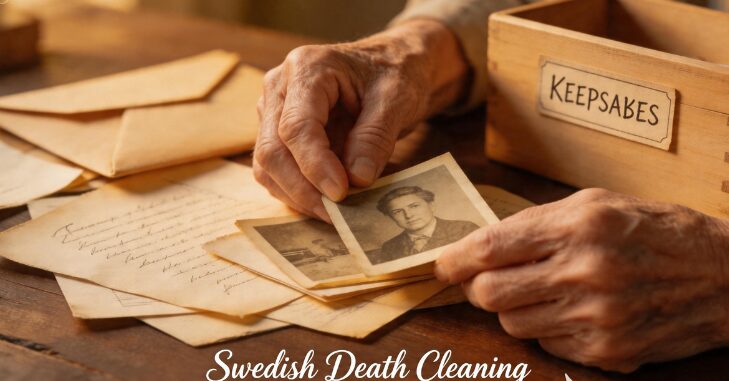
The process of Swedish Death Cleaning starts with simple, less emotional items like clothes, books, and kitchen utensils, which are easier to sort and decide whether to keep or remove. Gradually, it moves toward sentimental belongings such as photographs and keepsakes that require more emotional reflection.
Each item is evaluated based on its usefulness, emotional value, and necessity, to keep only what truly matters while donating or discarding the rest. Family members are often involved to help share, preserve, or receive meaningful items and to ensure a smoother, more thoughtful process.
Benefits

Creating a Simpler Living Environment
One of the most immediate benefits is a cleaner and more organized home. Reducing unnecessary items creates physical space, making daily life easier and more comfortable.
Reducing Stress and Overwhelm
Clutter is often linked to mental stress and distraction. By removing excess belongings, individuals often experience a sense of calm and mental clarity.
Helping Loved Ones in the Future
A major benefit of this is the relief it provides to family members. Instead of dealing with overwhelming amounts of possessions during an emotional time, they are left with a manageable and meaningful collection of items.
Encouraging Mindful Consumption
This practice also encourages people to become more mindful about what they purchase in the future. When individuals understand that every item will eventually need to be sorted, they tend to avoid unnecessary buying.
Emotional Impact
- Facing Difficult Emotions: One of the most challenging aspects of Swedish Death Cleaning is confronting emotional attachments. Items often carry memories, and letting go of them can bring feelings of sadness or nostalgia.
- Emotional Relief and Freedom: Many people also experience emotional relief after decluttering. Letting go of unused or forgotten belongings can create a sense of freedom and lightness.
- Strengthening Family Connections: Involving family members in the process can also strengthen emotional bonds. Sharing stories behind objects often leads to meaningful conversations and a deeper understanding between generations.
Challenges
One of the biggest challenges is the emotional difficulty of parting with possessions. Many people struggle with the idea that items connected to memories may no longer be physically present. Swedish Death Cleaning is not a quick process. It requires time, patience, and consistent effort, especially when dealing with large households or decades of accumulated belongings.
Finding the balance between what is practical and what is emotionally meaningful can also be challenging. Some items may not be useful but still hold sentimental value, making decisions difficult.
Swedish Death Cleaning vs Regular Decluttering
- Purpose and DepthWhile regular decluttering focuses mainly on organization and space-saving, Swedish Death Cleaning goes deeper, addressing emotional attachments and long-term responsibility.
- Long-Term Perspective: Swedish Death Cleaning is future-oriented. It is not just about improving current living conditions but also about preparing for the future and reducing the burden on others.
- Emotional Reflection: Unlike typical cleaning methods, this practice involves emotional reflection and thoughtful decision-making, making it a more mindful and philosophical approach to possessions.
Who Should Practice?
Older Adults
It is especially beneficial for older adults who want to simplify their lives and prepare their belongings for future generations.
Younger Individuals
However, younger people can also benefit from this practice. It helps develop habits of mindful consumption, organization, and emotional awareness.
Anyone Seeking Simplicity
Ultimately, Swedish Death Cleaning is suitable for anyone who wants a more organized, peaceful, and intentional lifestyle.
Tips for Practicing

- Start Small and Simple: It is best to begin with small areas or categories rather than overwhelming yourself with the entire house at once.
- Be Patient with Yourself: Emotional attachments take time to process, so patience is essential during the journey.
- Focus on Meaningful Items: Instead of focusing on what to remove, focus on what truly adds value and meaning to your life.
Conclusion
Swedish Death Cleaning is more than just a method of decluttering; it is a thoughtful philosophy of life that encourages simplicity, mindfulness, and responsibility. Introduced to a global audience by Margareta Magnusson, this practice teaches individuals to evaluate their possessions, reduce unnecessary clutter, and prepare for the future in a meaningful way.
Beyond physical organization, it also offers emotional benefits such as clarity, peace of mind, and stronger family connections. While it can be emotionally challenging, especially when letting go of sentimental items, the long-term rewards are significant.
Ultimately, Swedish Death Cleaning is about living intentionally, appreciating what truly matters, and creating a life that is both simpler and more meaningful.
Apart from that, if you want to know more about Hardwood Floor Polish: How to Use, Types, Reviews, Cost, Applicator, DIY Solutions And Much More then visit our Cleaning category.
FAQs
There is no set time frame for how long it will take to Swedish death clean your house. It depends on the size of the home and the number of possessions that need to go. It may also take longer if you choose to go through the process slowly and thoroughly rather than rush it.
The 12:12:12 part refers to: 12 things to chuck, 12 items to donate, and 12 items to re-home in their appropriate location. It’s a fresh way to look at a room, paying special attention to the purpose of each item and its value to the space.
In Swedish death cleaning, the red dot system (aka the Röd Prick system) helps you decide what to keep and what to toss. The ideology is simple–put a red sticker on what you want to throw away, a green sticker on what you want to hold on to, and a yellow sticker on anything you’re unsure of.