

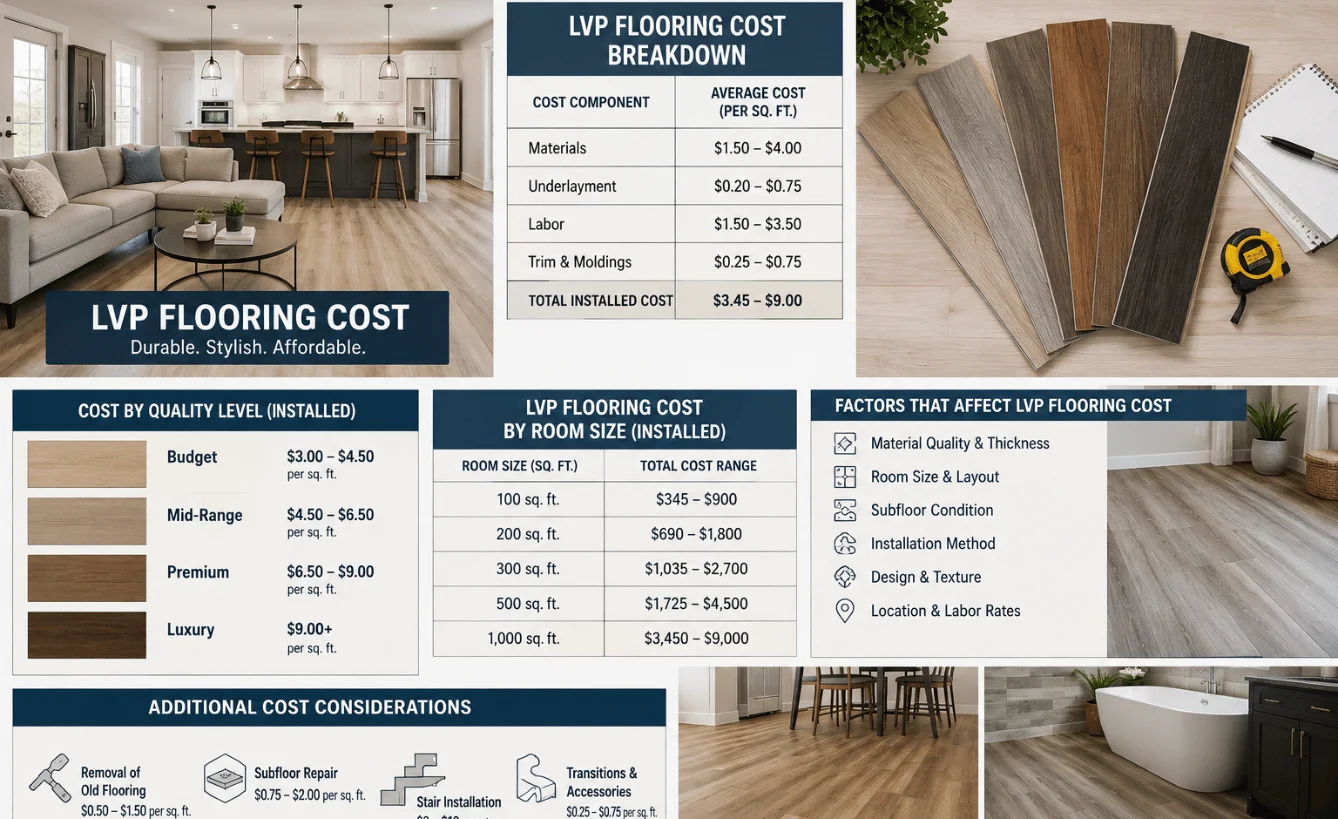
Short answer: For many U.S. projects, LVP flooring costs around $5 to $10 per square foot installed, with broader estimates ranging from $4 to $16. Material grade, labor rates, subfloor repair, old-floor removal, stairs, and trim can quickly change the final quote.
| Cost item | Typical price range |
|---|---|
| LVP material | About $2 to $7 per sq. ft. |
| Professional labor | About $2.50 to $6 per sq. ft. |
| Common installed budget | About $5 to $10 per sq. ft. |
| Broader installed range | About $4 to $16 per sq. ft. |
Material and labor ranges overlap because product quality, local wages, installation methods, and preparation needs vary. Home Depot currently lists many vinyl installations at $5 to $9 per square foot, while HomeAdvisor lists a common LVP/LVT range of $5 to $10 per square foot.
What Does LVP Flooring Cost Per Square Foot in 2026?
A useful starting budget is $5 to $10 per square foot for a professionally installed floor. That puts a straightforward 500-square-foot project at about $2,500 to $5,000 before unusual repairs or upgrades.
The full market range is wider. HomeGuide lists luxury vinyl plank and tile at roughly $4 to $16 per square foot installed. The range includes basic products at one end and premium flooring, higher labor rates, or more difficult preparation at the other end.
Material prices also vary. Today’s Homeowner reports that vinyl plank typically costs $2 to $7 per square foot, with premium products costing more. Current Home Depot listings show numerous 22-mil products priced close to $3 per square foot, illustrating how retail prices can sit well below the final installed cost.
What Makes One LVP Project Cost More Than Another?
Material quality and construction
Two planks that look similar can carry different prices. Wear-layer thickness, core construction, attached underlayment, texture, plank size, and design quality can all affect material cost. Premium products often use thicker wear layers, rigid SPC or WPC cores, improved imaging, and added backing. These features tend to push the price higher than that of entry-level planks.
Don’t choose based on thickness alone. Match the product to the room, traffic level, warranty, and manufacturer’s installation requirements.
Subfloor condition
A flooring quote can change once the old surface is removed. Uneven areas may need patching or leveling. Damaged sections may require repair before planks can be installed. Today’s Homeowner lists subfloor preparation as one of the main extra costs associated with vinyl plank projects. Old-floor removal can incur an additional charge when the new floor cannot be installed directly over the existing surface.
If you’re working over concrete, inspect the slab before ordering materials. Housnyst’s guide to concrete floor surfaces and preparation provides useful background on common issues with concrete floors.
Room shape, stairs, and finish work
A large rectangular room is normally simpler to install than several small rooms with closets, doorways, angles, and transitions. More cuts mean more labor and material waste. Stair treads, baseboards, quarter-round, transition strips, door trimming, furniture moving, and disposal may also appear as separate line items. Ask whether each item is included before comparing installers.
LVP Prices by Project Size
With an installed price range of $5 to $10, these simple room-size estimates give you a starting point. Actual bids can fall outside these ranges when extensive preparation or premium materials are involved.
| Floor area | Planning range |
| 100 sq. ft. | $500 to $1,000 |
| 200 sq. ft. | $1,000 to $2,000 |
| 500 sq. ft. | $2,500 to $5,000 |
| 750 sq. ft. | $3,750 to $7,500 |
| 1,000 sq. ft. | $5,000 to $10,000 |
Your purchase quantity will usually exceed the room’s measured area because cuts and unusable pieces create waste. Complicated layouts may require more extra material than simple rectangular rooms. For moisture-prone spaces, product choice matters as much as price. Housnyst’s laundry-room flooring guide discusses vinyl alongside other moisture-resistant flooring choices.
DIY vs. Professional Installation
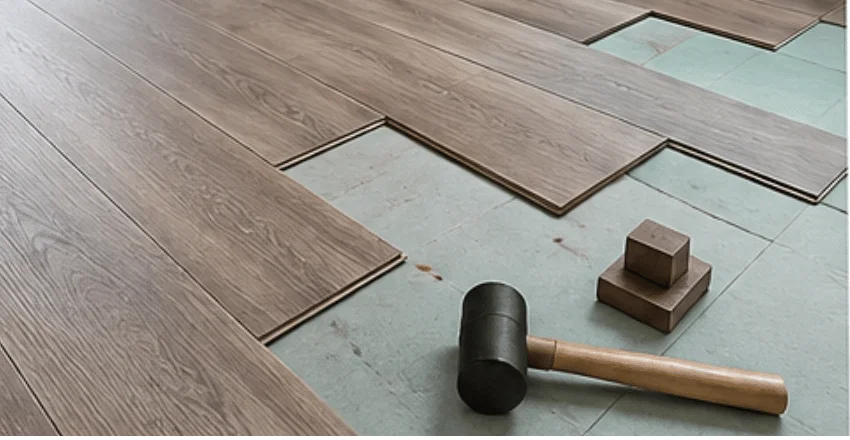
Click-lock luxury vinyl plank is popular with DIY renovators because the boards connect without traditional nails. That can eliminate a large part of the labor bill when the subfloor is ready and the room is straightforward.
Professional installation becomes more valuable when the project includes:
- Uneven or damaged subfloors.
- Several rooms and transitions.
- Stairs or complicated cuts.
- Existing flooring that needs demolition.
- Moisture concerns.
- Extensive trim or baseboard work.
HomeAdvisor estimates professional labor at around $2.50 to $6 per square foot, while Home Depot’s guide gives a narrower range of $3 to $5 per square foot for vinyl plank labor. Local contractor rates can differ. DIY also doesn’t make every other cost disappear. You may still need preparation materials, tools, underlayment, moldings, disposal, and extra flooring.
Hidden Costs to Put in Your Budget
The price of a plank on a store shelf isn’t the total project cost. Before approving a quote, check whether it covers:
- Old flooring removal and haul-away.
- Subfloor patching or leveling.
- Moisture testing or barriers when required.
- Underlayment if it isn’t attached.
- Baseboards or quarter-round.
- Transition pieces between rooms.
- Stair nosings or specialty trim.
- Furniture and appliance moving.
Removal and preparation are two areas where budgets often increase. Published cost guides treat both as separate expenses rather than as part of the plank price.
A Better Way to Compare Flooring Quotes
Don’t compare the bottom-line number until every installer is pricing the same scope of work.
Ask each contractor to show these six items separately:
- Flooring material and total square footage ordered.
- Labor for plank installation.
- Existing-floor removal.
- Subfloor preparation.
- Trim, transitions, and baseboards.
- Haul-away and final cleanup.
This prevents a $6-per-square-foot quote with several exclusions from looking cheaper than an $8 quote that includes the full scope.
It also gives you room to save intelligently. You might remove carpet yourself while leaving floor leveling and installation to a professional.
Is LVP a Good Choice for a Renovation Budget?
Luxury vinyl plank sits in a useful middle ground for homeowners who want a wood-look floor without moving into the price range of many hardwood options. Vinyl also works well in moisture-prone areas when the chosen product is approved for that location. Price shouldn’t be the only factor in your decision. Consider the condition of the subfloor, expected traffic, room moisture, warranty, and how long you plan to keep the floor.
If the project is part of preparing a property for sale, avoid assuming that every cosmetic upgrade will repay its full cost. Housnyst’s advice on renovating before listing a home recommends connecting each improvement to a real buyer concern.
How to Keep the Final Price Under Control
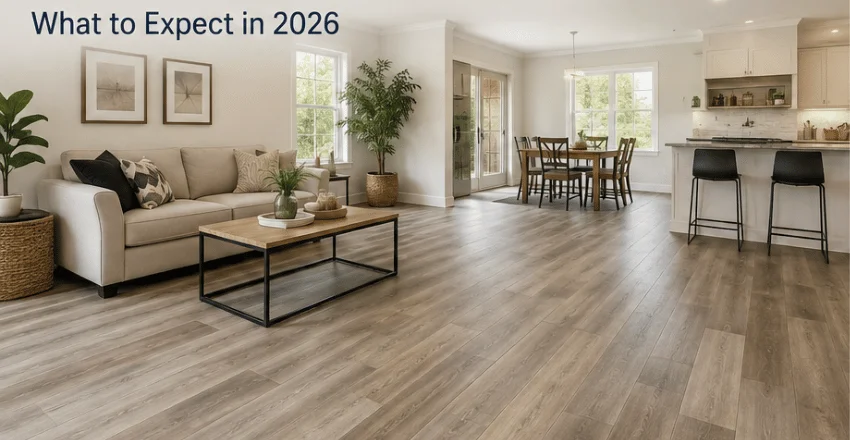
Start by measuring the actual flooring area rather than budgeting based on the home’s total square footage. Then inspect the existing floor before choosing the product.
You can also reduce surprises by:
- Requesting itemized estimates from at least three installers.
- Comparing the same plank specifications across retailers.
- Asking whether removal and leveling are included.
- Buying enough matching material at one time.
- Avoiding unnecessary premium features in low-traffic rooms.
- Handling safe, simple preparation yourself if you’re comfortable.
The cheapest material isn’t automatically the lowest-cost option for the project. A floor that needs extensive preparation or creates installation problems can erase the savings.
Plan the Quote Before You Pick the Plank
Measure the floor, inspect the subfloor, and decide which preparation work is necessary. Then request itemized quotes based on the same scope. That approach tells you whether a low bid represents genuine savings or simply leaves several costs for later. Once the scope is clear, you can choose a product and installer based on the full project price rather than the number printed on the flooring box.
Frequently Asked Questions
Using a common installed budget of $5 to $10 per square foot, 1,000 square feet may cost about $5,000 to $10,000. Complex preparation or premium materials can push the total higher. The Spruce has also estimated an average of nearly $6,700 for 1,000 square feet.
HomeAdvisor currently lists labor at around $2.50 to $6 per square foot. Home Depot estimates roughly $3 to $5 per square foot. Location and project complexity affect the final rate.
Sometimes. The existing surface must meet the flooring manufacturer’s requirements and be stable enough for the chosen installation system. Removal may still be necessary when the old surface is damaged, uneven, unsuitable, or causes height problems.
At $5 to $10 per square foot installed, a practical starting budget is $2,500 to $5,000. Keep a separate allowance for demolition, leveling, trim, or repairs that aren’t included in the base quote.