

Introduction
Concrete floors are used in both residential and business settings because of their reputation for longevity and ease of upkeep. However, they can often appear cold and uninviting. The right paint can transform these surfaces, enhancing their aesthetic appeal while providing protection. This article will explore the best paint for concrete floors, application methods, maintenance tips, and more.
| Paint Type | Best For | Key Features | Pros | Cons | Example Products |
| Epoxy Paint | High-traffic areas, garages | Durable, resistant to chemicals | Long-lasting, glossy finish, easy to clean | Requires careful preparation, costly | Rust-Oleum EpoxyShield |
| Acrylic Paint | Indoor concrete floors | Quick-drying, water-based | Affordable, easy application, low odor | Less durable than epoxy, it may chip | KILZ 1-Part Epoxy Acrylic |
| Polyurethane Paint | Outdoor concrete, industrial use | UV and weather-resistant | Highly durable, glossy or matte options | Expensive, strong odor during application | INSL-X Sure Step |
| Concrete Stain | Decorative concrete floors | Penetrates surface for a natural look | Customizable, low maintenance, unique design | Limited color options, not a true “paint.” | Valspar Concrete Stain |
| Latex Paint | Light-duty indoor applications | Flexible, low-VOC | Budget-friendly, easy cleanup | It is not as durable in high-traffic areas | BEHR Premium Porch & Patio |
Choosing the Right Paint Type for Durable Concrete Floors
When selecting the best paint for concrete floors, understanding the characteristics of different paint types is crucial for achieving long-lasting results. Epoxy-based paints are widely regarded as one of the most durable options for high-traffic areas like garage floors and workshops because they bond tightly to concrete and resist stains, abrasion, and moisture. For budget-friendly or lighter use areas, acrylic or latex paints offer easier application and quicker drying times, though they may require more frequent maintenance over time. There are also advanced options like polyaspartic and polyurea coatings, which cure quickly and provide strong resistance to wear and UV damage, making them ideal for both indoor and outdoor concrete surfaces. Selecting the right paint type based on traffic, location, and performance expectations ensures that the concrete floor not only looks good but also stands up to daily use.
Why Paint Concrete Floors?
Concrete is a porous material that can absorb moisture, leading to cracks, stains, and damage over time. Painting your concrete floors provides:
- Protection: A painted surface resists moisture, chemicals, and wear.
- Aesthetic Appeal: To fit your style, pick from various colors and finishes.
- Durability: Quality paint can prolong the life of your floors, especially in high-traffic areas.
Characteristics of Concrete
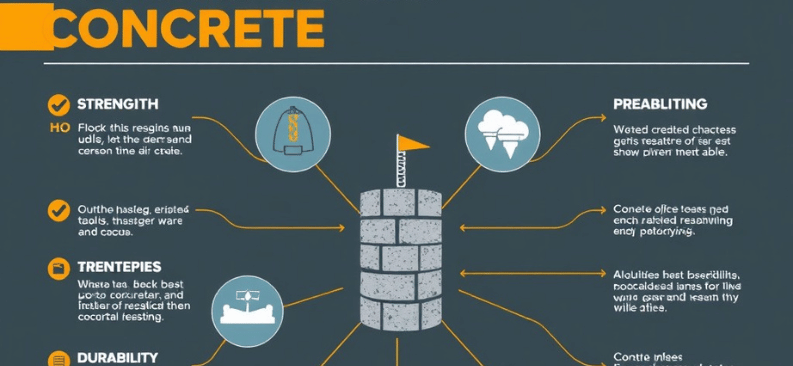
Concrete is a versatile material used in various applications, from driveways to living spaces. Its properties include:
- Durability: Because of its strength, concrete can support large weights.
- Low Maintenance: Unlike wood or carpet, concrete doesn’t harbor dust mites or allergens.
- Versatility: It can be stained, polished, or painted for different looks.
Common Issues with Concrete Floors
While concrete floors are durable, they can face challenges such as:
- Cracking: Over time, concrete can crack due to settling or temperature changes.
- Moisture: High humidity can lead to efflorescence, a white powdery residue.
Best Paint for Concrete Floors

1. Epoxy Paint
A resin and a hardener make up the two components of epoxy paint. They create a strong, durable coating suitable for high-traffic areas when mixed.
Benefits:
- Durability: Resistant to chemicals, stains, and abrasion.
- Adhesion: Forms a strong bond with the concrete surface, reducing the risk of peeling.
2. Acrylic Paint
Acrylic paint is a water-based option that is easy to apply and dries quickly.
Benefits:
- Flexibility: permits expansion and contraction of the concrete without causing cracks.
- Ease of Application: It can be applied with a roller or brush, making it suitable for DIY projects.
- UV Resistance: Suitable for indoor and outdoor use, as it resists fading from sunlight.
3. Polyurethane Paint
Polyurethane paint is a durable option that provides a tough, protective layer over concrete.
Benefits:
- Strong Finish: Highly resistant to chemicals, scratches, and abrasions.
- Variety of Finishes: Available in both matte and gloss finishes.
- Moisture Resistance: Ideal for areas prone to moisture, such as basements.
4. Concrete Stain
While not painted in the traditional sense, concrete stains penetrate the surface to provide color and protection.
Benefits:
- Natural Look: Enhances the natural beauty of the concrete.
- Long-lasting: Resists fading and wear over time.
- Eco-Friendly: Many stains are low in volatile organic compounds (VOCs).
Factors to Consider When Choosing Paint

Location
- Indoor vs. Outdoor: Some paints are specifically formulated for outdoor use, providing UV protection and weather resistance.
- Traffic Levels: High-traffic areas require more durable paint to withstand wear and tear.
Surface Preparation
The surface needs to be well-prepped for the paint to last. This may include:
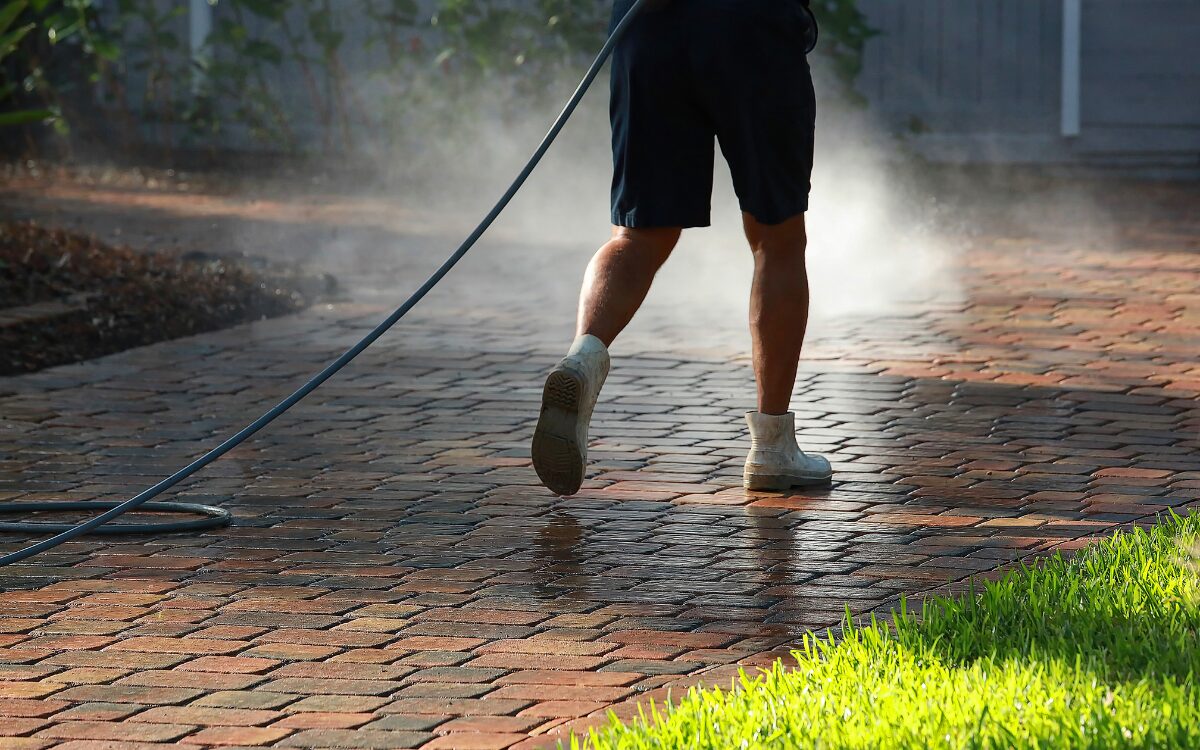
- Cleaning: Remove dirt, grease, and oil stains.
- Repairing Cracks: Any holes or cracks should be filled with an appropriate patching material.
- Etching: For certain paints, etching the surface with a concrete etcher can improve adhesion.
Finish
Both look and upkeep are impacted by the paint’s finish. Glossy finishes are easier to clean but may show imperfections, while matte finishes can hide blemishes but require more frequent cleaning.
Application Process: A Step By Step Guide
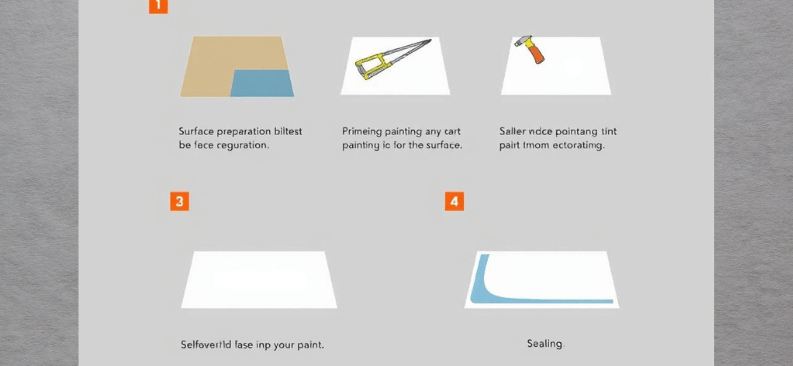
Step 1: Gather Materials
Before starting, ensure you have the following:
- Paint (epoxy, acrylic, or polyurethane)
- Primer (if necessary)
- Roller and tray
- Brushes for edges and corners
- Painter’s tape
- Clean rags and cleaning supplies
- Safety gear (gloves, mask)
Step 2: Prepare the Surface
- Clean the Floor: Use a degreaser and scrub the surface thoroughly.
- Repair Any Damage: Fill in cracks and smooth out rough areas.
- Etch the Surface: If required, use a concrete etcher to improve adhesion.
Step 3: Apply Primer (if needed)
A primer can enhance paint adhesion, especially for epoxy and polyurethane paints.
- Use a roller to apply the Primer evenly.
- Allow it to dry completely according to the manufacturer’s instructions.
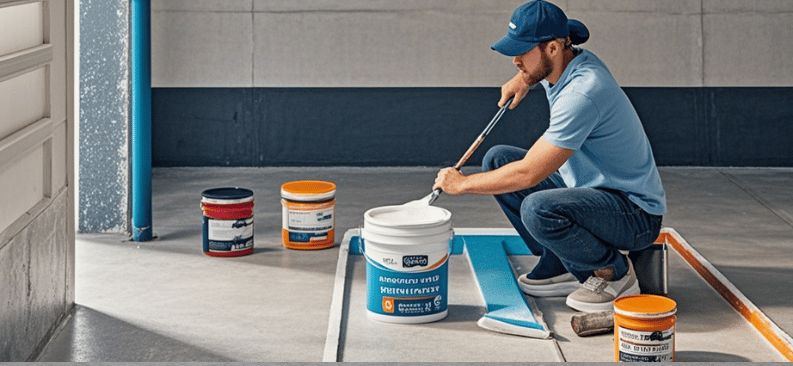
Step 4: Paint the Floor
- Mix the Paint: Mix the resin and hardener as instructed for epoxy.
- Cut in Edges: Use a brush to paint along the edges and corners.
- Roll the Paint: Use a roller to apply the paint in sections, working from one side of the room to the other.
- Apply Additional Coats: Multiple coats may be necessary depending on the paint type. Allow each coat to dry before applying the next.
Step 5: Finishing Touches
- Remove Painter’s Tape: Carefully peel off the tape while the paint is still slightly wet.
- Allow to Cure: Follow the manufacturer’s instructions regarding curing time before walking on the surface.
Maintenance Tips for Painted Concrete Floors

- Regular Cleaning.
- Address Stains Promptly
- Reapply Finish
Tips for a Successful Paint Job
- Test a Small Area: Before fully committing, test your chosen paint on a small, inconspicuous floor area to ensure it adheres well and meets your aesthetic expectations.
- Use the Right Tools: Invest in high-quality brushes and rollers for concrete surfaces to achieve a smooth finish.
- Follow Manufacturer Instructions: Adhere to the application and curing times specified by the paint manufacturer to ensure the best results.
- Consider a Sealer: For added protection, especially in high-traffic areas, apply a concrete sealer over your painted surface once fully cured.
- Regular Maintenance: Keep your painted concrete floor looking its best by cleaning it regularly and touching up any areas that show signs of wear.
Conclusion
Choosing the best paint for concrete floors can significantly enhance the look and longevity of your surfaces. Whether you opt for epoxy, acrylic, or polyurethane, proper preparation and application are key to achieving a beautiful and durable finish. With the right care, your painted concrete floors can provide a stylish and functional foundation for years.
By considering your specific needs and the characteristics of your space, you can select the perfect paint to transform your concrete floors into stunning and resilient surfaces.
Apart from that if you want to know about “Transform Your Bedroom with Creative Shelf Above Bed Ideas: A Step-by-Step Guide” then please visit our “Crafts and Tools” Category.
FAQs
Latex acrylic paint and epoxy paint are the two main forms of paint that you may use on your garage floors. Epoxy paint is more resilient and will give the concrete a stronger connection, making it more chip-resistant, even if latex paint is less expensive in the short run.
Use specialty concrete paints instead of regular store-bought paint for optimal effects. Because epoxy paints offer a smooth and long-lasting surface, they are the perfect option for coating new and old bare concrete floors. We advise using high-quality masonry paint on walls.
Additionally, the paint must be strong and sturdy enough to resist deterioration, chemicals, and UV rays. I strongly advise using acrylic epoxy coatings or epoxy concrete floor paint.
Epoxy paint offers superior durability and longevity, while latex paint is easier to apply and more suitable for low-traffic indoor areas.
Epoxy paint is considered one of the most durable options because it creates a hard, chemical-resistant surface that withstands heavy traffic and moisture.