

Quick answer: Cutting drywall cleanly starts with matching the tool to the cut. For long, straight cuts, score the face paper with a sharp utility knife, snap the sheet, and then slice the back paper. Use a jab saw or oscillating tool for openings, and keep powered cuts shallow on finished walls to avoid hidden obstacles.
A loose sheet is usually simple to trim. An installed wall requires more care because wiring, plumbing, studs, and other materials may be hidden behind the surface.
| Cut or task | Preferred tool | Main advantage |
| Long, straight sheet cut | Utility knife + T-square | Fast and low-dust |
| Small rectangular opening | Jab saw | Easy manual control |
| Outlet or switch opening | Jig saw or oscillating tool | Handles short plunge cuts |
| Round opening | Hole saw, jab saw, or rotary tool | Follows circular shapes |
| Small edge adjustment | Rasp or utility knife | Removes small high spots |
Utility knives are the standard choice for straight score-and-snap work. Jigsaw saws, rotary tools, and oscillating multi-tools are better suited to openings and irregular shapes.
What You’ll Need
Gather the basic tools before measuring:
- Tape measure and pencil
- T-square or long straightedge
- Sharp utility knife with spare blades
- Rasp for edge cleanup
- Jigsaw for openings
- Optional oscillating multi-tool or rotary cutout tool
- Eye protection and suitable respiratory protection for dusty work
If you’re working in a damp room, material choice matters before you trim any panels. Housnyst’s bathroom sheetrock guide explains moisture-resistant options and installation considerations.
Cutting Drywall Step by Step for Straight Sheet Cuts

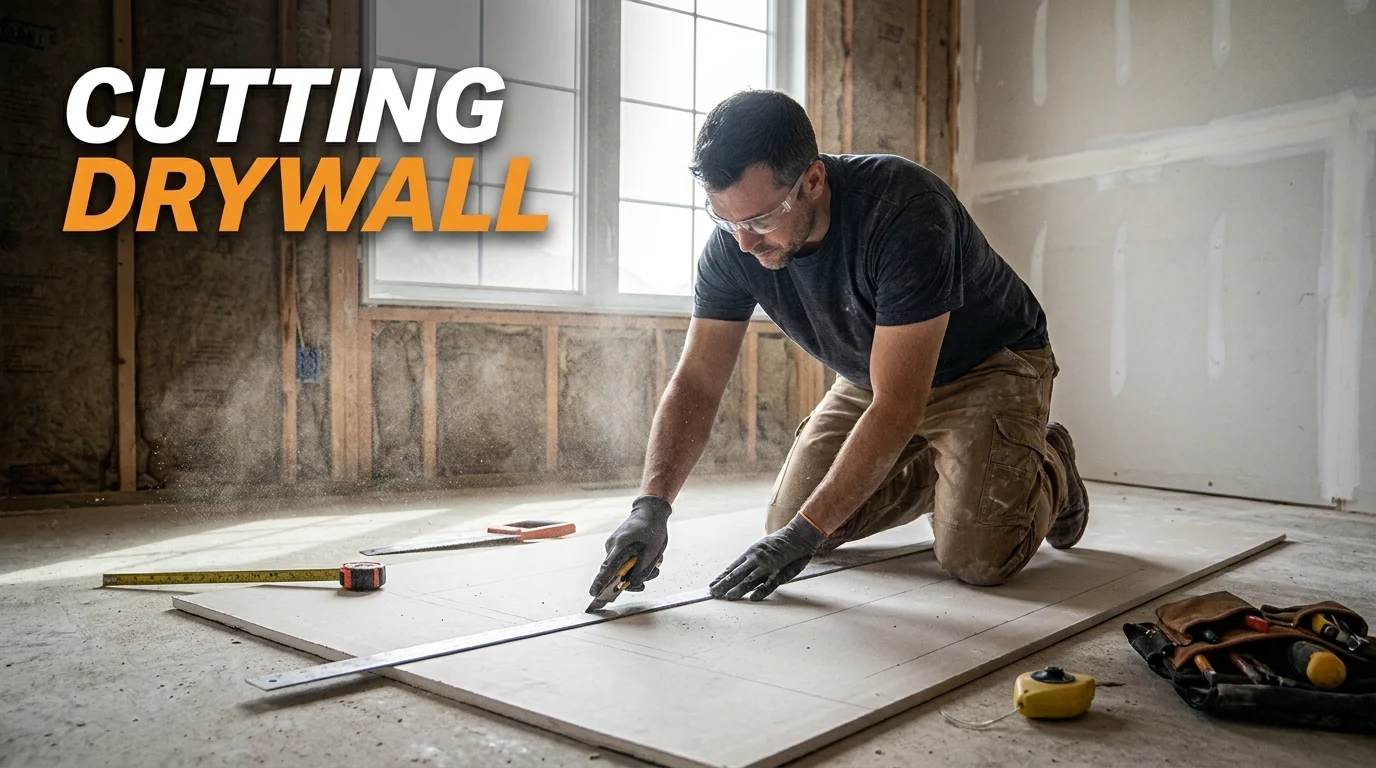
The score-and-snap method is one of the simplest approaches for long, straight cuts. It also creates less airborne debris than sawing through the entire panel.
- Measure the required size. Check both ends to ensure the cut line stays square.
- Mark the face paper. Make clear pencil marks where the cut should begin and end.
- Score along a straightedge. Hold the T-square firmly and draw a sharp utility knife along the line. You only need to score through the face paper and slightly into the gypsum core.
- Snap the sheet along the score. Support the panel and apply firm pressure behind the line until the core breaks cleanly.
- Slice the back paper. Fold the broken section back and run the knife along the crease to separate the two pieces.
- Smooth the edge. Pass a rasp along rough high spots instead of repeatedly shaving large amounts with the knife.
- Test-fit the panel. Check the piece in position before fastening it so you can correct a tight edge without damaging the surrounding area.
Keep the blade sharp. A dull utility knife tends to tear the paper and requires extra pressure, making accurate scoring more difficult.
How to Cut Outlet, Switch, Vent, and Light Openings
Rectangular and curved openings require a different technique from long sheet cuts.
For a small rectangular opening, transfer the measurements carefully and mark the outline. A jab saw can pierce the face and follow the marked perimeter. An oscillating tool can make short plunge cuts with greater control, especially where a manual saw has limited working space.
For a round opening, trace the required circle first. A hole saw works well for fixtures with a known diameter. A jab saw or rotary tool gives you more flexibility when the shape isn’t perfectly standard.
Avoid making the opening oversized to save time. A close test fit gives the fixture trim or cover plate more surface area to conceal the cut.
Be More Careful With an Existing Wall
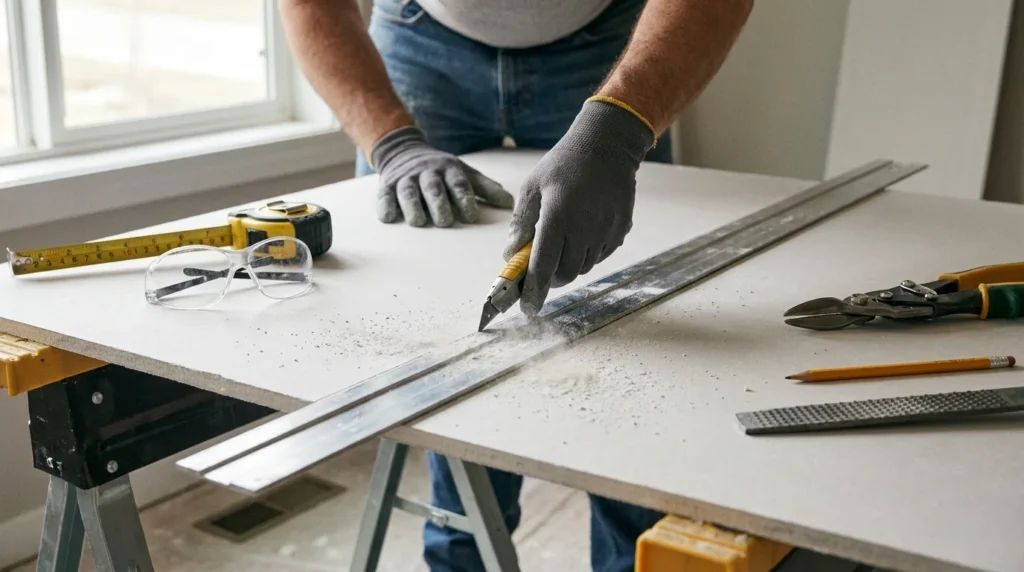
Cutting a new sheet on a work surface is different from opening a finished wall. Before making a plunge cut, determine where studs, electrical boxes, wiring, pipes, and ducts may be located.
Keep the blade or powered tool only as deep as necessary to pass through the wallboard. Take extra care when working near electrical boxes or other concealed services.
This is especially important during projects such as installing a microwave range hood vent, where wall penetrations and stud locations can affect the installation. The same planning applies before adding a wall-mounted shelf above a bed, since the supporting structure behind the wall determines where the hardware should go.
If you aren’t confident about what lies behind the planned opening, inspect the area first rather than making a blind, deep cut.
Reduce Dust While You Work
Score-and-snap work creates less dust because you aren’t grinding or sawing through the entire gypsum core. Powered cutting tools can produce much more fine dust.
Wear eye protection and appropriate respiratory protection during dusty tasks. Keep the work area as clean as possible and remove accumulated dust as you go.
If you’re working with older wall materials or joint compounds that may contain hazardous substances, don’t disturb them until they’ve been properly assessed.
Mistakes That Lead to Rough or Inaccurate Cuts
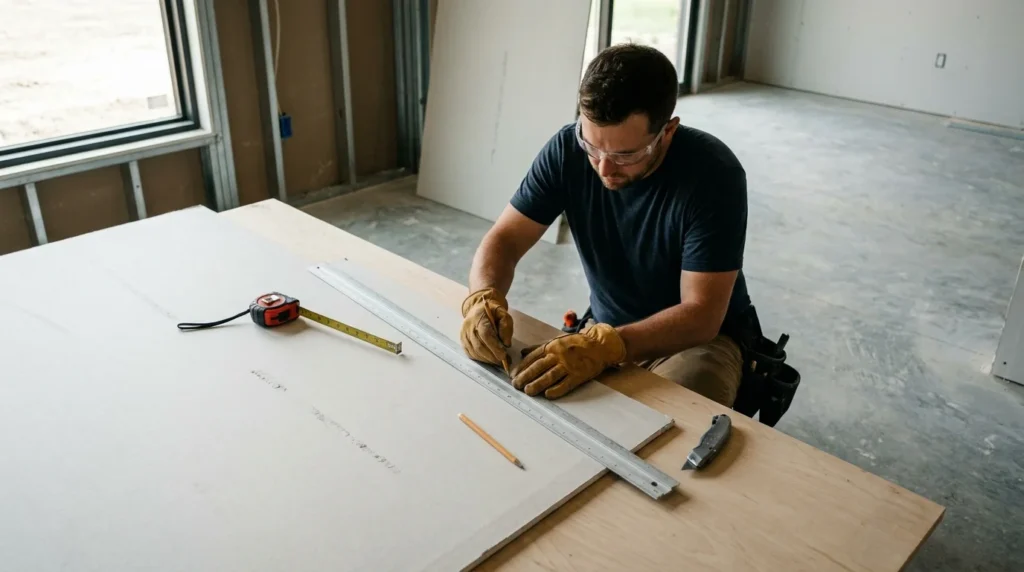
A few habits cause most avoidable problems:
- Using a dull knife: Replace the blade when it starts to drag or tear the face paper.
- Scoring too aggressively: Make one controlled pass along a firm straightedge instead of forcing the blade deep into the board.
- Using a power saw for every cut: Routine straight cuts rarely require one, and powered saws can create more dust.
- Skipping the test fit: Check the piece before fastening it.
- Rushing opening measurements: Confirm the dimensions and orientation before removing material.
Small high spots can usually be corrected with a rasp. An opening that’s too large is much harder to conceal or repair.
Make the Cut Fit the Job
Start with the simplest tool that suits the shape. Score and snap straight sheets, use a controlled hand tool or oscillating tool for openings, and work more slowly when cutting into an existing wall.
Measure first, keep blades sharp, limit dust, and test-fit every piece before fastening it. These habits reduce mistakes and help produce cleaner, more accurate results.
Frequently Asked Questions
For a straight sheet cut, start with a utility knife and T-square. Mark the line, score the face paper, snap the panel along the score, cut the back paper, and smooth the edge. This method requires few tools and produces relatively little dust compared with sawing through the entire sheet.
Yes, for straight cuts on loose panels. A knife handles the scoring and back-paper cut, while a T-square keeps the line straight. You’ll need another tool for many openings, curves, and cuts in confined spaces.
A circular saw isn’t the usual choice for routine wallboard work because it creates more airborne dust than scoring and snapping. For long, straight lines, a utility knife is simpler. Use specialty power tools when their speed or shape control offers a clear advantage.
First, identify the damaged area and determine whether moisture is still entering the structure. Fix the source of the problem before replacing the damaged finish. Housnyst’s guide to preventing interior ceiling damage through roof repairs explains why unresolved water intrusion can continue damaging interior materials.