

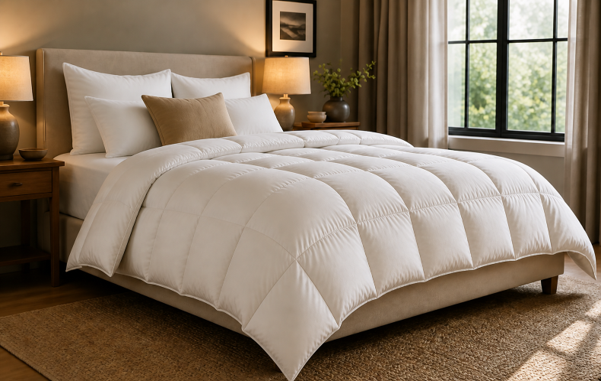
Choosing the best full-size down comforter should feel exciting rather than overwhelming. Shoppers furnishing a full-size bed want something that looks proportioned, feels genuinely soft at night, and actually matches how they sleep — whether they run warm, crave winter coziness, or want a polished all-season bed that works most of the year. A great comforter does more than add warmth: it shapes loft, drape, breathability, and how restful a bedroom feels at the end of the day. The best choice is rarely just “the thickest one” — it’s the one that balances fill, shell fabric, construction, and warmth level for the room and the sleeper.
What Makes a Full-Size Down Comforter the Best Choice?
Fit matters, but sizing alone doesn’t make a comforter premium. The strongest options combine the right warmth level for the climate and sleep style, a fill that matches a preference for fluffiness and breathability, a shell fabric that feels soft and helps regulate temperature, and construction that resists bunching and cold spots. Generic buying guides tend to talk about warmth in broad strokes and skip the details that actually change how a comforter feels night after night — especially for couples, hot sleepers, and households juggling different comfort needs under one roof.
Why Fill Material Matters More Than Most Shoppers Realize
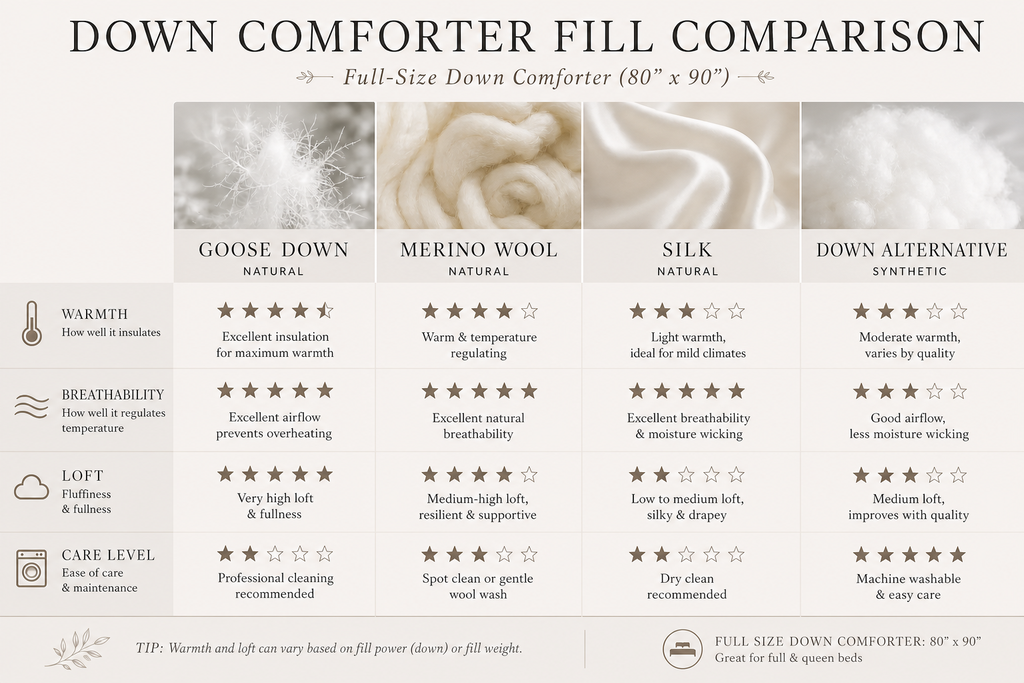
Material is where comfort really starts. Goose down remains one of the most loved fills because it delivers real warmth without excessive heaviness, creating the airy, almost-floating feel associated with luxury bedding — a well-made goose down comforter in organic cotton captures that cloudlike loft along with excellent cold-season insulation. Merino wool is the most overlooked option, regulating temperature and managing moisture naturally, which suits sleepers who get chilly but dislike waking up stuffy. Silk-filled comforters trade a bit of loft for a smoother, more refined drape, ideal for mild climates or anyone who dislikes bulky bedding. Down alternative remains the practical middle ground — still plush when paired with a quality shell and good stitching, and usually the easiest choice for guest rooms, family homes, and allergy-conscious households that prefer non-down fill.
Choosing the Right Warmth Level
Warmth is one of the biggest reasons bedding gets returned, and it’s rarely because the comforter is poorly made — it’s usually mismatched to the room. Lightweight options suit warmer bedrooms and naturally hot sleepers, without ever feeling suffocating. All-season is the sweet spot for most households, offering enough warmth for cool nights while still breathing well in centrally heated homes — something like the Cozy365™ Premium Down Comforter is built around exactly that balance. Winter-weight options are for cold sleepers or drafty rooms, insulating deeply while still allowing enough airflow to avoid overheating.
Fill Power, Construction, and Shell Fabric
Fill power measures how lofty and insulating down is — higher fill power generally means better warmth-to-weight performance, with 650 and above considered premium territory. Construction matters just as much: baffle-box designs create three-dimensional chambers that keep fill evenly distributed and prevent cold spots, while sewn-through construction is lighter and more affordable but can compress along the seams over time. On the outside, shell fabric shapes both feel and function. Organic cotton is the breathable, everyday default; silk brings a smoother, dressier finish; and something like a European Linen Goose Down Filled Comforter adds texture and airflow that suits relaxed, warmer bedrooms particularly well. Corner loops are a small detail that make a noticeable difference, keeping the comforter’s fill aligned and evenly distributed rather than bunching or sliding out of place overnight.
Matching a Comforter to Different Sleepers
Cold sleepers generally do best with a high-loft goose down or a warm merino wool build, which retain heat without excessive added weight. Hot sleepers should look toward cooling shell fabrics paired with lighter down or silk. Couples are where most generic guides fall short — two people rarely sleep the same way, and a one-style-fits-all comforter often means nightly compromise, so a customizable mix-and-match approach tends to serve shared beds far better than a single fixed option. For families and guest rooms, a durable down alternative or balanced all-season pick usually wins on easy care and versatile styling. Also worth a look: Why Waukesha Paint Peels.
Is a Heavier Comforter Always Better?
Not necessarily, and it’s one of the more persistent bedding myths. A heavy comforter can feel comforting, but weight alone doesn’t guarantee warmth or better sleep — a lofty premium down comforter can feel noticeably lighter than a cheaper synthetic one while keeping a sleeper just as warm. What actually matters is how well the fill traps insulating air, whether the shell allows breathability, and how evenly the construction prevents cold spots.
The Bottom Line
The best full-size down comforter is the one that fits the bed proportionally, matches the room’s sleep temperature, and makes the whole space feel calmer and more restorative. For some households, that means lofty goose down with organic cotton; for others, silk for elegant breathability, wool for balanced warmth, or a practical down alternative for easy everyday comfort. Getting the fill, warmth level, construction, and shell right matters far more than chasing the thickest option on the shelf.
FAQ
Goose down comforters are typically the fluffiest, offering high loft and trapping plenty of air without feeling heavy. A cloudlike, hotel-style bed usually starts with a premium down comforter with strong fill power.
Many luxury hotels rely on high-loft down comforters, crisp cotton shells, and layered premium sheets to create a plush yet breathable feel — a combination of soft materials and balanced warmth rather than sheer thickness.
The most comfortable options balance warmth, breathability, softness, and the right weight for a sleeper’s habits. Goose down, silk, merino wool, and well-made down alternative comforters can all feel cozy when paired with quality shell fabrics and thoughtful construction.