

A seaside resort project is easy to describe through leisure: apartments, hotels, restaurants, walks and sea views. But for a large-scale development, this is not enough. If a location functions only as a place for seasonal stays, it depends on the tourist calendar, hotel occupancy and the summer flow of visitors.
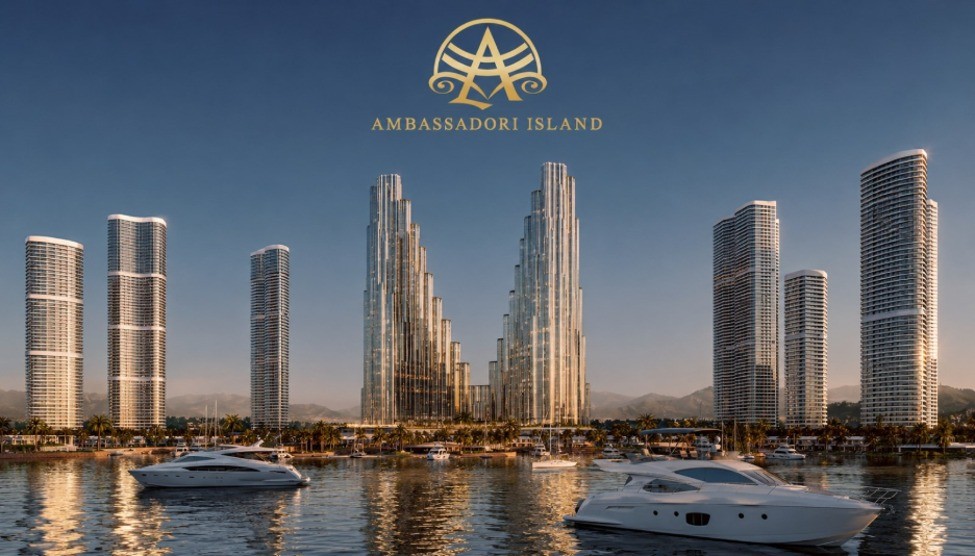
Modern coastal projects increasingly compete not only through their natural setting, but also through their ability to perform an urban function. They need to be places where people work, meet, use services and return outside the holiday season. In this context, Ambassadori Island in Batumi is interesting as an artificial island that is being developed not only around the resort function, but also around business and commercial infrastructure.
What Drives the Business Engine
A business engine is not a separate office building or the formal presence of commercial premises. For a resort project, it is a mechanism that changes the economic model: the location stops depending only on tourist demand and gains a second layer of activity — working, commercial and event-driven.
At Ambassadori Island, this mechanism is formed by several directions:
| Direction | What supports it | What it brings to the project |
| Working function | Coworking spaces and areas for business meetings | Adds a daily business rhythm |
| Commercial function | Shops, restaurants and services | Creates everyday reasons to visit |
| Event function | Event hall | Forms a calendar of events and attracts an audience outside the season |
| Hotel function | Hotels | Connects tourism, business and event-driven demand |
| Public function | Open public spaces | Keeps people within the project and connects different formats of stay |
This is how a resort project starts to function not only as a place for leisure, but also as an urban environment: people can come here for a meeting, spend the day working, attend an event, stay at a hotel, have dinner, use services and spend time by the sea.
Why This Matters for the Real Estate Market
For a long time, proximity to the sea remained the main argument in resort real estate. But for large projects, a view alone is no longer enough. Buyers and investors assess not only the property itself, but also how actively the surrounding environment works.
Housing creates a basic audience, but business and commercial infrastructure expands it. The project attracts not only those who live or stay there for leisure, but also those who need workspaces, meetings, events, restaurants, services and everyday urban infrastructure.
In this model, business infrastructure works as a second layer of the economy: it supports the project when tourist demand declines. The more ways a location can be used, the less it depends on one season, one audience or one type of demand.
How the Status of the Territory Changes
Business and commercial infrastructure changes the status of the project within the urban system. A seaside space stops being only a resort zone and starts working as an independent center of activity. At Ambassadori Island, this shift can be seen in several ways:
- A seaside leisure territory becomes a new urban point of activity.
- Dependence on the tourist season is replaced by several sources of demand.
- The project’s audience becomes broader.
- Infrastructure stops being just an addition to housing.
For Ambassadori Island, this is especially important. When housing, hotels, coworking spaces, retail, event infrastructure, restaurants and services are combined within one territory, the project gains a more resilient development model and can function as a new point of business and public life in Batumi.
Why the Business Function Strengthens the Resort Function
Business infrastructure does not cancel the resort nature of the project. On the contrary, it makes it more stable. The sea, hotels, restaurants and walking areas remain an important part of Ambassadori Island’s appeal, but working, commercial and event-driven scenarios are added to them.
As a result, the project is not limited to the “come to the sea” model. It gains more reasons to visit: to work, hold a meeting, take part in an event, use services, spend a day with family or stay at a hotel after an event.
For buyers, this means real estate within an active environment that can be used throughout the year. For investors, it means a broader audience and more stable interest in the location. For Batumi, it means an additional center of attraction where the resort function is combined with business and everyday urban life.
Conclusion
Ambassadori Island shows why it is increasingly difficult for a modern resort project to remain only a place for leisure. To stay in demand beyond the high season, a space needs business, commercial and event infrastructure.
This infrastructure becomes the project’s business engine: it creates a second layer of the economy, supports activity when tourist demand declines and moves seaside real estate from the category of a seasonal asset into the category of urban infrastructure. In this model, Ambassadori Island works not only as a resort address, but also as a new center of business and public activity in Batumi.