

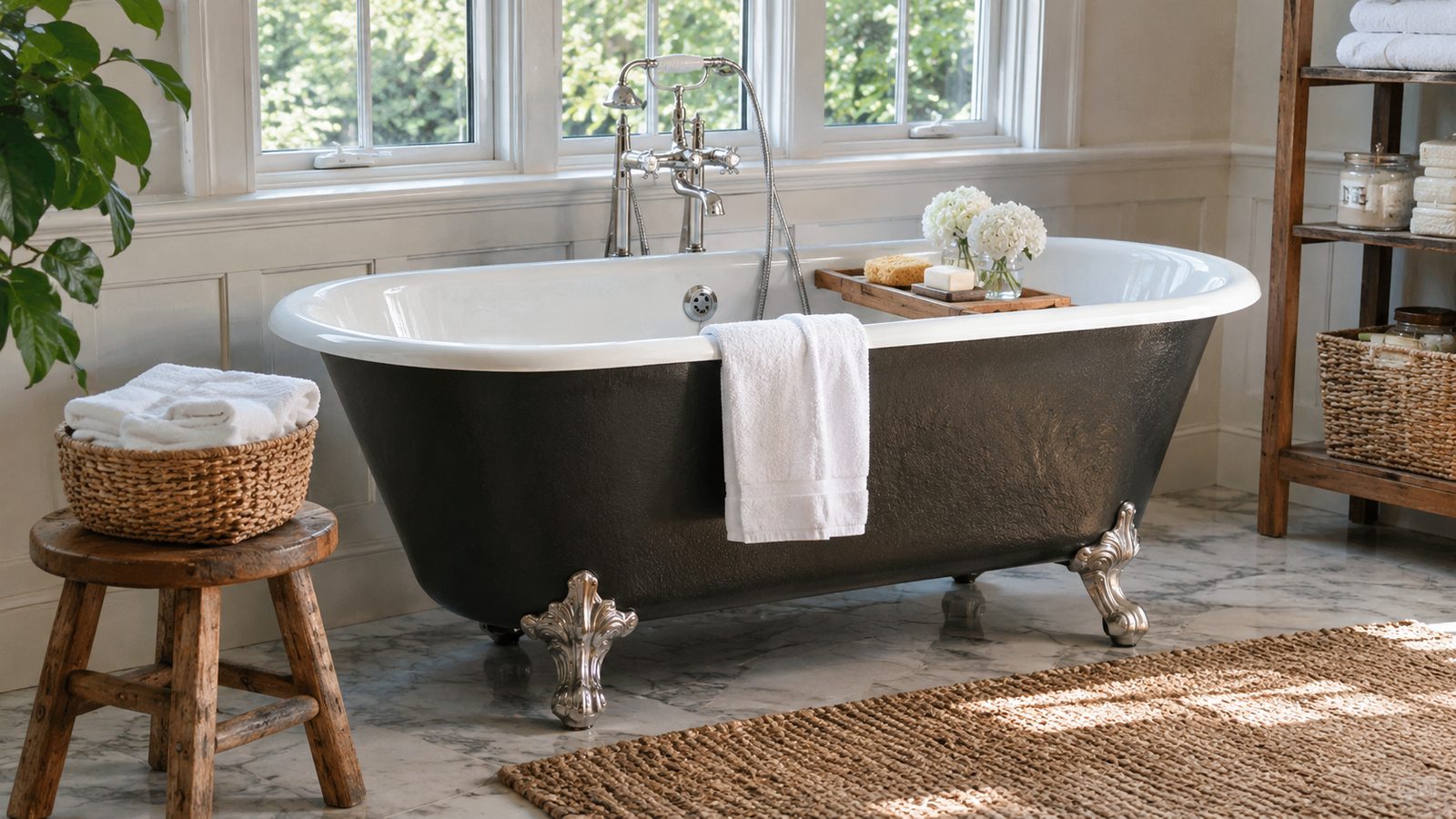
A cast iron tub offers exceptional durability, strong heat retention, and a solid feel that lighter materials cannot match. However, its weight can complicate delivery, floor support, and installation. U.S. homeowners should compare these practical factors before choosing one for a remodel or new bathroom. Cast iron bathtubs suit homeowners who value durability, heat retention, and a substantial bathing experience. Their main drawbacks are considerable weight, harder installation, and higher project costs. Before buying, confirm dimensions, plumbing locations, floor capacity, delivery access, and the total installed price.
| Factor | What U.S. Homeowners Should Know |
|---|---|
| Material | Molded iron covered with a hard porcelain-enamel surface |
| Typical empty weight | Often several hundred pounds, depending on model and size |
| Common styles | Alcove, freestanding, drop-in, undermount, clawfoot |
| Main benefits | Durability, solid feel, heat retention, classic appearance |
| Main drawbacks | Heavy weight, harder installation, possible enamel chips |
| Floor planning | Framing may need professional evaluation |
| Maintenance | Mild cleaners and nonabrasive tools are safest |
| Best suited for | Long-term remodels where durability outweighs installation difficulty |
Key Takeaways
* Cast iron is one of the heaviest common bathtub materials. * The porcelain-enamel surface can remain attractive for decades with proper care. * Heat retention makes the material appealing for people who enjoy longer baths. * Installation planning matters as much as the tub’s purchase price. * Floor structure, doorways, stairs, plumbing, and drain placement should be checked first. * Acrylic usually offers easier handling when weight is the main concern.
What Is a Cast Iron Bathtub?
An enameled iron bathtub begins with a heavy molded metal body. Manufacturers then cover the bathing surface with a hard enamel finish. The result feels noticeably more substantial than many acrylic or fiberglass fixtures. Modern versions are not limited to vintage clawfoot designs. Manufacturers now offer alcove, freestanding, drop-in, and undermount configurations. That range lets homeowners use the material in traditional and contemporary bathrooms. Before selecting a style, consider the entire room instead of the fixture alone. Tub placement affects walking space, plumbing, storage, and shower planning. Housnyst’s master bath layout guide can help with broader fixture placement.
Cast Iron Tub Weight and Floor Support
Weight is usually the most important practical concern during installation. Individual models can weigh several hundred pounds before adding water or a person. One current Kohler freestanding model weighs 365 pounds and holds 75 gallons. Water adds considerable load after the fixture is installed. A U.S. gallon of water weighs about 8.34 pounds. Therefore, 50 gallons alone add roughly 417 pounds before including the bather. That does not mean every bathroom automatically needs reinforcement. Floor capacity depends on framing, joist spans, subfloor condition, and where the load sits. Older homes and upper-floor bathrooms deserve particular attention from a qualified professional. Freestanding tubs also concentrate loads differently than some built-in installations. Decorative feet or pedestal bases may transfer weight through smaller contact areas. Check the manufacturer’s required floor load and installation instructions for your exact model.
What Does a Cast Iron Bathtub Cost?
Prices vary widely because cast iron spans basic alcove fixtures and premium freestanding designs. Current market guides show options beginning in the hundreds of dollars. Specialty or designer models can cost several thousand dollars. The fixture price is only part of the project budget. Labor may rise when installers need additional people, special handling, or structural work. Plumbing changes and difficult stair access can also increase the total. A lower purchase price can still produce an expensive installation. Measure delivery routes before ordering any heavy bathtub. Door widths, stair turns, landings, and bathroom entrances can determine whether the selected model reaches its final location.
Main Advantages of Cast Iron
Excellent Durability
Porcelain-enameled iron has a long-standing reputation for durability. The dense body resists flexing under normal bathroom use. A quality fixture can remain serviceable for decades when its enamel remains protected. The surface also feels solid underfoot and along the rim. That quality appeals to homeowners who dislike lightweight or flexible fixtures. It can make a remodeled bathroom feel more permanent.
Good Heat Retention
Iron initially absorbs heat from the bathwater. Once warmed, its large thermal mass releases heat slowly. This characteristic makes the material attractive for people who prefer longer soaking sessions. Acrylic behaves differently because it feels warmer at first contact. The better choice depends on your bathing habits and room conditions. Neither material wins every comparison for every household.
Classic Appearance With Modern Options
Traditional clawfoot fixtures remain closely associated with cast iron. Yet current product ranges include streamlined alcove and freestanding designs. Homeowners can therefore use the material without creating a strictly historic bathroom. Color choices have also expanded beyond basic white. Some manufacturers offer neutral shades and more distinctive finishes. Availability depends on the collection and model.
Main Disadvantages to Consider
The first drawback is obvious once delivery begins. A heavy bathtub usually needs more labor and careful movement. Tight stairways or second-floor bathrooms can turn a simple replacement into a larger project. Enamel also deserves careful treatment despite its hardness. A severe impact can chip the finish and expose the metal underneath. Exposed iron can eventually rust if the damaged area remains untreated. Design flexibility can also be narrower than acrylic. Molded synthetic materials can accommodate more unusual curves and shapes. Iron fixtures therefore work best when available dimensions already fit your layout.
Cast Iron vs. Acrylic: Which Is Better?
| Feature | Cast Iron | Acrylic |
|---|---|---|
| Empty weight | Heavy | Much lighter |
| Installation | More difficult | Easier to handle |
| Surface feel | Hard and substantial | Warmer at first touch |
| Heat behavior | Warms slowly, then retains heat | Feels warm quickly |
| Durability | Excellent with proper enamel care | Good but more prone to surface wear |
| Shape selection | More limited | Broad variety |
| Best fit | Long-term, substantial installations | Remodels needing easier handling |
Acrylic is often the simpler option for upstairs remodels or difficult delivery routes. It provides broad style choices without placing the same load on installers. Cast iron makes more sense when longevity and a substantial feel matter more. Your home’s structure should influence the decision more than design trends. A beautiful fixture creates little value if moving or supporting it becomes impractical. Compare the complete project rather than the showroom price alone.

How to Plan Installation Before Buying
Start by measuring the intended tub area carefully. Record wall dimensions, faucet clearance, drain position, and finished floor height. Compare those measurements with the manufacturer’s specification sheet before ordering. Next, map the delivery path from the exterior door to the bathroom. Measure every doorway, stair turn, hallway, and landing. A fixture that fits the bathroom may still be impossible to move through the house. Then discuss the floor with a contractor when structural concerns exist. Ask about joist size, direction, spacing, spans, and the tub’s final location. Never assume an older second floor can accept a heavy new fixture without evaluation. Finally, coordinate plumbing before delivery day. Drain and overflow locations differ between models. If drainage becomes troublesome later, Housnyst’s bathtub drainage guide covers common causes and maintenance concerns.
Choosing the Right Size and Style
Standard alcove bathrooms often favor rectangular fixtures around familiar residential dimensions. Freestanding models can require more clearance around the body and faucet. Always use actual product measurements rather than relying on category labels. Clawfoot designs create a traditional focal point and expose more flooring. Pedestal and modern freestanding models offer a cleaner base profile. Built-in configurations usually integrate more naturally with shower walls and surrounding tile. Think about future accessibility before committing to a deep-sided fixture. High tub walls can become harder to enter over time. Homeowners prioritizing easier access can also review Housnyst’s guide to walk-in baths when comparing alternatives.
Cleaning and Maintenance
Use gentle cleaners that are compatible with porcelain enamel. Soft cloths and nonabrasive sponges reduce the chance of dulling the glossy surface. Harsh scouring tools can damage a finish that otherwise lasts for years. Inspect chips instead of ignoring them. Prompt repair helps protect exposed metal from moisture. Follow the manufacturer’s care instructions because approved products may differ among brands. Also maintain the drain, overflow, caulk, and nearby plumbing. Water problems around the fixture can damage surrounding materials even when the bathtub remains sound. Routine inspection is easier than repairing hidden moisture damage later.
Is a Cast Iron Tub Worth It?
A cast iron tub is worth considering when durability, solidity, and long soaking comfort are priorities. It suits homeowners planning a long-term bathroom rather than a quick cosmetic update. The strongest candidates have adequate floor support and straightforward delivery access. It may be less attractive when installation simplicity matters most. Upstairs bathrooms, narrow stairways, and tight renovation budgets can favor lighter materials. Acrylic often solves these problems without giving up modern styling. The right decision comes from balancing comfort against construction realities. Choose the fixture only after confirming size, structure, plumbing, and labor requirements. That approach prevents an attractive purchase from becoming an expensive installation problem.
Frequently Asked Questions
How much does a cast iron tub weigh?
Many models weigh several hundred pounds before filling. Actual weight varies by dimensions, wall thickness, and design. Always use the manufacturer’s specification sheet for structural planning.
Do cast iron bathtubs hold heat well?
Yes, the iron body absorbs heat and then releases it gradually. This thermal mass supports longer soaking sessions once the fixture becomes warm. Acrylic feels warmer sooner but behaves differently during extended bathing.
Can you install one on a second floor?
Sometimes, but the floor structure must safely handle the completed load. Consider the fixture, water, user, and surrounding materials together. A contractor or qualified structural professional can evaluate uncertain framing conditions.
Can an enameled iron bathtub rust?
The iron underneath can rust when damaged enamel exposes the metal to moisture. Small chips should therefore be repaired before corrosion spreads. Proper surface care reduces this risk.
Is cast iron better than acrylic?
Neither material is automatically better for every home. Iron favors durability, solidity, and long-term service. Acrylic favors lower weight, easier installation, and greater shape flexibility.
Final Buying Checklist
Before placing an order, confirm these project details.
* Exact tub dimensions and bathing depth * Empty weight and filled-load expectations * Manufacturer floor-load requirements * Drain and overflow locations * Faucet configuration and clearance * Doorway, hallway, and stair access * Floor framing condition * Installation labor requirements * Enamel care instructions * Total fixture and installation budget
A heavy bathtub rewards careful planning before installation begins. Confirm specifications with the manufacturer and discuss structural concerns with your contractor. Once those details check out, enameled cast iron can provide decades of dependable bathroom service. —