


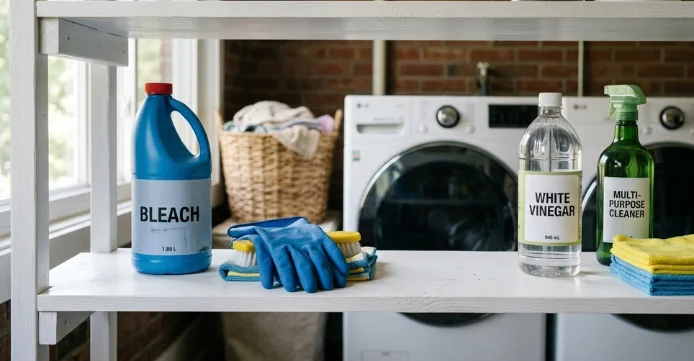
Bleach and vinegar should never be mixed for household cleaning. Combining chlorine bleach with acidic vinegar can release chlorine gas. This gas can irritate your eyes, throat, and lungs.
If you accidentally combine these cleaners, leave the affected area and get fresh air. Don’t remain nearby trying to clean the mixture. People with breathing trouble or serious symptoms need prompt medical assistance.
Bleach and Vinegar Safety at a Glance
| Question | Safe answer |
|---|---|
| Can you mix them? | No |
| What can the mixture release? | Chlorine gas |
| Is adding water enough to make mixing safe? | No |
| Common exposure symptoms | Coughing, burning eyes, throat irritation, chest tightness |
| First action after accidental mixing | Leave the area and get fresh air |
| U.S. Poison Help number | 1-800-222-1222 |
| Severe breathing difficulty | Call 911 |
| Safest cleaning practice | Use products separately and follow their labels |
Quick answer: Mixing bleach with vinegar can release chlorine gas because vinegar is acidic. Exposure can irritate your eyes, nose, throat, and respiratory system. Never combine these cleaners or deliberately use them together. After accidental mixing, leave the area, get fresh air, and contact Poison Help if you were exposed.
What Happens When You Mix Bleach and Vinegar?
Household chlorine bleach commonly contains sodium hypochlorite. White vinegar contains diluted acetic acid. Bringing an acid into contact with hypochlorite bleach changes the chemical environment and can release chlorine gas.
That reaction doesn’t create a stronger household cleaner. Instead, it creates an unnecessary exposure hazard. The risk can become greater in bathrooms, laundry rooms, and other poorly ventilated spaces.
Chlorine has a strong and irritating odor. Exposure can affect moist tissues in the eyes and respiratory tract. You shouldn’t remain nearby trying to judge the concentration by its smell.
The U.S. Environmental Protection Agency advises people never to mix cleaning products. EPA guidance also recommends following product labels and increasing ventilation during cleaning. These basic precautions prevent many avoidable chemical reactions.
Why Is Chlorine Gas Dangerous?
Chlorine gas can irritate tissues after someone breathes it or comes into contact with contaminated air. Severity depends on concentration and exposure duration. Individual health factors can also affect the response.
Common symptoms can include:
- Burning or watery eyes
- Runny nose
- Throat irritation
- Coughing
- Chest tightness
- Wheezing
- Shortness of breath
- Nausea or vomiting
- Skin irritation after direct contact
More significant exposure can cause serious respiratory problems. Some symptoms may also appear after the initial exposure. This makes ongoing breathing problems an important reason to seek medical guidance.
What Should You Do If You Accidentally Mix Bleach and Vinegar?
If you accidentally mix them, move away rather than adding another chemical. Don’t pour something else into the container to neutralize it. Adding more household chemicals could create another hazardous reaction.
Follow these safety steps:
- Leave the affected area. Move away from the fumes and get to fresh air.
- Keep other people away. Children and pets shouldn’t enter the affected space.
- Don’t add another cleaner. Avoid attempting a home chemical neutralization.
- Follow exposure guidance. Remove contaminated clothing when appropriate and wash exposed skin.
- Contact Poison Help. U.S. residents can call 1-800-222-1222 for case-specific advice.
- Get emergency help for severe symptoms. Call 911 for serious breathing difficulty or another medical emergency.
Don’t reenter a contaminated area simply to continue cleaning. The appropriate response depends on what was mixed and how much exposure occurred. Poison Control can provide instructions for the particular incident.
Bleach and Vinegar Exposure: When Should You Get Help?
Mild irritation doesn’t tell the whole story about an exposure. The CDC notes that symptoms from lower chlorine exposure can sometimes appear later. Pay attention to how you feel after reaching fresh air.
Contact Poison Help if you’ve been exposed and need individual guidance. Call 911 for severe breathing difficulty or another medical emergency. Don’t rely on an internet article to assess a significant chemical exposure.
The U.S. Poison Help line is 1-800-222-1222. It connects callers with their local poison center. Keep the cleaner containers or product names available when requesting guidance.
Can You Mix Small Amounts of Bleach and Vinegar?
No intentional amount should be treated as a safe cleaning recipe. Even a small mixture creates an unnecessary chemical risk. The safer approach is keeping bleach away from acidic cleaning products.
Diluting both products doesn’t turn their combination into a recommended cleaner. Household chemical concentrations also differ between products. Follow each manufacturer’s label rather than creating homemade combinations.
This rule applies to more than bottles labeled simply as vinegar. Some household products contain acids within more complicated formulas. Read the ingredients and warnings before using another product around bleach.
Can You Use Them One After the Other?
Avoid layering different cleaners on the same wet surface. Residue from the first product can remain after wiping. Applying another incompatible product could then cause an unwanted reaction.
For ordinary household cleaning, choose one suitable product for the job. Follow its label, contact time, ventilation requirements, and surface instructions. Plain detergent and water are enough for many routine cleaning tasks.
If a surface needs disinfection, choose an appropriate registered disinfectant and follow its directions. EPA guidance says antimicrobial products work best on surfaces cleaned of dirt and debris. More cleaning chemicals don’t automatically produce a cleaner surface.
What About Bleach and Vinegar in a Washing Machine?
Don’t intentionally combine these products during the same laundry cycle. The washing machine doesn’t remove the basic chemical incompatibility. A confined laundry space can also make irritating fumes more concerning.
Follow the appliance and laundry-product instructions instead. Housnyst’s washing-machine troubleshooting guide also recommends using manufacturer-specific procedures for washer maintenance. That approach is safer than experimenting with chemical mixtures inside the machine.
Never assume a laundry additive can safely mix with chlorine bleach. Check its label before using it during a bleach cycle. When compatibility isn’t clearly stated, keep the products separate.
Is the Combination Safe for Mold Removal?
No. Combining these chemicals isn’t a safe mold-removal method. Creating chlorine gas adds a respiratory hazard without solving the moisture problem that allowed growth.
Housnyst’s mold removal guide explains that moisture control is central to preventing recurring growth. Small hard-surface areas can often be cleaned after you correct the water source. Larger, hidden, HVAC-related, or contaminated-water problems can require professional remediation.
EPA guidance for basic mold cleanup emphasizes cleaning hard surfaces and drying them completely. Fixing leaks and moisture problems matters more than combining stronger chemicals. Chemical experimentation can turn a manageable cleaning task into an exposure incident.
Safer Ways to Clean Without Mixing Chemicals
Many household jobs don’t require aggressive disinfectants. Soap or detergent and water can remove dirt from numerous surfaces. Then decide whether that area needs disinfection.
Use these habits during household cleaning:
- Read every product label before use.
- Use one cleaner at a time.
- Keep the room appropriately ventilated.
- Wear protective equipment specified on the label.
- Keep chemicals away from children and pets.
- Store products in their original containers.
- Never create unlabeled homemade chemical mixtures.
- Follow stated dilution and contact-time directions.
These precautions also reduce accidental contact between incompatible products. They are especially useful when several people share household cleaning duties. Everyone should know which products are being used.
For broader household maintenance, Housnyst’s Cleaning section can help you choose task-specific approaches. Using the correct method reduces the temptation to combine products. A stronger chemical mixture isn’t automatically a better cleaning solution.
Other Cleaning Products You Shouldn’t Mix With Bleach
Vinegar isn’t the only substance that requires caution around chlorine bleach. CDC guidance warns that bleach can release toxic chlorine gas when mixed with acids. Other incompatible household products can produce dangerous fumes too.
As a simple household rule, don’t mix bleach with other cleaners. Read the bleach label before adding anything besides the permitted dilution water. Never assume two separately useful cleaners will remain safe together.
Also avoid transferring cleaners into drink bottles or unlabeled containers. Original packaging keeps safety directions and ingredient warnings available. It also reduces the chance that someone mistakes a chemical for another liquid.
How to Prevent Accidental Mixing
Start each cleaning job by deciding which single product you need. Put unnecessary cleaners away before beginning. This simple habit reduces accidental spills and product confusion.
Use separate cloths, buckets, and tools when incompatible chemicals might leave residues. Rinse reusable cleaning equipment thoroughly according to product directions. Don’t pour leftover cleaner into another product’s bottle.
Bathrooms deserve extra attention because you may store several cleaners together. Toilet, tile, mold, and mineral-deposit products can contain different active ingredients. Read each label before switching products during the same cleaning session.
Frequently Asked Questions
Can you mix bleach and vinegar?
No. Bleach and vinegar can react and release chlorine gas. Use household cleaners only as their labels direct.
What gas does bleach mixed with vinegar make?
The reaction can release chlorine gas. This gas can irritate the eyes, nose, throat, and lungs. Greater exposure can cause more serious respiratory symptoms.
What should I do if I accidentally mixed them?
Leave the affected area and move to fresh air. Don’t add another chemical to the mixture. U.S. residents can call Poison Help at 1-800-222-1222 for individual guidance.
Can I add water after mixing them?
Don’t rely on adding water as a home neutralization method. Leave the area rather than experimenting with the mixture. Follow instructions from Poison Control or emergency responders if exposure occurs.
Can I mix them for mold or bathroom cleaning?
No. Their combination isn’t a safe recipe for cleaning mold or bathrooms. Choose one suitable cleaning method and follow its product directions.
Does the danger disappear if I use only a little vinegar?
Don’t intentionally mix any amount for household cleaning. No practical benefit makes the chemical risk worthwhile. Keep acidic products away from chlorine bleach.
Clean Safely Instead of Combining Products
The safest rule is simple: use household cleaners one at a time and exactly as directed. Bleach can be useful when its label calls for it. Vinegar can also have separate household uses, but combining them isn’t a cleaning shortcut.
Keep labels intact, ventilate cleaning areas, and avoid homemade chemical combinations. If accidental mixing causes exposure, move to fresh air and seek guidance for your situation. For U.S. households, Poison Help is available at 1-800-222-1222.