

Introduction
Porch columns are a beloved architectural feature that has graced the entryways of homes for centuries. These structural supports serve a functional purpose and contribute significantly to the aesthetic appeal of a building’s exterior. From the grand, stately columns of historic mansions to the charming, rustic pillars of quaint country homes, porch columns come in various styles and materials, each offering a unique visual statement. Our guide to Iron Spiral Staircases in Mesa, AZ covers this in more detail.
Here’s a table summarizing key aspects of porch columns:
| Aspect | Details |
| Definition | Vertical structural elements supporting a roof or overhang are often decorative. |
| Materials | Wood, metal (aluminum, steel), fiberglass, PVC, stone, brick, or concrete. |
| Styles | Traditional, modern, colonial, craftsman, Victorian, Tuscan, or Doric. |
| Shapes | Round, square, tapered, rectangular, fluted, or plain. |
| Functions | Structural support, aesthetic enhancement, framing entryways. |
| Popular Colors | White, black, natural wood tones, gray, or customized painted finishes. |
| Features | Load-bearing, non-load-bearing (decorative), hollow, or solid design. |
| Maintenance Needs | Varies by material; wood may require repainting, while PVC or fiberglass is low-maintenance. |
| Common Heights | Standard heights: 8 to 12 feet; customizable for specific porch designs. |
| Customization Options | Carvings, intricate moldings, decorative caps, or base designs. |
The Significance of Porch Columns
Porch columns have played a crucial role in architectural design’s evolution, serving as structural and decorative elements. They have the power to transform the overall look and feel of a home, contributing to the creation of a welcoming and inviting entryway. Whether made of wood, stone, or even modern materials like steel, porch columns can reflect the home’s character and style.
Choosing the Right Porch Columns for Your Home’s Style
Porch columns do more than just support your porch roof — they are a key architectural feature that can define the overall look and feel of your home’s exterior. From classic round or square styles to more decorative options with moulding and trim, the right column design can complement a range of architectural aesthetics, whether traditional, modern, or transitional. Homeowners often match columns to other exterior elements like railings, trim work, and siding to create visual harmony and enhance curb appeal. Beyond aesthetics, selecting columns with appropriate materials and proportions ensures they not only look good but also provide lasting structural support for the porch and entryway. There is more on this in What Should You Do When Furniture Hardware Doesn’t Match.
Popular Materials for Porch Columns

· Wood
Wooden porch columns are a classic choice, offering warmth and timeless appeal. They can be carved into intricate shapes or left simple for a rustic look. However, wood requires regular maintenance to prevent damage from moisture, pests, and weathering.
· Fiberglass
Fiberglass columns are lightweight, durable, and resistant to rot and insects. They mimic the look of wood or stone, making them an ideal choice for homeowners seeking low-maintenance options without compromising aesthetics.
· PVC (Vinyl)
PVC columns are another low-maintenance option. They are resistant to weather and come in a variety of styles. While not as strong as wood or fiberglass, they are suitable for decorative purposes and can handle moderate loads.
· Stone and Concrete
For a robust and elegant appearance, stone or concrete columns are excellent. They add a touch of grandeur but are more expensive and may require professional installation due to their weight.
· Aluminum
Lightweight and durable, aluminum columns are perfect for modern or industrial-style porches. They are rust-resistant and often come with powder-coated finishes for added protection.
The Styles of Porch Columns

Porch columns come in various styles, each with a unique character and visual appeal. From the stately and classical to the rustic and contemporary, a porch column design suits every architectural style and personal preference.
1. Classical Columns
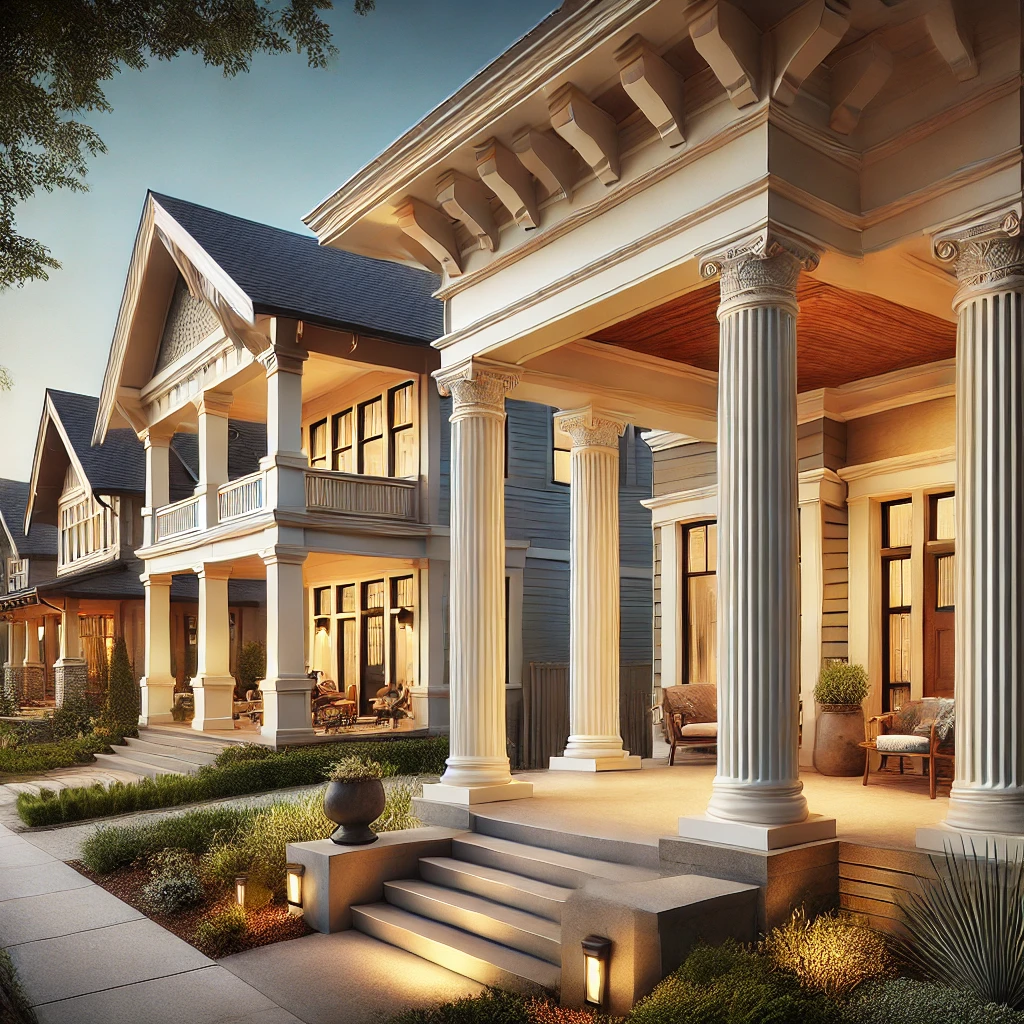
Classical column styles, such as the Doric, Ionic, and Corinthian, are characterized by their distinct proportions, decorative capitals, and often fluted shafts. These columns are frequently associated with grand, formal homes and public buildings, lending the porch an air of timeless elegance.
2. Craftsman and Mission Columns
The Craftsman and Mission styles of porch columns are defined by their simple, sturdy forms and the use of natural materials like stone, wood, and stucco. These columns often feature tapered or square shapes and may include decorative elements like exposed beams or brackets.
3. Victorian Columns
Victorian-era porch columns are known for their ornate and highly decorative designs. They may feature intricate carvings, turned or twisted shafts, and elaborate capitals adorned with scrollwork, foliage, or other ornamental elements.
4. Contemporary Columns
Modern porch column designs often prioritize clean lines, minimalist forms, and innovative materials like steel, glass, or concrete. These columns can range from sleek and streamlined to sculptural and avant-garde, reflecting the latest trends in architectural design.
5. Tuscan
Simple and unadorned, Tuscan columns are ideal for minimalist or traditional designs. They exude elegance without overwhelming other design elements.
6. Doric
Doric columns are slightly more decorative than Tuscan styles, featuring subtle grooves and a sturdy appearance, making them perfect for colonial and neoclassical homes.
7. Ionic
Recognized by their scroll-like capitals, Ionic columns add sophistication and are often used in formal architectural designs.
8. Corinthian
Corinthian columns epitomize grandeur, with ornate capitals featuring acanthus leaves. They are a striking choice for large, stately homes.
9. Modern
For contemporary homes, sleek and minimalist columns with clean lines are increasingly popular. These may incorporate materials like steel, glass, or aluminum.
Key Considerations When Choosing Porch Columns

- Architectural Harmony: Ensure that the columns complement the overall style of your home.
- Load-Bearing Requirements: If the columns are structural, consult an engineer or contractor to determine the appropriate material and size.
- Maintenance Needs: Choose materials that align with your willingness to maintain them over time.
- Budget: From affordable wood and PVC options to pricier stone columns, ensure your choice fits your budget without compromising quality.
Maintaining and Enhancing Porch Columns
Proper maintenance and care are essential to ensuring your porch columns’ longevity and continued visual appeal. Regular cleaning, painting, and repairs can help to preserve the columns’ structural integrity and keep them looking their best.
· Cleaning and Maintaining Columns
Routine cleaning, using a mild detergent and a soft-bristle brush, can help to remove dirt, grime, and any weathering that has occurred over time. It’s also important to inspect the columns regularly for any signs of damage or deterioration, such as cracks, peeling paint, or rot, and address these issues promptly.
· Painting and Refinishing Columns

Repainting or refinishing porch columns can breathe new life into an entryway and help protect the underlying material from the elements. When selecting a paint or finish, it’s important to choose products specifically formulated for outdoor use that will provide long-lasting protection.
· Enhancing Columns with Decorative Details
In addition to maintaining your porch columns’ structural integrity, you can explore ways to enhance their visual appeal by adding decorative details. This might include adding ornamental capitals, installing decorative brackets or trim, or incorporating lighting fixtures or other architectural elements.
DIY vs. Professional Installation
While some homeowners choose to install or replace porch columns themselves, professional installation is often recommended, especially for load-bearing columns. Experts can ensure proper alignment, stability, and durability.
Creative Uses for Porch Columns
Porch columns are not just for support—they can be used creatively to elevate your home’s design:
- Add string lights or hanging plants for a cozy and welcoming ambiance.
- Paint them in bold or contrasting colors to create a visual statement.
- Wrap them in seasonal decorations for festive flair.
Conclusion
Porch columns are a perfect blend of form and function, offering structural support and an opportunity to enhance your home’s visual appeal. By selecting the right material, style, and design, you can create a porch that boosts your home’s exterior charm and stands the test of time.
If you want to read an interesting article about it, explore our “Exterior” category.
FAQs
The porch roof is supported above by vertical structures called porch columns. They also enhance a home’s curb appeal by adding refinement and flair.
Protecting the entry, a porch is a roofed structure that protrudes from a building’s façade and is often open at the sides. It is sometimes called an entrance and a veranda in the United States.
The structural framing element that crosses the tops of the posts is called the beam. Your porch posts and beams should have the same thickness. The beam must be large enough to transfer and sustain the roof structure’s weight.
Porch columns provide structural support for porch roofs while also enhancing the home’s exterior appearance.
Yes, porch columns play a major role in curb appeal by defining the style and character of a home’s front entrance.