

Slippery stairs can turn an ordinary trip between floors into a serious household hazard. Non slip stair treads add traction where shoes, socks, paws, or moisture can reduce grip. The right choice depends on your stair material, location, traffic level, and preferred appearance. Quick answer: Choose carpet treads for comfortable indoor stairs, rubber for wet or outdoor steps, and abrasive grip strips for maximum traction. Measure every step before buying. Pick a tread designed for your stair surface, then secure it exactly as the manufacturer directs.
Non-Slip Stair Options at a Glance
| Type | Best suited for | Main advantage | Main drawback |
|---|---|---|---|
| Carpet treads | Indoor wood or laminate stairs | Comfortable and quieter | Can hold dirt and moisture |
| Rubber treads | Outdoor, garage, basement, utility steps | Strong wet-surface grip | More functional appearance |
| Abrasive adhesive treads | Smooth wood, metal, tile, concrete | Strong traction with low profile | Adhesive may require careful removal |
| Clear grip strips | Finished wood or decorative stairs | Preserves the visible surface | Less decorative than fabric |
| Full stair covers | High-traffic or problem stairs | Broad coverage and durability | More installation work |
Key Takeaways
* Match the tread material to indoor or outdoor conditions. * Confirm the backing works with your stair surface. * Cover the main walking area without creating raised trip edges. * Clean and dry steps before installing adhesive products. * Inspect edges regularly for curling, movement, or wear. * Pair better traction with proper lighting and secure handrails. * Replace damaged products instead of relying on loose temporary fixes.
Why Stair Traction Deserves Attention
Falls can happen anywhere, but stairs deserve extra attention because one missed step can affect several levels. The National Institute on Aging recommends secure carpets, good lighting, handrails, and no-slip materials around household walking areas. These measures work together rather than replacing one another. Older adults can face greater consequences after a fall, including fractures and reduced independence. CDC guidance recommends railings on both stair sides and brighter household lighting as part of fall prevention. A traction product can support those measures when the walking surface feels slick. Treads also protect finished steps from scratches, pet claws, dirt, and repeated foot traffic. That benefit matters on hardwood and other surfaces homeowners want to preserve. Protection should never come at the cost of loose edges or poor fit.
Non Slip Stair Treads: Which Type Is Right for Your Home?
There is no single material that works best for every staircase. Indoor comfort, outdoor drainage, cleaning needs, and existing flooring all change the answer. Start with the conditions the stairs experience every day.
Carpet Treads for Indoor Comfort
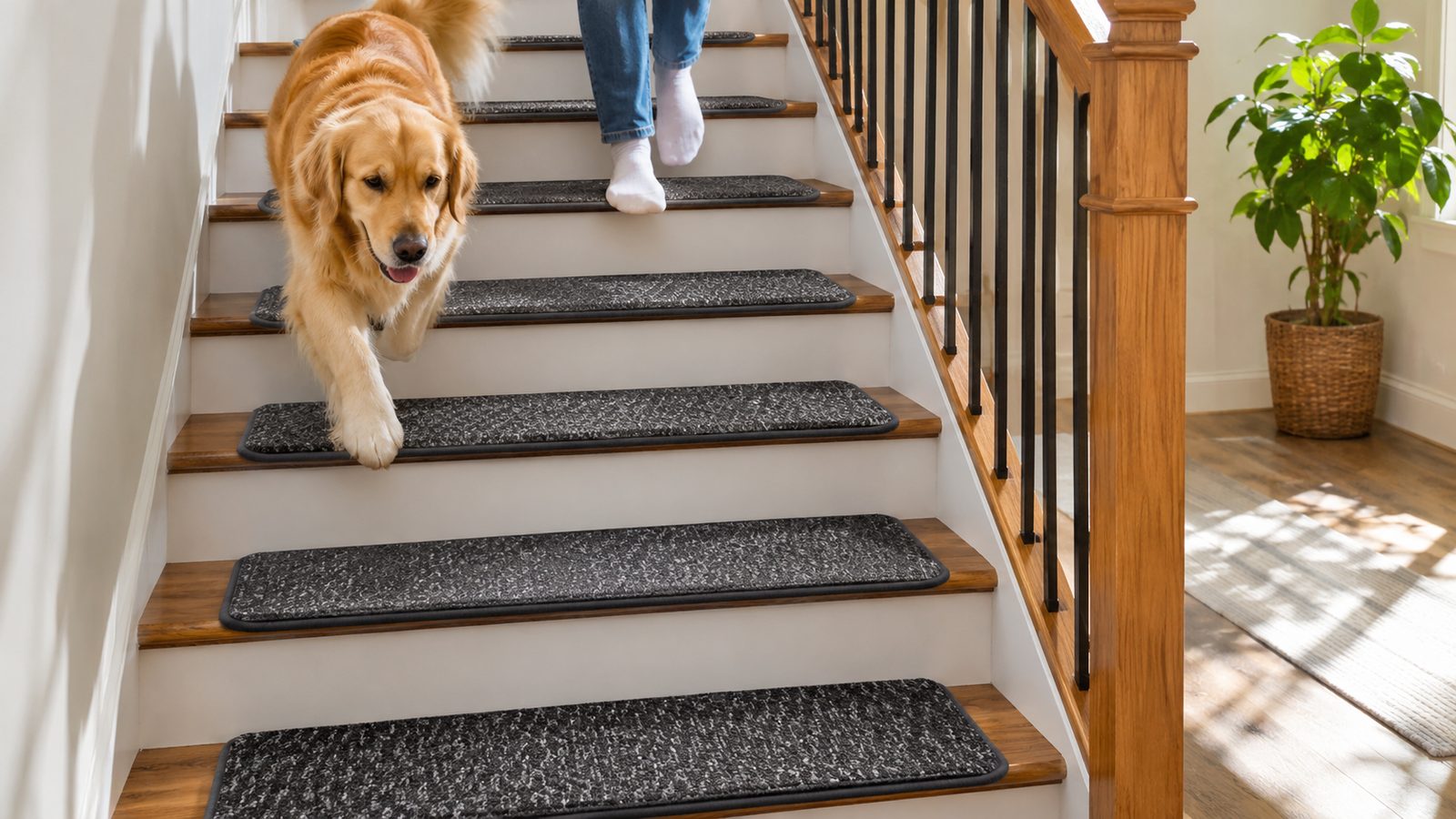
Carpet pads are popular on hardwood, laminate, and other indoor stairs. Their textured fibers can improve footing while adding warmth underfoot. They can also soften footstep noise in busy homes. Look closely at the backing before choosing a set. Some products use reusable gripping materials, while others rely on adhesive or separate tape. The backing must remain flat without sliding during normal use. Carpet designs work especially well where appearance matters as much as traction. Neutral colors can blend into existing interiors without covering the whole staircase. Regular vacuuming helps keep grit from collecting in the fibers.
Rubber Treads for Wet or Utility Areas
Rubber is practical for porches, garages, basement steps, and other moisture-prone locations. Textured surfaces can maintain useful traction when shoes bring water onto the steps. Many products are also easy to sweep or rinse. Outdoor models should be specifically rated for exterior exposure. Sunlight, freezing temperatures, rain, and heat can damage products intended only for indoor conditions. Drainage also matters because trapped water can create another hazard. Check how the tread remains secured before installation. A heavy rubber mat can still move if the size or backing does not suit the surface. Corners and front edges should remain flat after repeated use.
Abrasive Grip Tape for Maximum Traction
Abrasive strips use a rough surface to increase friction beneath footwear. They work well on smooth steps where a low-profile solution is preferred. Common applications include concrete, metal, painted wood, tile, and finished wood. Surface preparation has a major effect on adhesive performance. Dust, wax, grease, moisture, and loose paint can weaken the bond. Clean the step and follow the product’s drying instructions before applying anything. Placement should cover the normal foot-contact area without hanging over an edge. Avoid creating seams or corners that can lift under traffic. Inspect adhesive products periodically because worn edges can become a trip point.
Clear Strips for Finished Wood Stairs
Clear traction strips can improve grip without hiding attractive wood grain. They suit homeowners who dislike the appearance of carpet pads or dark abrasive tape. Their subtle appearance can work well in modern interiors. These products still need compatible, smooth surfaces. A strip that cannot bond evenly may trap air or lift along the edge. Check the manufacturer’s approved surface list before installation. Removal requirements deserve attention on expensive finishes. Adhesives differ in strength, curing behavior, and residue. Test a discreet area when the product instructions recommend doing so.
How the Main Tread Types Compare
| Factor | Carpet | Rubber | Abrasive Tape | Clear Grip Strip |
|---|---|---|---|---|
| Indoor comfort | Excellent | Fair | Fair | Good |
| Outdoor use | Limited | Excellent | Good when rated | Product-dependent |
| Wet traction | Moderate | Strong | Strong | Moderate to strong |
| Noise reduction | Strong | Moderate | Minimal | Minimal |
| Visual impact | Noticeable | Noticeable | Noticeable | Low |
| Cleaning | Vacuum or wash | Sweep or rinse | Brush or wipe | Wipe |
| Installation | Easy to moderate | Easy to moderate | Easy | Easy |
| Surface protection | Strong | Strong | Limited | Limited |
Verdict: carpet is the strongest all-around choice for comfortable indoor stairs. Rubber makes more sense for exposed or wet areas. Abrasive strips are the practical pick when strong traction and a thin profile matter most.
How to Choose the Correct Size
Measure the usable width and depth of each step instead of assuming every stair matches. Older stairs and remodeled staircases can have small dimensional differences. Measure several steps before ordering a full set. A tread should cover the normal walking zone without interfering with the stair edge. Products that are too small may leave the busiest area exposed. Oversized products can curl, overlap, or sit incorrectly near the nosing. Pay particular attention to transitions near landings and doorways. A raised edge can create a new problem where people already change their stride. Housnyst’s Door Threshold Guide also explains why smooth floor transitions matter around entrances.
Match the Product to Your Existing Flooring
Finished wood needs different treatment from unfinished concrete or outdoor masonry. Strong adhesives can interact with coatings, paint, wax, or delicate finishes. Always check product compatibility before sticking anything to a finished surface. Homes with vinyl surfaces deserve the same care. Housnyst’s LVP Flooring Cost Guide explains how flooring construction, surface preparation, and finish choices affect renovation decisions. Manufacturer guidance should decide whether an adhesive can touch the specific flooring. Concrete and painted utility stairs usually tolerate heavier traction solutions. Yet weak paint or dusty concrete can prevent adhesive from bonding correctly. Repair loose surfaces before adding a covering.

Installing Treads Without Creating New Hazards
Start by removing dust, grit, grease, and moisture from every step. Let washed surfaces dry fully before using adhesive-backed products. Skipping preparation can shorten the life of the installation. Position one piece before removing protective liners or applying permanent fasteners. Check alignment from the top and bottom of the staircase. Consistent placement creates a cleaner appearance and more predictable footing. Press or fasten the material according to its instructions. Do not assume extra household glue will improve a product designed for another attachment method. Mixing adhesives can damage finishes or create uneven edges. After installation, walk the stairs carefully and inspect every piece. Check corners, front edges, and areas near the wall for movement. Correct a loose section immediately instead of waiting for it to worsen.
Five Details Buyers Often Overlook
1. Wet and Dry Performance
A product that feels secure indoors may behave differently when wet. Outdoor stairs face rain, snow, mud, and changing temperatures. Choose products rated for those conditions rather than relying on indoor descriptions.
2. Cleaning Requirements
Fabric surfaces usually require more frequent vacuuming than rubber or abrasive strips. Outdoor rubber can often be swept or rinsed. Choose maintenance requirements you will realistically keep up with.
3. Pets and Bare Feet
Coarse grit can feel uncomfortable against bare skin and sensitive paws. Carpet offers a softer surface for indoor family spaces. Rubber textures vary, so inspect the pattern before buying.
4. Edge Visibility
Seeing where one step ends can help people judge the staircase more clearly. Contrasting colors can make tread edges easier to distinguish. This can be useful where lighting or visual contrast is limited.
5. Replacement and Removal
No tread lasts forever under continuous traffic. Adhesive edges can loosen, fabric can wear, and rubber can crack over time. Consider replacement effort before committing to a permanent-looking installation.
Stair Treads Are Only One Part of Stair Safety
Better traction cannot correct broken steps, loose railings, poor lighting, or clutter. National fall-prevention guidance also emphasizes secure handrails and clear walking paths. Treat the stair surface as one part of a larger safety check. Lighting should make each step and edge easy to recognize. Replace burned-out bulbs and improve dark landings where needed. Motion-activated lighting can also help in frequently used passageways. Nearby maintenance can affect safety as well. Water entering around an exterior doorway may eventually reach steps or landing surfaces. Housnyst’s Weather Stripping Guide covers ways homeowners can address common door and window gaps.
When Should You Replace a Worn Tread?
Replace a covering when it slides, curls, cracks, tears, or no longer provides dependable grip. A damaged edge deserves prompt attention because shoes can catch underneath it. Repeated repairs may signal that the material does not suit the location. Outdoor products should also be checked after harsh weather. Freezing temperatures, strong sunlight, and standing water can accelerate wear. Inspect the complete staircase instead of replacing only the most obvious damaged piece. If movement keeps returning, reconsider the attachment method or tread type. The underlying surface may also need cleaning or repair. Secure installation matters as much as the material itself.
Frequently Asked Questions
Do non slip stair treads work on hardwood stairs?
Yes, many designs are intended for finished wood stairs. Compatibility depends on the backing, adhesive, and floor finish. Check the manufacturer’s instructions before attaching anything permanently.
Are carpet or rubber stair coverings safer?
Neither material is automatically safer in every setting. Carpet works well for dry indoor comfort, while rubber suits wetter environments. Secure fit and proper installation matter more than material alone.
Can adhesive treads damage wood finishes?
Some adhesives can leave residue or affect certain coatings. Product chemistry and finish condition influence removal results. Read the approved-surface guidance before installation.
Are stair grip strips suitable outdoors?
They can be when the manufacturer rates them for exterior exposure. Outdoor products must tolerate moisture and temperature changes. Indoor-only tape may fail sooner outside.
How often should stair traction products be replaced?
There is no universal replacement schedule for every material. Traffic, weather, cleaning, and installation quality all affect lifespan. Replace a product when it becomes loose, damaged, worn, or less secure.
Should every step have a tread?
Consistent treatment is usually easier for users to anticipate. Mixing covered and uncovered steps can change traction unexpectedly. Follow the product instructions and assess the whole staircase before installation.
Choose for the Staircase You Actually Have
The strongest choice matches the surface, environment, traffic, and people using the stairs. Measure carefully and prioritize secure edges over decorative appeal alone. Then inspect the installation as part of normal home maintenance. For most indoor U.S. homes, carpet pads offer a useful balance of comfort, appearance, and traction. Rubber works better around moisture, while abrasive strips suit harder-working surfaces. Use Housnyst’s related flooring and doorway guides when the project extends beyond the steps themselves. —