


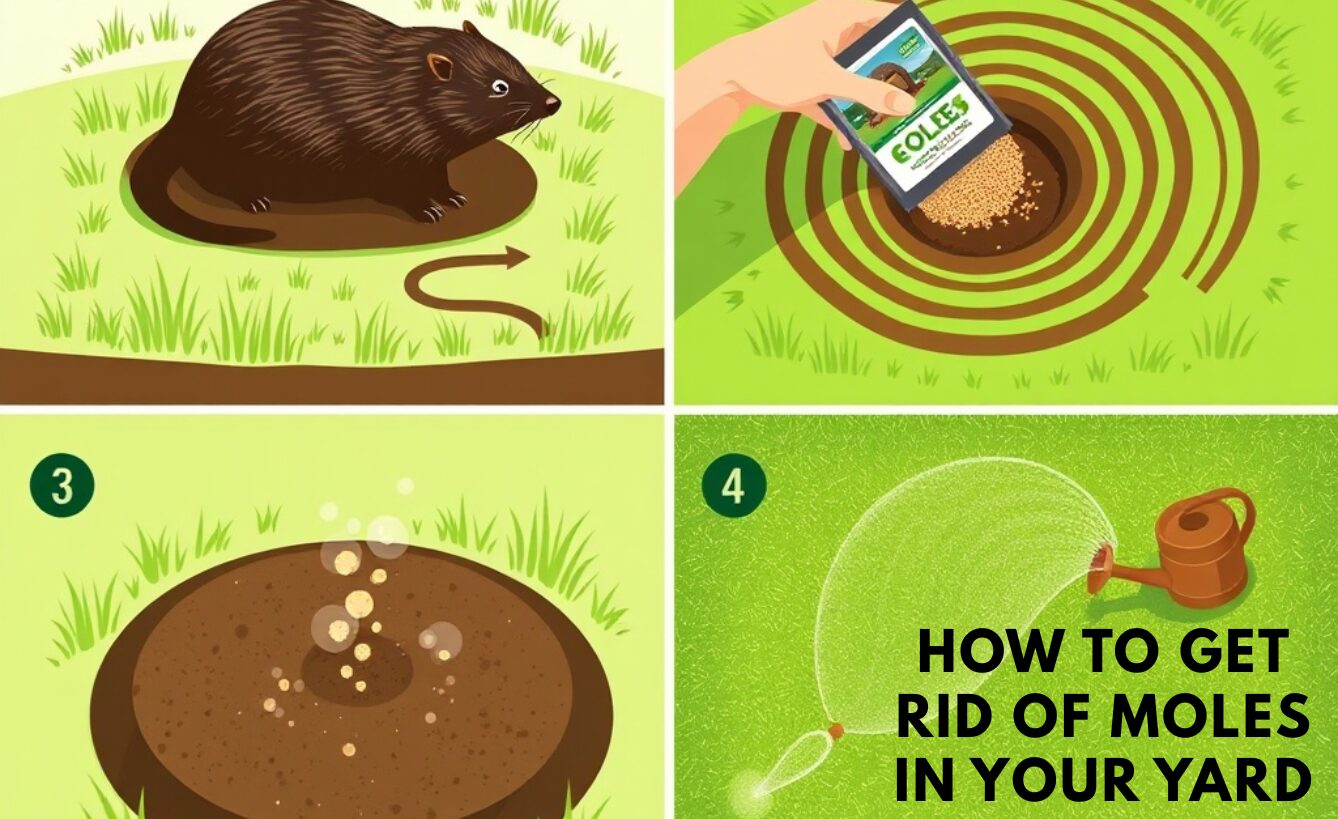
Dealing with underground pests can be frustrating for homeowners, especially when they leave unsightly tunnels and mounds across an otherwise healthy lawn. Understanding how to get rid of moles in your yard starts with learning about their behavior, food sources, and the conditions that attract them. Moles are not plant-eaters but insectivores that dig extensive tunnel systems in search of earthworms and grubs, often causing significant surface disruption.
While their presence can damage lawns and create uneven ground, effective control is possible through a combination of accurate identification, habitat modification, non-lethal deterrents, and targeted interventions when necessary. By taking a strategic, informed approach, homeowners can manage mole activity while maintaining a healthy, balanced outdoor environment.
| Aspect | Details |
| Topic | How To Get Rid Of Moles In Your Yard |
| Main Problem | Lawn damage from tunneling and soil mounds |
| Cause of Activity | Search for food (earthworms, grubs) |
| Key Signs | Raised ridges, dome-shaped mounds, and uneven ground |
| Mole Behavior | Solitary, underground tunneling mammals |
| Non-Lethal Methods | Habitat modification, moisture control, repellents |
| Food Source Control | Reduce grubs using biological treatments. |
| Repellents | Castor oil-based products have limited effectiveness. |
| Devices | Sonic/vibrational tools (temporary results) |
| Physical Barriers | Mesh or hardware cloth for small areas |
| Trapping | Effective when correctly placed in active tunnels |
| Chemical Control | Generally ineffective or restricted |
| Best Approach | Integrated pest management strategy |
| Prevention Tips | Proper watering, drainage, and lawn maintenance |
| Common Mistakes | Misidentification, overwatering, and relying on one method |
| Long-Term Solution | Combine monitoring, prevention, and targeted action. |
How To Get Rid Of Moles In Your Yard?

Moles are small, primarily insectivorous mammals adapted to a subterranean lifestyle, and understanding their biology helps explain why they make the landscapes they do, especially when learning how to get rid of moles in your yard. Most moles feed on earthworms, grubs, and other soil-dwelling invertebrates rather than plant roots, and their need for a near-constant food supply drives extensive tunneling.
Their bodies are built for digging: strong, paddle-like forefeet, compact bodies, and sensitive snouts enable them to move through soil quickly and efficiently. Moles construct shallow surface runways for foraging and deeper galleries for nesting and longer travel. Surface runways appear as raised, winding ridges just under the grass, while deeper tunnels often result in small, dome-shaped “push-up” mounds where soil has been forced to the surface.
Seasonal patterns in activity can vary by species and region, but many homeowners notice increased tunneling in spring and fall. Because moles are largely solitary, a lawn usually hosts only one or a few individuals, yet even a single mole can create enough disturbance to be a significant nuisance.
Signs of Mole Activity in Your Lawn
- Raised, sinuous ridges crossing the lawn indicate shallow runways that moles use to hunt for food.
- Conical or dome-shaped mounds form when moles excavate deeper tunnels and push displaced soil upward; these differ from the fan-shaped mounds created by gophers and the flattened surface runways left by voles.
- Collapsed tunnel sections can produce sunken patches or irregular turf surfaces that may be hazardous to people and pets.
- A noticeable reduction in visible earthworm activity can be an indirect sign of mole presence, since moles feed heavily on worms and can locally deplete their numbers.
- Differentiating mole damage from other pests is important because treatments differ: voles leave surface paths and often eat plants, while gophers leave fan-shaped mounds and open burrow holes.
Natural and Non-Lethal Ways to Reduce Mole Activity
Habitat Modification: The Foundation of Mole Control
For homeowners who prefer non-lethal or environmentally sensitive approaches, habitat modification is the cornerstone of mole management.
Reduce Food Sources
Because moles follow food, reducing populations of grubs and other soil pests can make a yard less attractive; biological controls such as beneficial nematodes and targeted microbial products can reduce grub numbers without broadly harming beneficial insects or earthworms.
Manage Lawn Moisture
Managing moisture is also important: overwatered lawns and leaky irrigation systems encourage earthworms and other prey, so addressing irrigation practices and improving drainage will make the environment less favorable to moles.
Use Castor Oil-Based Repellents
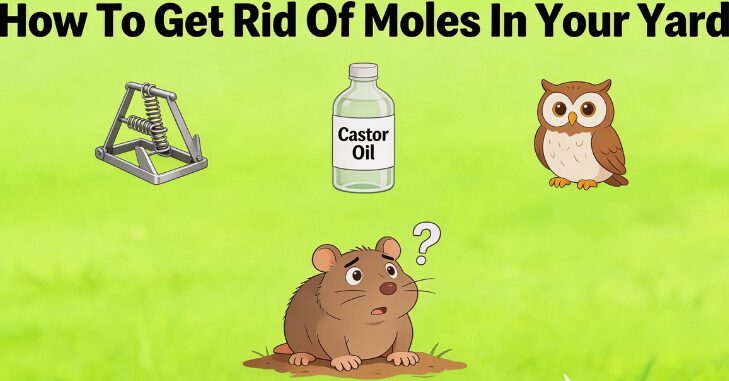
Castor oil-based repellents are widely used as a non-lethal measure; these products are applied to the lawn and can alter the soil environment enough to encourage moles to move on, though they require regular reapplication and are not universally effective.
Sonic and Vibrational Devices
Sonic and vibrational repellents, which emit periodic vibrations intended to disturb moles, produce mixed results in studies and field reports; they sometimes work temporarily, but moles may habituate.
Natural and Anecdotal Deterrents
Planting supposed repellent species or using predator scents such as fox or coyote urine are anecdotal approaches with variable efficacy.
Install Physical Barriers
Installing physical barriers, such as hardware cloth or buried mesh, around small, high-value beds can protect gardens or flowerbeds from tunneling. Still, it is impractical for entire lawns due to the depth and labor required.
Humane Trapping and Relocation Considerations
Live-trapping is an option for those seeking a non-lethal resolution, but it carries practical and ethical complications. Cage-style live traps may capture a mole, but success depends on correct placement in active tunnels and frequent monitoring. Relocation of trapped moles is controversial and in many places illegal; relocated individuals often struggle to survive because they are territorial, unfamiliar with new food sources, and vulnerable to predators.
Before attempting live-trapping and relocation, homeowners should check local wildlife regulations and consult with animal control or wildlife rehabilitators. If relocation is not a legal or humane option, humane lethal methods or professional removal may be preferable to prolonged trapping that causes stress to the animal.
When Trapping or Lethal Control Is Appropriate
- When non-lethal measures fail to stop destructive tunneling, targeted trapping is often the most effective and environmentally responsible lethal method.
- Many pest professionals recommend scissor-jaw, harpoon-style, and tunnel traps because they kill quickly and directly, helping to avoid widespread environmental contamination.
- Effective trapping requires accurately locating active runways, exposing short sections of tunnel, and correctly orienting and setting traps so moles trigger them during normal travel.
- Traps should be checked frequently to minimize animal suffering and to comply with local laws and regulations.
- Poison baits are generally ineffective for moles because moles do not consume grain-based rodent baits.
- Fumigants and gas products are hazardous to humans, pets, and non-target wildlife, and their use is often restricted to licensed applicators.
- Environmental and ethical concerns about animal suffering and collateral impacts make poisoning an unattractive option for most homeowners.
Integrated Strategies for Long-Term Success

The most successful approach to mole control is an integrated one that combines accurate identification, habitat modification, repellents, targeted trapping when necessary, and ongoing prevention. Start by confirming mole activity over several days, then repair irrigation leaks, reduce moisture, and address any significant grub populations with biological or targeted control measures.
Apply castor oil repellents across affected areas and consider sonic or vibrational devices as complementary tools rather than sole solutions. If activity persists, set traps or hire a professional experienced in mole removal. After the moles have been removed, promptly repair tunnels, regrade mounds, and reseed thin patches to prevent recolonization. Monitoring the lawn regularly, especially during spring and fall, helps you catch new activity early so it can be addressed before it becomes more extensive.
Prevention Tips to Keep Moles Away
Preventing moles from returning is just as important as removing them, and it largely depends on making your yard less attractive to their food sources and tunneling behavior. Maintaining proper lawn drainage, avoiding overwatering, and regularly inspecting for grub infestations can significantly reduce mole activity over time. You can also strengthen prevention by keeping grass healthy and dense, as well-maintained turf makes it harder for moles to create visible surface tunnels.
In addition, using natural deterrents or occasional soil treatments can help maintain a less inviting environment, ensuring that your yard remains protected from future mole damage.
Common Mistakes to Avoid When Dealing with Moles
Misidentifying the Pest
Misidentifying the pest is a frequent mistake that leads to inappropriate treatments, such as using rodent baits or gopher traps that won’t affect moles. Take the time to distinguish mole activity from damage caused by voles, gophers, and other burrowing animals before choosing a control method.
Irrigation and Overwatering
Overwatering lawns and failing to repair irrigation leaks make yards more attractive to moles by supporting abundant prey populations, such as earthworms and grubs. Fix leaks, improve drainage, and adjust watering schedules to reduce moisture that attracts moles.
Injudicious Insecticide Use
Broad-spectrum insecticides intended to kill grubs can also harm earthworms and beneficial soil organisms, degrading soil health and inadvertently making the yard less resilient. Treat grub problems only when monitoring indicates damaging levels, and prefer biological or targeted controls where possible.
Overreliance on Sonic or Vibrational Repellents
Relying solely on sonic or vibrational repellents often fails in the long term because moles can adapt to constant disturbances. These devices may offer short-term relief but work best when used as part of an integrated approach that includes habitat modification and monitoring.
Illegal or Inhumane Relocation
Releasing trapped moles far from your property is often illegal and usually leads to the animal’s death due to territoriality, unfamiliar food sources, and increased predation. Always check local wildlife regulations and consult animal control or wildlife professionals before attempting relocation.
Failing to Monitor Traps
Another common mistake is failing to check traps frequently; trapped animals should not be left to suffer. Check traps daily and follow legal and humane guidelines for dispatch or release as applicable in your area.
Neglecting Lawn Repairs

Lastly, neglecting to repair and reseed damaged turf invites reestablishment and leaves hazardous uneven ground. Promptly smooth tunnels and mounds, topdress and overseed or replace sod as needed to restore even, healthy lawn surfaces.
Conclusion
In conclusion, mole problems in the yard are frustrating but manageable when approached thoughtfully. By accurately identifying mole activity, prioritizing habitat modification and non-lethal deterrents, and using targeted trapping or professional removal only when necessary, you can protect your lawn and garden while minimizing environmental harm.
Consistent lawn care, proper watering, drainage, and timely turf repairs, combined with monitoring and selective use of repellents or barriers, will reduce the likelihood of reinfestation. When in doubt, seek advice from extension services or local experts to make sure procedures are applied humanely and in accordance with the law.
Most homeowners can restore their yards and, in doing so, learn how to get rid of moles in your yard. With perseverance, patience, and a well-thought-out plan, they can keep moles from returning.
Want to know about The Ultimate Complete Guide to How to Get Rid of Wasps Safely? A Guide to Identification, Removal Methods, Prevention Tips, and Expert Solutions Check out our
Cleaning category.
FAQs
If repelling them isn’t good enough, there are two very effective ways to kill moles – trapping and baiting. Tomcat provides products for both options to meet your specific needs and preferences. You’ll have the most luck killing moles in your yard if you use traps or bait in the spring or fall.
Mole traps are the most effective way to get rid of moles, but by law, they must be installed correctly and checked daily to ensure the moles are killed instantly and don’t suffer. It’s best to have a pest control expert install mole traps if you choose to use them. Make use of sonic mole repellents.
If moles appear out of nowhere in your yard, it’s probably because of increased soil moisture or food availability, though seasonal shifts may also be the cause.
According to lawn expert Lori Johnson, “[it] is a common, natural way many people use to keep moles away from their yard.” She suggests combining one part dish soap with three parts castor oil as a recipe. In regions where moles seem to be active, a gallon of water is mixed with four tablespoons of this mixture and sprayed.