

Introduction
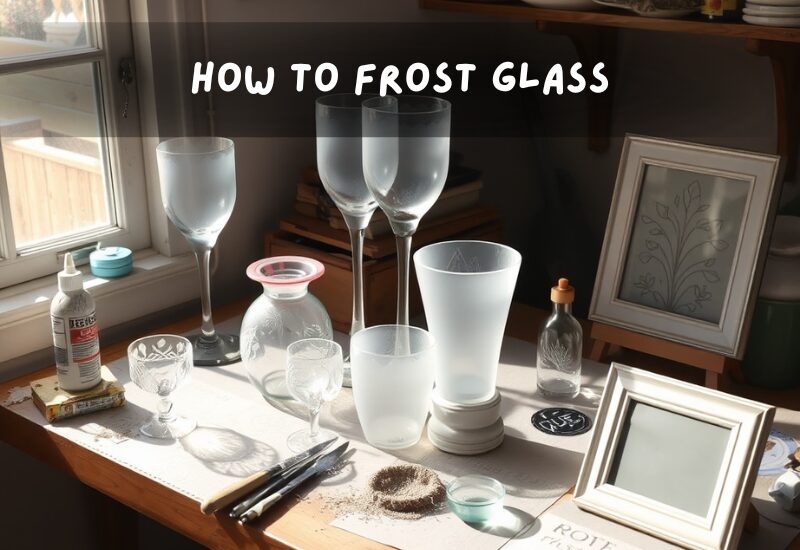
Frosted glass is a top-notch way to add privacy and style to your home or office without losing that beautiful natural light. Whether you’re keen on sprucing up your bathroom windows, jazzing up some jars, or blocking out nosy neighbors, learning how to frost glass is easier than you might think—and it won’t cost you an arm and a leg.
From quick fixes like how to frost glass with paint using frosted spray paint to more creative approaches like how to frost glass with Epsom salt, there’s a method for every project.
If you’re after a hands-on solution, you can even try how to frost glass with sandpaper for a textured finish or go all-in with how to frost glass with acid for a permanent and professional look.
This guide will walk you through everything from how to frost glass windows and how to frost glass doors for added privacy, to smaller projects like how to frost glass jars for decorative purposes. So grab your tools and let’s crack on with how to frost glass DIY like a true legend!
Creative Methods for Frosting Glass
Frosting glass not only enhances privacy but also adds a stylish touch to various surfaces in your home. One popular method is using frosted glass spray paint, which offers a quick and easy way to achieve a frosted look on windows, doors, or decorative jars. For a more durable and permanent solution, etching cream can provide a professional finish. Additionally, applying frosted window film is an excellent alternative for renters, as it is removable and allows for easy application without specialized tools. For a unique DIY approach, mixing Epsom salt with warm water can create a decorative frosted effect perfect for jars or vases. With these versatile methods, you can transform glass surfaces while maintaining a beautiful aesthetic.
How to Frost Glass: DIY Methods
There are heaps of ways to frost your own glass at home, depending on whether you want something temporary or permanent. Here are some of the most popular techniques:
1. Using Frosted Glass Spray Paint
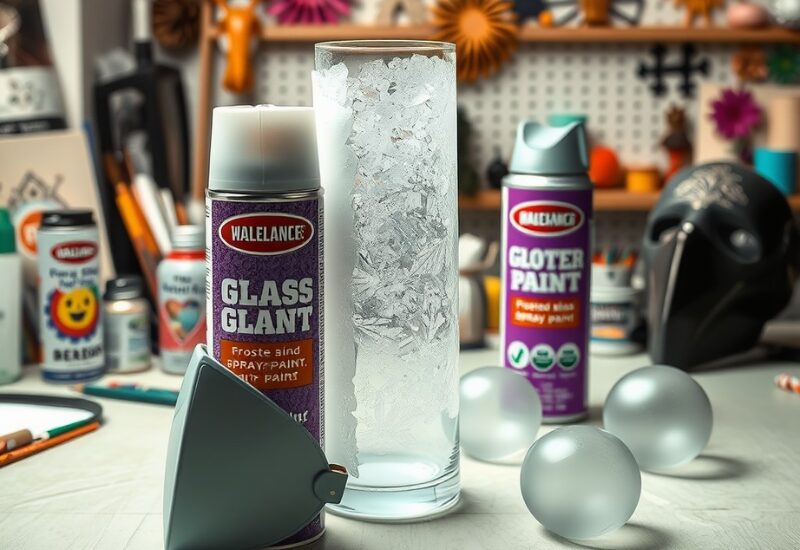
This is hands-down one of the easiest ways to get that frosted look on your glass. It’s perfect for windows, doors, or smaller projects like jars.
Steps:
- Give your glass a good clean with soapy water or some Windex—no one wants streaks under their frosting! Let it dry completely.
- Mask off any areas you don’t want frosting using painter’s tape or stencils.
- Shake the spray can like mad and apply an even coat from about 20–30 cm away.
- Let it dry completely before adding another coat if needed.
- Once it’s dry as a bone, carefully peel off any tape or stencils.
Pros: Quick and easy; great for temporary projects.
Cons: Can wear off over time if not sealed properly.
2. Applying Frosted Window Film
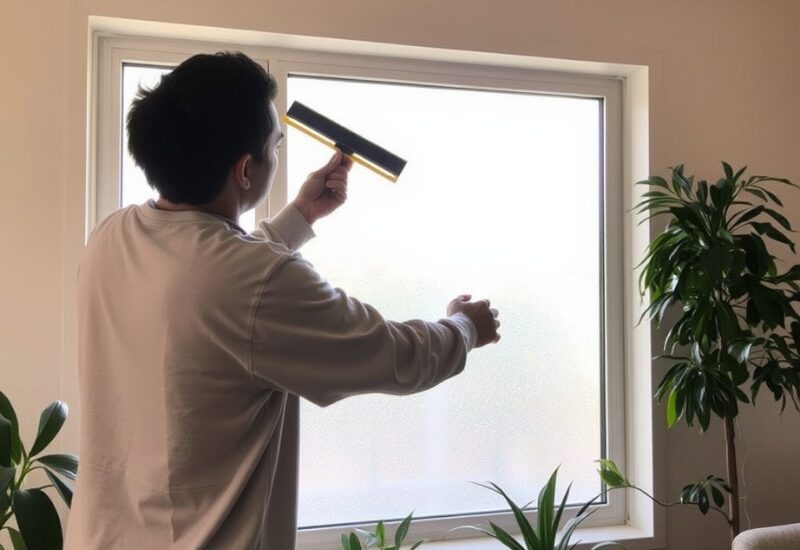
Window film is another top-notch option that doesn’t require any fancy tools or skills. Plus, it’s removable—perfect if you’re renting!
Steps:
- Measure your glass and cut the film to size (a ruler and sharp scissors will do the trick).
- Clean your glass thoroughly and spray it with soapy water before applying the film—it helps with positioning!
- Carefully stick the film onto the wet surface and smooth out any bubbles with a squeegee or an old credit card.
- Trim any excess film with a sharp knife for a neat finish.
Pros: Affordable; removable; no mess.
Cons: Takes a bit of patience to get it just right.
3. Using Etching Cream
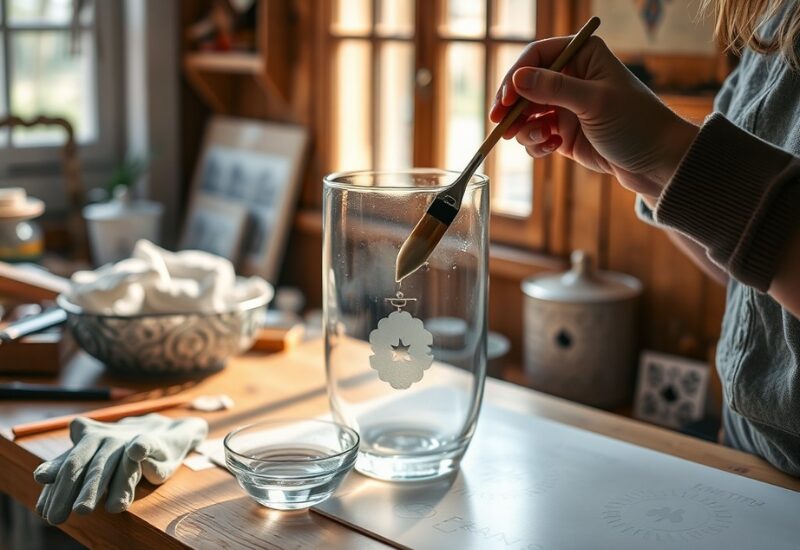
Etching cream is perfect if you’re after something permanent and professional-looking.
Steps:
- Chuck on some gloves—it’s strong stuff—and follow all safety instructions on the label.
- Apply the cream evenly using a brush or sponge.
- Let it sit for about 5–10 minutes (check the instructions on your product).
- Rinse it off thoroughly with water and dry with a clean cloth.
Pros: Permanent; gives a professional finish.
Cons: Requires careful handling; not ideal for large surfaces.
4. Frosting Glass with Sandpaper

If you’re feeling adventurous (and don’t mind getting stuck in), sandpaper can give you that frosted look by lightly scuffing up the surface of the glass.
Steps:
- Grab some fine-grit sandpaper (400–600 grit works best).
- Gently rub the sandpaper over the surface in circular motions until you get your desired level of frostiness.
- Wipe away any dust with a damp cloth when you’re done.
Pros: Cheap as chips; no chemicals required.
Cons: Labour-intensive; can be uneven if not done carefully.
5. Frosting Glass with Epsom Salt
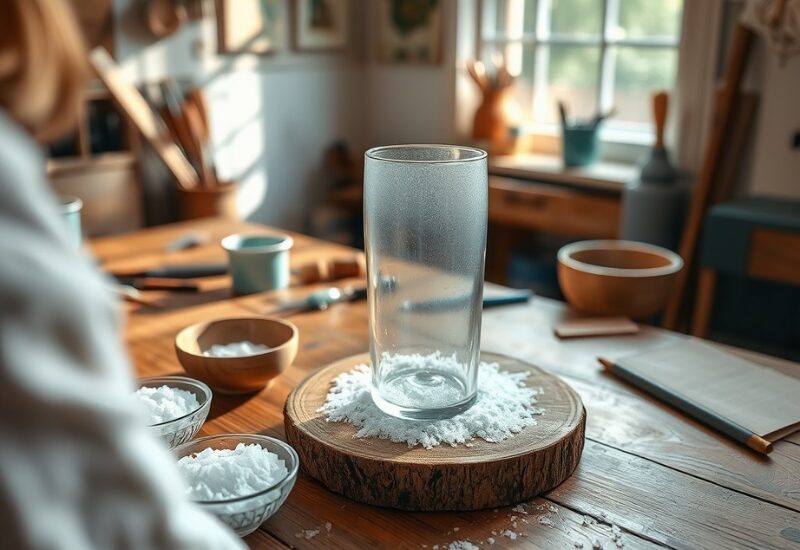
For decorative projects like jars or vases, Epsom salt creates a unique frosted effect that looks like snowflakes—perfect for Christmas decorations!
Steps:
- Mix Epsom salt with warm water until dissolved.
- Apply the mixture to your glass using a brush or sponge.
- Let it dry completely—it’ll leave behind a textured frosted finish.
Pros: Great for creative projects; budget-friendly.
Cons: Not durable; best for decorative use only.
Some Other Options
- How to frost glass with paint?
Using frosted spray paint is one of the simplest ways to frost glass. Clean the surface thoroughly, mask off areas you don’t want painting, and apply thin coats evenly until you achieve your desired opacity. It’s perfect for windows, jars, or decorative projects! - How to frost glass with acid?
Acid etching is a professional method used to permanently frost glass. By applying acid cream evenly across the surface and rinsing it off after the recommended time, you can achieve a smooth and durable frosted finish—perfect for intricate designs or long-term projects.
Tips for Nailing Your Frosting Job
- Always work in a well-ventilated area when using sprays or etching cream—no one wants to be breathing in fumes!
- Test your method on a small section first to make sure you like how it looks before committing to the whole piece of glass.
- Use stencils or masking tape if you want patterns or designs—it’s an easy way to add some flair!
- For large surfaces like windows or doors, take your time to avoid streaks or bubbles.
How to Frost Different Materials
How do frostglass windows?
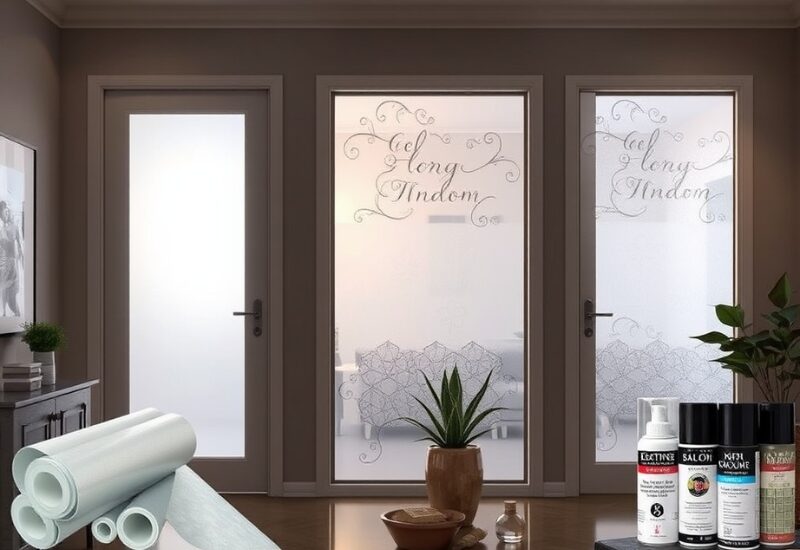
To frost glass windows, use frosted spray paint for a quick fix or frosted window film for a removable option—both are easy and provide privacy while letting light through.

How to frost glass doors?
Frosting glass doors is simple too; frosted window film works well for large surfaces, while etching cream or spray paint offers a more permanent solution.
How to frost glass jars?
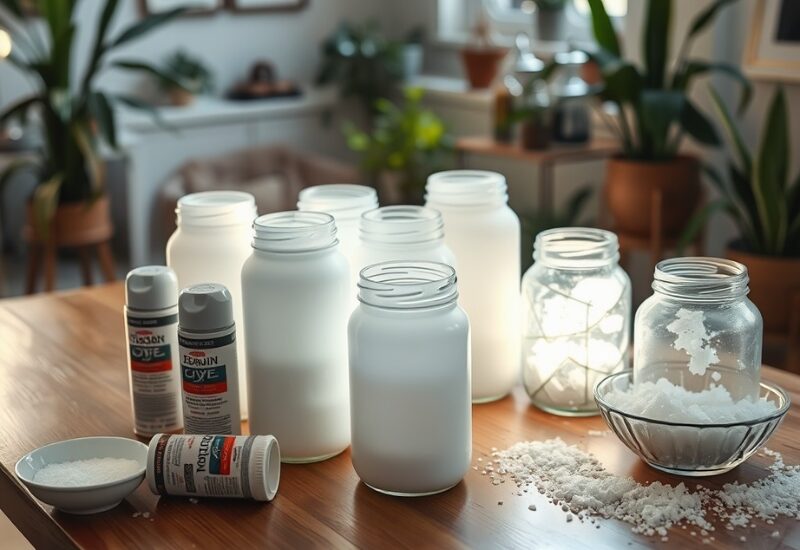
For glass jars, use frosted spray paint for a matte finish or Epsom salt for a textured, decorative look—great for gifts or home décor.
Benefits of Frosted Glass
- Frosted glass provides privacy while letting natural light through, ideal for bathrooms, bedrooms, and offices.
- It gives any space a stylish, contemporary appearance.
- Budget-friendly DIY methods save money compared to pre-made frosted panels.
- Versatile for use on windows, doors, mirrors, jars, and more.
- Customizable with DIY techniques like stencils or Epsom salt for unique designs.
- Provides both short-term and long-term solutions to accommodate various needs.
Types of Frosted Glass
Before we dive into the DIY side of things, let’s quickly quiz the types of frosted glass you can buy if you’re after a professional finish.
Acid-Etched Glass
This type of frosted glass is made by applying acid to clear glass, giving it a smooth and uniform frosted look. It’s tough as nails and resistant to wear, making it ideal for shower screens or office partitions.
Sandblasted Glass
Sandblasted glass is created by blasting sand onto the surface of the glass, leaving it with a slightly rougher texture than acid-etched glass. It’s great if you’re after custom patterns or designs.
Satin Glass
Satin glass is like the Goldilocks option—it’s not too frosty and not too clear. It lightly blurs objects on the other side without completely blocking them out, making it perfect for subtle privacy needs.
If pre-made frosted glass isn’t quite what you’re after—or if you’re keen to save some dosh—DIY methods are an absolute winner.
DIY vs. Pre-Made Frosted Glass
If you’re tossing between doing it yourself or buying pre-made frosted glass panels, here’s what to keep in mind:
- DIY Methods: Cheap as chips and customizable but may need touch-ups down the track (especially spray paint).
- Pre-Made Frosted Glass: Durable and professional-looking but more expensive upfront; ideal for big jobs like shower screens or office partitions.
Conclusion
Frosting glass is an absolute game-changer when it comes to adding privacy and style without spending heaps of cash. Whether you’re going down the DIY route with sprays, films, or etching cream—or splashing out on pre-made frosted panels—you’ve got plenty of options to choose from.
So why not give one of these methods a crack? With just a bit of effort, you’ll have stunning frosted glass that looks like it cost an arm and a leg—but didn’t!
Apart from that if you want to know about “How to Frost Glass? Highlighting Its Methods, Benefits, Types, And Much More” then please visit our “Decoration” Category.
FAQs
Use peel-and-stick frosted window film—it’s easy to apply, gives a frosted look, and peels off cleanly, making it perfect for renters or temporary needs.
Absolutely! Roll glue onto the glass, tape off a pattern, and let it dry for a budget-friendly matte frosted finish.
Custom frosted glass requires specialized techniques, skilled labor, and expensive equipment, making it pricier than DIY options.
The easiest way to frost glass is by using frosted glass spray paint, which can be applied quickly and produces a frosted appearance without complex tools.
Yes, frosted window film is an excellent choice for frosting glass because it is easy to install, removable, and perfect for temporary applications.