


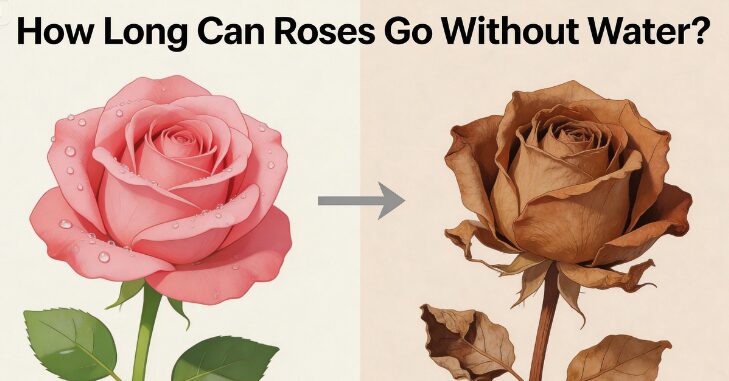
Established garden roses can usually go about 3 to 7 days without water in warm weather, and longer in cool, cloudy conditions, because deep roots draw moisture from lower soil layers. Newly planted roses and roses in pots may need water every one to three days in summer heat. Cut roses are the least forgiving: out of water they start to wilt within hours, though they last longer if kept cool.
Those are general ranges, not hard limits. How long your roses can go without watering depends on the plant’s age, its roots, your soil, the weather and whether it grows in the ground, in a container or in a vase. This guide covers each situation, the warning signs of a thirsty rose, how to revive one and how to water so your roses cope better with dry spells.
How Long Roses Can Go Without Water: Quick Reference
| Situation | Typical time without water | Notes |
|---|---|---|
| Established garden rose (2+ years), mild weather | About 1 week or more | Deep roots and mulch extend this; still aim for weekly deep watering |
| Established garden rose, hot and dry weather | About 3–5 days | Wind and heat speed up water loss |
| Newly planted rose (first season) | About 1–3 days | Roots have not spread beyond the planting hole yet |
| Potted rose outdoors in summer | About 1–2 days | Containers dry out fast; check daily in heat |
| Dormant rose in winter | Weeks | Water only if the ground is dry and not frozen |
| Cut roses out of water | A few hours | Longer when kept cold, as florists do |
| Cut roses in a vase | Change water every 1–2 days | Vase life is often around a week with good care |
These figures are rough guides based on common horticultural advice. Your own garden may differ, so use the soil and plant checks below rather than the calendar alone.
Garden Roses: Why Some Last Longer Than Others

A rose in the ground draws water through its roots, and the deeper and wider those roots, the longer it can tap moisture after the surface dries. The following factors make the biggest difference.
Age and root depth
Roses in their first growing season, including bare-root roses planted that spring, have small root systems. They behave almost like potted plants and need steady moisture until they establish. Mature roses that have been in the ground for a few years send roots well down into the soil and can cope with a dry week far better.
Type of rose
Rugged shrub roses and many species and old garden roses tend to tolerate dry spells better than heavily bred hybrid teas and floribundas, which put enormous energy into repeat flowering. Climbers, with their large leaf area, can use a lot of water in summer. If you garden in a dry climate, look for varieties described as hardy or drought-tolerant.
Soil type
Sandy soil drains quickly and holds little water, so roses in sand dry out sooner. Clay holds moisture longer but can become waterlogged and then crack when dry. Loamy soil, rich in organic matter, holds water while still draining, which is ideal. Working compost into the bed improves both sand and clay over time.
Weather and position
Heat, low humidity, wind and full afternoon sun all increase water loss through leaves and soil. A rose against a hot south- or west-facing wall can dry out much faster than one in an open bed. Roses under trees or near hedges also compete with those roots for water.
Season
Roses use the most water in late spring and summer while they grow and bloom. As growth slows in fall, needs drop, and dormant roses in winter need little water unless the weather is unusually dry and the ground is not frozen.
Mulch and care
A 2 to 3 inch layer of organic mulch such as shredded bark or wood chips keeps soil cooler and slows evaporation, often stretching the time between waterings. Keep mulch a few inches away from the canes to avoid rot.
Potted Roses Need Water More Often
Containers hold a limited volume of soil, and sun and wind hit the sides of the pot as well as the surface. In hot weather a potted rose may need water every day, and small or dark-colored pots dry out fastest. Use the largest pot practical, a quality potting mix rather than garden soil, and a pot with drainage holes. Self-watering containers or a saucer filled with gravel can help during a short trip, but never leave a pot standing in water for days, which can rot the roots.
Cut Roses: How Long Without Water?
Once cut, a rose has no roots and relies entirely on water drawn up the stem. Out of water, petals and leaves begin to droop within a few hours at room temperature. Air can also enter the cut end and block water uptake, which is why florists recut stems before arranging them.
- Recut 1 to 2 inches off each stem at an angle with a sharp knife or pruners, ideally under water.
- Remove any leaves that would sit below the waterline.
- Use a clean vase with fresh, cool water and the flower food that came with the bouquet.
- Change the water and recut the stems every day or two.
- Keep the vase away from direct sun, heaters and ripening fruit.
If roses have been out of water and are drooping, recut the stems and stand them in deep, cool water for a few hours; many will perk up if the petals have not started to dry out.
Signs Your Roses Are Thirsty

- Wilting or limp leaves and soft new shoots, especially in the morning or evening when the plant should look fresh. Midday wilting in extreme heat can be temporary, so check again in the evening.
- Yellowing or browning leaves, often starting at the edges or tips.
- Dry soil several inches down. Push a finger or trowel 2 to 3 inches into the soil near the plant. If it is dry at that depth, it is time to water.
- Buds that fail to open or blooms that crisp and brown at the petal edges.
- Smaller leaves and fewer flowers over time.
- Leaf drop, which is the plant’s way of cutting water loss under severe stress.
Some of these symptoms overlap with overwatering, which also causes yellowing leaves and wilting because waterlogged roots cannot take up water. Always check the soil before adding more water.
What Happens When Roses Go Too Long Without Water
Under drought stress, roses close the pores on their leaves to save water, which also slows photosynthesis and growth. Flowering drops off first, then leaves yellow and fall. Fine feeder roots can die back in very dry soil, which reduces the plant’s ability to take up water and nutrients even after watering resumes.
Stressed roses are also more vulnerable to pests such as spider mites, which thrive in hot, dry conditions. A mature rose often survives a dry spell by dropping leaves and slowing down, then recovers when watered, but repeated or prolonged drought can kill young plants and weaken older ones.
How to Revive a Dehydrated Rose
- Water deeply and slowly at the base, letting it soak in rather than run off. For a garden rose, several gallons applied slowly is better than a quick splash.
- Check the soil the next day and water again if it is dry a few inches down.
- Mulch around the plant to hold moisture.
- Remove dead leaves and spent blooms so the plant can focus energy on recovery, but hold off on heavy pruning or fertilizing until new growth appears.
- Give shade during heat waves with shade cloth for young or potted roses.
- Scratch a cane with a fingernail; green tissue underneath means that cane is alive.
Best Practices for Watering Roses

- Water deeply, not often. A thorough soak that wets the soil well below the surface encourages deep roots. A common rule of thumb is about an inch of water per week from rain and irrigation combined, more in heat or sandy soil.
- Water at the base. Wet foliage encourages fungal diseases like black spot. Drip irrigation or soaker hoses deliver water right to the roots.
- Water early in the day so any splashed leaves dry quickly and less water is lost to evaporation.
- Adjust for weather. Skip watering after a good rain and add extra during heat waves and windy spells.
- Improve the soil with compost to hold moisture without waterlogging.
- Plan for vacations. Water deeply and mulch before you leave, move pots into shade and group them together, or set up a simple timer on a drip line.
If you are installing drip lines or digging new rose beds near the house, it helps to know where buried pipes run before you start. Our guide to How Different Pipe Materials Affect Sewer Line Repair explains what is likely under your yard.
Common Rose Watering Mistakes
- Frequent shallow sprinkling, which keeps roots near the surface where they dry out fastest.
- Overwatering in heavy soil, leading to root rot and yellow leaves that look like drought stress.
- Evening overhead watering that leaves leaves wet overnight.
- Forgetting new plantings, which need regular water through their first summer.
- Ignoring potted roses during hot spells, when they may need daily attention.
Bottom Line on Roses and Water
A well-established rose in good soil can usually handle a dry week, but young roses, potted roses and cut flowers need much closer attention. Check the soil a few inches down rather than following a fixed schedule, water deeply at the base, and mulch to stretch the time between waterings. For more plant care guides, explore our Gardening category.
FAQs
Can roses go 12 hours without water?
Garden and potted roses easily go 12 hours without water as long as the soil holds some moisture. Cut roses out of water usually start drooping within a few hours at room temperature, though they last much longer when kept cold.
How often should I water roses?
Established garden roses generally do well with a deep watering about once a week, more in hot, dry or windy weather or sandy soil. New roses may need water every few days in their first season, and potted roses may need daily water in summer.
Can a wilted rose bush recover?
Often yes. Water deeply at the base, mulch, and check the soil again the next day. If the canes are still green under the bark, the plant is alive and should push new growth once it is watered consistently.
Is it better to underwater or overwater roses?
Neither is good, but persistent overwatering in heavy soil can rot roots and be harder to reverse. Check the soil 2 to 3 inches down and water only when it is dry at that depth.
How long do cut roses last in a vase?
With fresh water, clean vases, recut stems and flower food, cut roses commonly last around a week, sometimes longer. Changing the water every day or two and keeping them cool makes the biggest difference.
Do roses need water in winter?
Dormant roses need little water, but in dry winters with unfrozen ground an occasional deep watering helps prevent root damage. Potted roses kept in sheltered spots may need light watering every few weeks.