

A fire ring gives a wood-burning fire a defined boundary while keeping the setup simple. It works well for backyards, campsites, cabins, and other approved outdoor areas. Choosing the right design depends on size, material, placement, local rules, and how you plan to use it.
| Key detail | What to know |
|---|---|
| Main purpose | Creates a defined area around a ground-level wood fire |
| Common materials | Steel, stone, concrete, and masonry |
| Popular metal size | Around 36 inches in diameter |
| Typical design | Open bottom with raised sides |
| Common uses | Backyard gatherings, camping, cabins, and light outdoor cooking |
| Placement | Use a stable, noncombustible area with adequate surrounding clearance |
| Safety priority | Check local rules and keep water nearby |
| Best for | Homeowners and campers wanting a simple wood-burning setup |
A contained outdoor ring surrounds a wood fire built at ground level. Most models have an open bottom and raised metal or masonry sides. Choose a stable location, follow local fire rules, control the flame size, and keep water nearby whenever the fire is burning.
Key Takeaways
- Steel models are common because they are portable, durable, and easy to install.
- A 36-inch diameter is common, but smaller and larger options are available.
- Open-bottom designs differ from bowls because they do not contain the fire underneath.
- Local ordinances and temporary burn restrictions should always be checked first.
- Water should remain nearby until the fire and ashes are completely cold.
- Seating, plants, structures, and stored firewood need thoughtful spacing.
What Is a Fire Ring and How Does It Work?
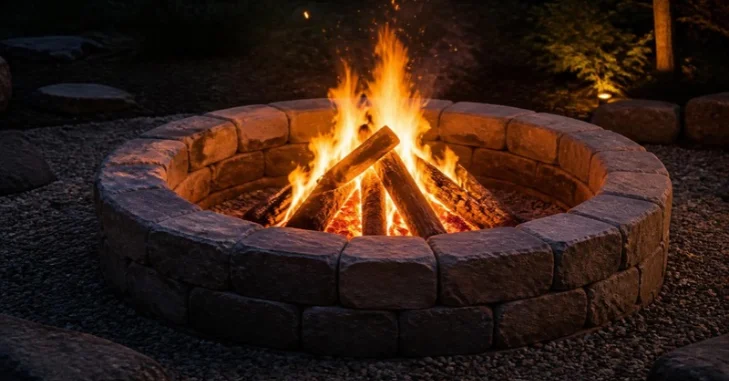
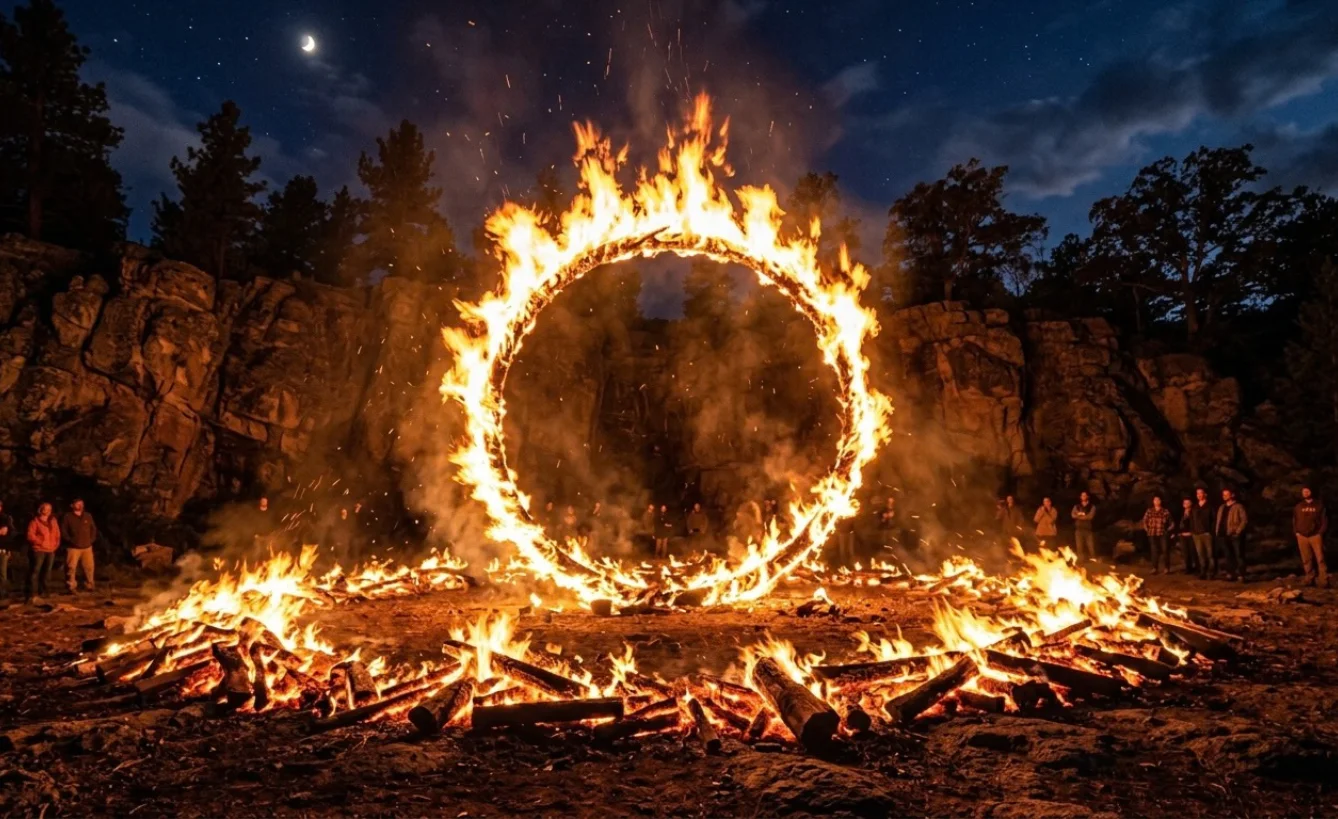
A fire ring is a circular barrier surrounding a fire built directly on the ground. Manufactured versions commonly use steel, while permanent designs may use stone or masonry. Its raised edge helps define the burning area and keeps logs from rolling outward.
Most manufactured versions do not include a solid bottom. Instead, wood burns over the prepared surface inside the ring. Tractor Supply describes these products as open-bottom frames that define a campfire area.
This simple construction makes them useful in both portable and permanent settings. Some models can sit above ground, while others work inside masonry surrounds. Certain steel inserts are also designed for partially in-ground installations.
Metal Ring or Traditional Fire Pit: What Is the Difference?
The biggest difference is the bottom and overall structure. A traditional pit or bowl usually contains the burning material on a built-in base. An open-bottom ring mainly forms the sides around a ground-level fire.
That difference affects placement and portability. Metal rings can often move between suitable locations more easily than built masonry pits. A full pit may offer more isolation between burning material and the surface below.
Your preferred setup should guide the choice. A simple ring suits homeowners wanting a rustic campfire experience. A raised bowl may suit patios where keeping the fire completely off the ground matters more.
Which Materials Work Best?
Steel is one of the most common choices for manufactured outdoor rings. It tolerates high temperatures and allows relatively thin walls without excessive weight. Many retail models also use high-temperature coatings to improve outdoor durability.
Stone and masonry create a heavier, more permanent appearance. These materials can work well when the feature forms part of a planned backyard zone. Installation takes more effort because the base, dimensions, and surrounding surface need careful preparation.
Concrete can also create a substantial permanent boundary. Whatever material you select, use products designed for high-temperature outdoor applications. Decorative materials not rated for intense heat may crack or fail unexpectedly.
What Size Should You Choose?
A diameter near 36 inches appears frequently among manufactured steel models sold in the United States. Examples from major retailers include several 36-inch products intended for backyard or camping use.
Smaller models can make sense when outdoor space is limited. Larger designs provide more room for wood but also require more surrounding clearance. Bigger should not automatically mean a larger fire.
Think about the complete gathering area before choosing a diameter. Chairs, walkways, landscaping, and firewood storage all require space around the burning zone. Housnyst’s backyard landscaping guide offers useful ideas for dividing a yard into functional zones. Housnyst backyard landscaping ideas
Where Should You Place It?
Start with a level location away from materials that could catch fire. Dry vegetation, low branches, fences, furniture, structures, and stored wood all deserve attention. The safest location can vary because municipal codes and seasonal restrictions differ across the United States.
National Park Service guidance also recommends checking local rules and current fire conditions before starting an outdoor fire. Conditions can change during dry or windy periods. Temporary restrictions may apply even where fires are normally permitted.
Ground conditions matter as much as surrounding clearance. Bare mineral soil, gravel, masonry, or another approved noncombustible surface can reduce exposure to nearby vegetation. Follow the product manufacturer’s placement instructions whenever you use a manufactured model.
If the feature sits within a landscaped yard, plan the surrounding plants carefully. Keep combustible vegetation outside the required safety area. Housnyst’s guide to different grass types can also help when planning the broader lawn around an outdoor gathering space. Housnyst guide to grass types
How to Set Up a Backyard Ring Safely
A safe setup begins before any wood is lit. Review local regulations, manufacturer instructions, and current weather conditions first. Postpone the fire when strong winds or official restrictions create unsafe conditions.
Prepare the interior with the surface recommended for your design. Keep the immediate surrounding area free from leaves, dry grass, paper, and other combustible debris. Place a bucket, hose, or another suitable water source within easy reach.
Arrange seating with enough room for people to move safely. Avoid creating narrow paths where someone could stumble toward the flames. Keep children and pets under close supervision whenever the area remains hot.
Outdoor lighting can make walkways easier to see after sunset. It should illuminate routes without creating glare around the seating area. Housnyst also covers pathway and exterior lighting considerations for outdoor spaces. Housnyst outdoor pathway lighting guide
Essential Fire Safety for U.S. Homeowners
Never leave an active or smoldering outdoor fire unattended. The National Park Service advises keeping water nearby and maintaining fires at a controllable size. Wind can move sparks beyond the intended burning area without much warning.
Keep extra firewood away from the flames instead of stacking it beside the ring. The National Park Service recommends keeping flammable gear away and placing spare firewood upwind. These simple precautions reduce the amount of nearby fuel available to escaping sparks.
Extinguishing the fire properly is equally important. Apply plenty of water, stir the remaining coals, and continue until everything is cold. NPS guidance states that a fully extinguished campfire should be cool to the touch.
Can You Cook Over One?
Some outdoor rings can support simple campfire cooking when their design permits it. Cooking grates and compatible accessories may allow hot dogs, marshmallows, or basic meals. Always confirm that the manufacturer approves cooking use before adding a grate.
Avoid assuming every decorative model is suitable for food preparation. Coatings, painted surfaces, or accessories may have restrictions around cooking. Follow the manufacturer’s instructions for grate placement and heat exposure.
Campground rules may add further restrictions. Public lands can limit fires to designated equipment or locations during high-risk periods. Check the managing agency’s current guidance before cooking over an open wood fire.
How to Make the Area More Comfortable
Treat the burning area as one part of a larger outdoor room. Create enough room for chairs without crowding the heat source. Leave clear walking paths between seating and the house, patio, or yard.
A gravel or masonry zone can visually separate the fire area from surrounding lawn. Chairs can then form a loose circle outside the required safety clearance. This layout encourages conversation without pushing people too close to the heat.
Consider wind direction before fixing permanent seating in place. Smoke naturally shifts as conditions change during the evening. Movable chairs give guests more flexibility when smoke begins drifting toward one side.
Maintenance and Long-Term Care
Remove cold ash when buildup begins reducing usable space inside the ring. Confirm that every ember is extinguished before handling or disposing of ash. Local waste rules may specify how cooled fireplace or campfire ash should be discarded.
Inspect metal walls for corrosion, loose fasteners, sharp edges, or severe heat damage. Surface rust can become more serious when moisture remains trapped against steel. Follow the manufacturer’s recommendations for cleaning and touch-up coatings.
Permanent masonry also needs occasional inspection. Look for loose blocks, cracking, shifting, or deteriorated mortar near high-heat areas. Repair damaged sections before lighting another fire.
Common Mistakes to Avoid
One common mistake is choosing the location mainly for appearance. A beautiful seating area still needs suitable clearances and a stable noncombustible surface. Safety requirements should determine the location before furniture and decorative details.
Another mistake is allowing the fire to grow larger than necessary. A contained boundary does not make an oversized blaze safe. Smaller fires are easier to control, extinguish, and enjoy comfortably.
People also underestimate how long hot coals retain heat. Flames may disappear while embers remain capable of starting another fire. Continue adding water and stirring until all remaining material is fully cold.
Create a Safer Backyard Gathering Area
A well-planned wood-burning area can become a comfortable focal point for cool evenings and casual gatherings. Choose the size and material around your available space, then design the surrounding area for safe movement. Local regulations and current fire conditions should always take priority over appearance.
Keep the flames modest, supervise the area continuously, and maintain a dependable water source. Give nearby furniture, plants, structures, and stored wood adequate distance from the heat. Careful planning makes the outdoor space easier to use and maintain throughout the year.
For your next backyard project, begin by mapping the full gathering zone before buying materials. Decide where people will sit, how they will approach the area, and where firewood will remain safely stored. That planning helps the finished space feel intentional rather than crowded.
Frequently Asked Questions
Is a fire ring safer than an open campfire?
A fire ring provides a defined boundary that can help keep logs and burning material together. It does not eliminate the hazards associated with open flames, sparks, wind, or hot coals. Safe placement, supervision, local compliance, and complete extinguishment remain necessary.
Do I need a permit for a backyard wood fire?
Requirements differ by city, county, state, and fire district. Some areas restrict recreational fires by size, location, air-quality conditions, or seasonal fire danger. Check your local fire department or municipal code before installing or using a permanent setup.
Can I put a metal ring directly on grass?
Direct placement on living or dry grass can expose vegetation and soil to intense heat. Use the surface and clearances required by the manufacturer and local fire rules. A prepared noncombustible area is generally a better choice for a permanent backyard installation.
What should I keep nearby while the fire burns?
Keep an adequate water source within easy reach. A shovel or appropriate fire extinguisher can provide another layer of preparedness. Someone responsible should remain present until the flames and embers are fully extinguished.