

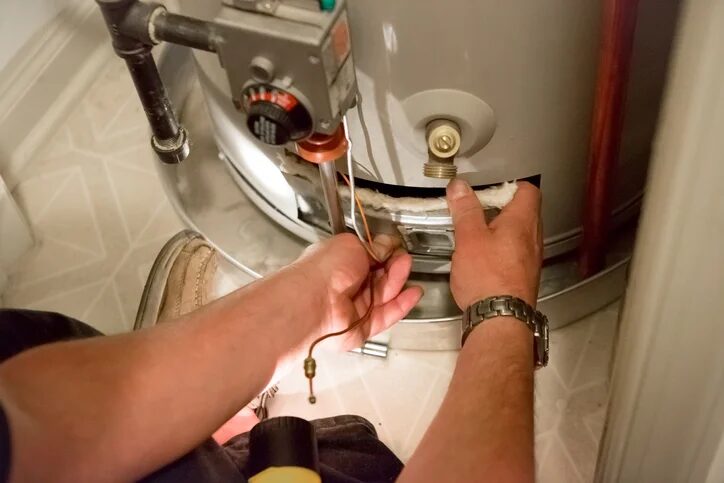
Water heater installation done properly means choosing the right type and size for your household, connecting water, fuel and venting to code, and fitting the safety parts (a working temperature and pressure relief valve, correct discharge pipe, and an expansion tank where required) before the unit is filled and fired. Most homeowners should hire a licensed plumber, pull a permit and expect a standard tank swap to take a few hours, while a switch to tankless or a heat pump model often takes a full day or more.
A water heater runs every day for a decade or longer, so small installation shortcuts turn into higher energy bills, leaks or a unit that dies years early. This guide walks through the choices to make before installation, what a professional install should include, typical cost ranges, warning signs that your current heater is due for replacement, and the maintenance that keeps a new one efficient.
Choosing the Right Type of Water Heater
The best installation starts with the right equipment. Each main type suits a different kind of home, budget and hot water pattern.
| Type | How it works | Best for | Trade-offs |
|---|---|---|---|
| Gas or electric storage tank | Keeps 30–80 gallons hot and ready at all times | Most households; simplest like-for-like replacement | Standby heat loss; limited by tank size during heavy use |
| Tankless (on-demand) | Heats water only as it flows through the unit | Homes wanting endless hot water and wall space savings | Higher upfront cost; gas models often need new venting and a larger gas line |
| Heat pump (hybrid) electric | Moves heat from surrounding air into the tank | Electric homes in warm or mild spaces like garages or basements | Taller and pricier; needs room and airflow; cools the space around it |
| Solar-assisted | Uses roof collectors to preheat water, with backup heating | Sunny regions and long-term owners | Highest upfront cost and more complex installation |
| Indirect / combi with boiler | Uses a home’s boiler to heat water in a separate tank | Homes already on a boiler for space heating | Depends on the boiler’s efficiency and condition |
Sizing it correctly
For a tank heater, the key figure is the first-hour rating (FHR) on the yellow EnergyGuide label, which tells you how much hot water the unit can deliver in a busy hour. Add up your peak hour: several showers back-to-back, a dishwasher and a load of laundry. A household of two often manages with a 40-gallon tank, while families of four or more commonly need 50 gallons or more, but the FHR matters more than the gallon number.
For tankless units, size by flow rate in gallons per minute and the temperature rise needed. Groundwater in northern states can arrive in the 40s°F in winter, so a unit that comfortably runs two showers in Texas may struggle with one in Minnesota. A good installer will calculate this rather than guess.
Fuel and venting
Staying with the same fuel usually keeps costs down. Switching from electric to gas means running a gas line and venting; switching from gas to a heat pump unit often needs a dedicated 240-volt circuit and a condensate drain. High-efficiency condensing gas heaters vent through PVC pipe and need a drain for condensate, which can be a good upgrade but adds work to the job.
What a Professional Installation Should Include
Whether you hire a local firm or compare quotes from several, the job should cover the following steps. Ask any installer to confirm each one in writing.
- Permit and inspection. Most US municipalities require a permit to replace a water heater. A licensed plumber normally pulls it and arranges the inspection.
- Shutting off and draining the old unit safely, turning off gas or power at the breaker, and disposing of the old tank responsibly.
- Checking the location: clearances from combustibles, access for service, a drain pan with a drain line where a leak could damage the home, and seismic straps in areas that require them.
- Water connections with a shut-off valve on the cold supply and new flexible connectors or hard piping, plus dielectric unions where copper meets steel to limit corrosion.
- Temperature and pressure relief valve installed and piped with a discharge line that runs to an approved location and ends within a few inches of the floor or a drain.
- Expansion tank where the home has a check valve or pressure-reducing valve creating a closed system, as many local codes require.
- Gas and venting with leak-tested gas connections, a sediment trap, and venting sized and pitched correctly so combustion gases leave the home. A carbon monoxide alarm nearby is a sensible addition.
- Electrical work on a correctly sized circuit and breaker for electric and heat pump units.
- Filling before firing. The tank must be completely full and air bled from the taps before power or gas is turned on, or electric elements can burn out in seconds.
- Setting and testing. The thermostat set to around 120°F, the relief valve tested, connections checked for leaks, and the warranty registered.
Skipping any of these steps is where most installation problems start: a missing expansion tank strains the tank and relief valve, a badly pitched vent can spill exhaust, and an unregistered unit can lose part of its warranty.
Typical Water Heater Installation Costs
Prices vary widely by region, fuel, brand and how much the installer has to change. The ranges below are broad ballpark figures for installed cost in the US, not quotes; always get two or three written estimates.
| Job | Typical installed range | What pushes the price up |
|---|---|---|
| Like-for-like tank replacement (gas or electric) | About $1,200–$3,500 | Larger tanks, tight spaces, code upgrades like expansion tanks or new venting |
| Tankless installation | About $2,500–$6,000+ | Converting from a tank, upsizing the gas line, new venting, whole-house units |
| Heat pump water heater | About $2,500–$6,000 | New electrical circuit, condensate drain, relocating the unit |
| Permit fee | Varies by town | Some areas charge more for fuel switches or new gas work |
Federal tax credits and local utility rebates have been available for qualifying heat pump water heaters and some high-efficiency gas units, but programs change. Check current eligibility with your utility and the ENERGY STAR site before you buy rather than relying on an installer’s summary.
Signs Your Water Heater Needs Replacing
- Age. Many tank heaters last around 8 to 12 years; tankless units often last longer with regular descaling. The manufacture date is usually coded in the serial number on the label.
- Rusty or discolored hot water, which can point to corrosion inside the tank.
- Water around the base of the tank. A leaking tank cannot be repaired and should be replaced promptly.
- Rumbling or popping from heavy sediment buildup that is no longer cleared by flushing.
- Running out of hot water faster than it used to, or uneven temperatures.
- Rising energy bills with no change in household use.
Water damage from a failed tank often spreads well beyond the utility room. If you are planning floor repairs after a leak, our guide to LVP Flooring Cost in 2026 can help you budget for replacement flooring.
Keeping a New Water Heater Efficient
- Flush the tank once a year to clear sediment, more often in hard water areas.
- Test the relief valve annually by lifting the lever briefly; if it does not reseat or keeps dripping, have it replaced.
- Check the anode rod every few years. Replacing a worn rod is cheap and can add years to a tank’s life.
- Descale tankless units as the manufacturer recommends, typically once a year in hard water areas.
- Insulate the first few feet of hot water pipe to cut heat loss on the way to the taps.
- Keep the thermostat around 120°F, which the U.S. Department of Energy suggests for most homes to balance comfort, efficiency and scald risk.
For more detail on settings and efficiency, the U.S. Department of Energy’s water heating guidance is a reliable, independent reference.
Choosing an Installer
Look for a licensed and insured plumber who will pull the permit, quote the full job in writing, and explain which code upgrades are included. Ask how they handle disposal of the old tank, whether the quote covers an expansion tank and drain pan, and what labor warranty they provide on top of the manufacturer’s warranty. A company that offers emergency service is worth knowing about too, since water heaters rarely fail at a convenient time.
Bottom Line on Water Heater Installation
A water heater installation is only as good as its sizing and safety details. Pick the type that fits your fuel, space and hot water peak, insist on a permit, a properly piped relief valve and an expansion tank where needed, and keep up annual flushing. Done that way, a new heater should give you dependable hot water and lower running costs for many years.
This post was written by a professional at Heights Plumbing, Heating, and Cooling. Heights Plumbing, Heating, and Cooling has served New Jersey for more than 30 years, providing plumbing, heating, and cooling solutions for both residential and commercial customers. The team handles everything from emergency plumbing and leak repairs to HVAC installation, furnace service, heating service Fair Lawn, and AC maintenance, with 24/7 availability for sudden breakdowns and long-term maintenance plans.
Frequently Asked Questions
How long does water heater installation take?
A like-for-like tank replacement usually takes about two to four hours for an experienced plumber. Switching to a tankless or heat pump unit, moving the heater, or adding new gas lines, venting or electrical circuits can stretch the job to a full day or longer.
Do I need a permit to replace a water heater?
In most US jurisdictions, yes. Water heaters involve gas, venting, electrical and pressure safety, so local codes typically require a permit and inspection. A licensed plumber normally handles the permit as part of the job.
Can I install a water heater myself?
Some local codes allow homeowners to do it with a permit, but gas connections, venting and relief valve piping carry real safety risks, including carbon monoxide and scalding. Unless you have plumbing experience and your area permits it, hiring a licensed plumber is the safer choice.
Is a tankless water heater worth it?
It can be if you use a lot of hot water, want to free up space, or plan to stay in the home long enough to recover the higher upfront cost. For smaller households with low use, a well-sized efficient tank or heat pump model is often the better value.
What temperature should a new water heater be set to?
About 120°F suits most homes, balancing comfort, energy use and scald protection. Households with specific health needs should ask a professional about the right setting for them.
Why does my new water heater need an expansion tank?
When water heats it expands, and in a closed plumbing system with a check valve or pressure-reducing valve that extra volume has nowhere to go. An expansion tank absorbs it, protecting the heater, relief valve and pipes from pressure spikes.